Dpal ldan bir wa ba'i blo sbyong/Full text
From Bodhicitta
< Texts | Dpal ldan bir wa ba'i blo sbyongTexts/Dpal ldan bir wa ba'i blo sbyong/Full text
FULL TEXT
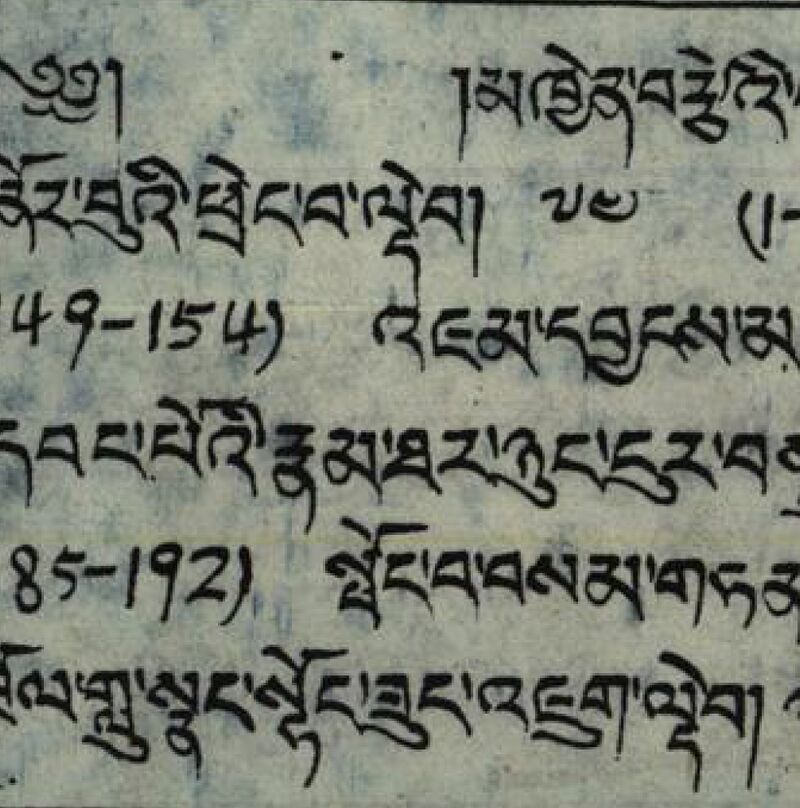
Description
Though attributed to Lo Lotsāwa, the source of the mind training instruction presented here is identified in its "colophon" as one Darpaṇa Ācārya, who, in turn, was presenting the thought of the Indian mystic Virvapa. The text cites first an eight-line quotation and later a six-line quote from Virvapa, which form the "root text" for this work. The instructions are organized within what the author calls the "yoga of unparalleled compassion" and the "yoga of root cause."
It is difficult to identify who this Indian master Virvapa is. The Tengyur contains two entries attributed to one Birbapa (Toh 1744 and Toh 2280), which may be the same person as our Virvapa. If so, then this is probably in fact Virūpa-the author of the famous Vajra Lines on the Path and Its Fruits, which is the primary root text for the cycle of teachings known as lamdré, or path and its fruits. Virūpa is generally recognized to be the same person as the eighth-century Nalanda Buddhist monk-scholar Dharmapāla. As for Darpaṇa Ācārya, there is an extremely short section on him in The Blue Annals (pp. 1045-46), where the only substantive information given is that he is the author of an important work on the rite of initiation entitled Kriyāsamuccaya (Toh 3305 Tengyur, rgyud 'grel). Lo Lotsāwa, the author of this text, was a Tibetan translator who was born sometime in the latter part of twelfth century. He traveled to Nepal and India and received extensive teachings from many Indian masters. The translations of a number of Vajrayana works are attributed to him. Intriguingly, neither Darpaṇa Ācārya nor the Tibetan lotsāwa (translator) appear in the lineage of this instruction. (Thupten Jinpa, Mind Training: The Great Collection, 612n406)
| Reference | dpal ldan bir wa ba'i blo sbyong [དཔལ་ལྡན་བིར་ཝ་བའི་བློ་སྦྱོང་།]. [Glorious Virvapa's Mind Training]. |
|---|---|
| People | Lo Lotsāwa |
