Blo sbyong tshogs bshad ma/Full text
From Bodhicitta
< Texts | Blo sbyong tshogs bshad maTexts/Blo sbyong tshogs bshad ma/Full text
FULL TEXT
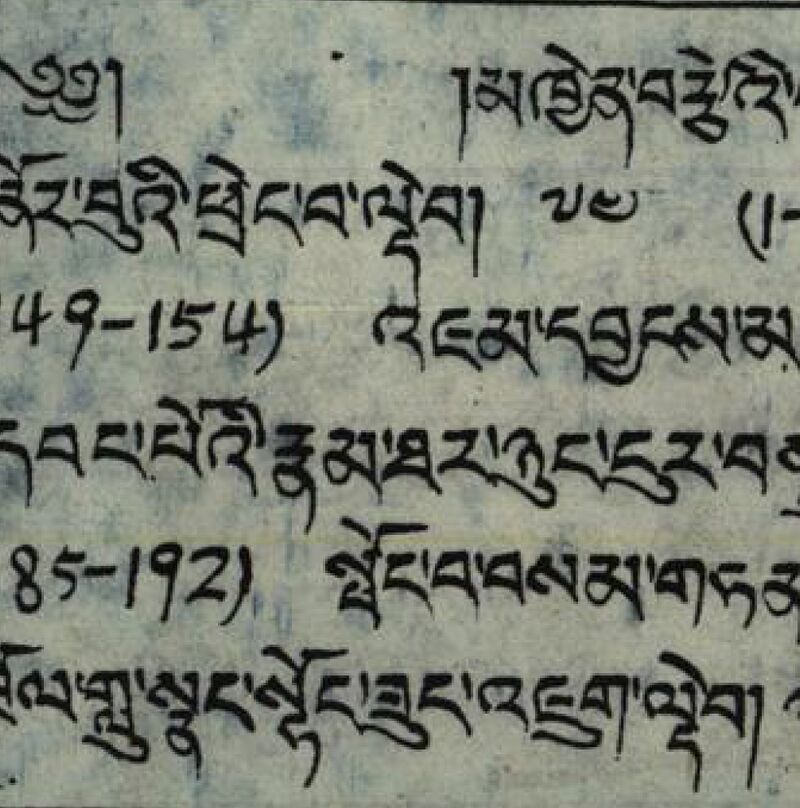
Description
This text, widely acclaimed as "The Great Public Explication" (Tsogs bshad chen mo), represents perhaps the most extensive early commentarial work of the mind training genre. Soon after its composition, the work appears to have assumed the status of a classic in this genre. Könchok Gyaltsen, one of the compilers of [Blo sbyong brgya rtsa, Mind Training: The Great Collection], felt the need to compose what is effectively a companion to this classic, which he entitled Supplement to the "Oral Tradition" . . . Shönu Gyalchok, on the other hand, recognized Sangyé Gompa's text as a somewhat alternative reading to Chekawa's mainstream approach to Seven-Point Mind Training expounded in Sé Chilbu's commentary. In Compendium of Well-Uttered Insights (pp. 193-211), Shönu Gyalchok provides a detailed outline of Public Explication's presentation of the mind training instructions. In terms of literary style, although it frequently says "thus taught the master" (zhes gsung ngo), the work does not appear to be based on notes taken at an oral teaching. Rather, it seems to have been composed as an independent piece, and this is explicitly confirmed by the author's dedication, where he writes:
- Ratnaguru relied on his teacher's words;
I, too, have applied the meaning a little in my mind;
So through [showing the] interrelations, sequence, and essential instructions,
I here present this [instruction on] training the mind.
| Reference | blo sbyong tshogs bshad ma [བློ་སྦྱོང་ཚོགས་བཤད་མ།]. [Public Explication of Mind Training]. |
|---|---|
| People | Sangye Gompa Senge |
