Blo sbyong gyer sgom rdo rje'i glu dbyangs/Full text
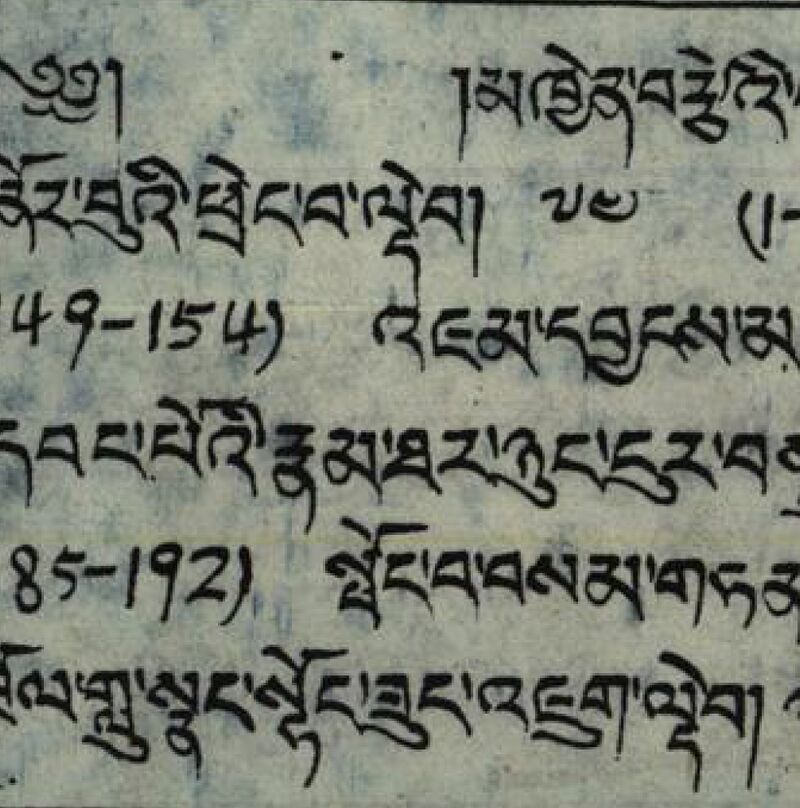
The Tibetan term gyerwa (spelled gyer ba), means "to chant something in songs, or sing something as a song." So I have translated the expression gyergom (spelled gyer sgom) as a "chanting meditation." Although the Tibetan edition of this work, as found in [the Blo sbyong brgya rtsa, Mind Training: The Great Perfection], does not provide any note on its authorship, the Tibetan tradition generally attributes this short text to one Maitrīyogi, literally "a yogi of loving-kindness," who is recognized as one of the three principal teachers of Atiśa on mind training. Ostensibly, the work is a series of ecstatic, spontaneous songs sung in a dialogical structure by Maitrīyogi and Maitreya, the future Buddha. There is, however, a third voice, namely that of an interlocutor. This is probably the voice of the person who first compiled the songs together to weave them into a single narrative. Unfortunately, the identity of our editor remains anonymous. Although Tibetan authors identify Maitrīyogi as the younger of the two Kusalī brothers, Kusalī" is probably a degeneration of Koṣala, the Tibetan equivalent of which is Gewachen (spelled: dge ba can), the name Yeshé Döndrup (Treasury of Gems, p. 481 gives to Kusalī Jr. (Thupten Jinpa, Mind Training: The Great Collection, 599n300)
| Reference | blo sbyong gyer sgom rdo rje'i glu dbyangs [བློ་སྦྱོང་གྱེར་སྒོམ་རྡོ་རྗེའི་གླུ་དབྱངས།]. [Melodies of an Adamantine Song: A Chanting Meditation on Mind Training]. |
|---|---|
| People | Maitrīyogi |
