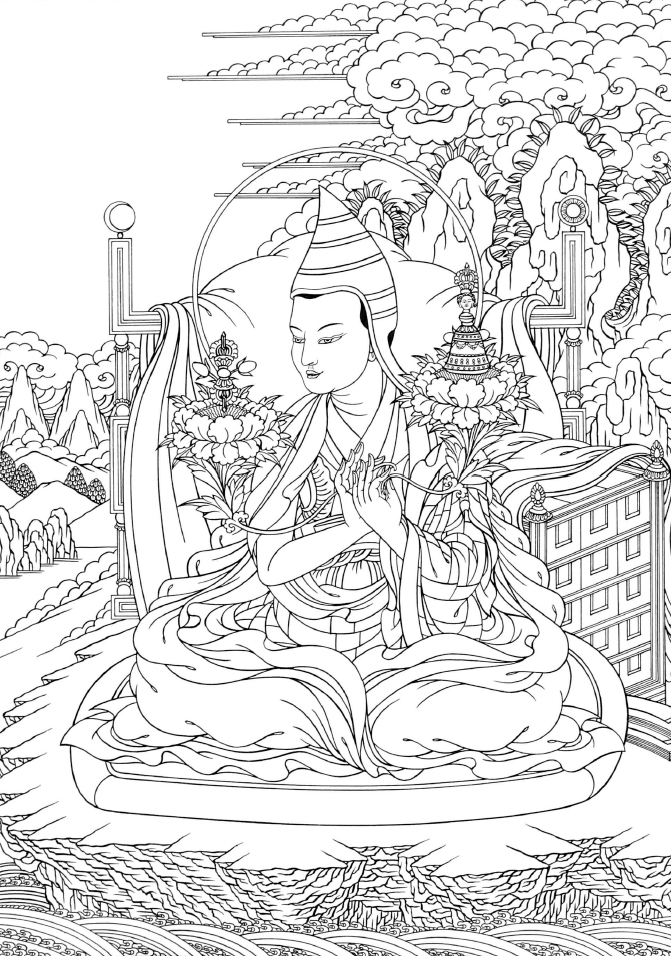
Butön Rinchen Drup, a Sakya lama raised in a Nyingma family, was the eleventh abbot of Zhalu Monastery, from 1320 to 1356. Some enumerations list him as the first abbot, as he significantly expanded the institution. He was an important teacher of the Prajñāpāramitā, and a key lineage holder of the Guhyasamāja and Kālacakratantras as transmitted in the Geluk tradition, and the Kālacakra, Hevajra and Sampuṭa tantras as transmitted in the Sakya tradition. He is generally credited as the creator of the Tibetan Buddhist canon, the Kangyur and Tengyur, and his History of Buddhism is still widely read. In addition to his Sakya training he also studied in the Kadam and Kagyu traditions. ... read more at

Sakya - The Sakya tradition developed in the eleventh century in the Khön family of Tsang, which maintained an imperial-era lineage of Vajrakīla and which adopted a new teaching from India known as Lamdre. Tib ས་སྐྱ་
Nyingma - The Nyingma, which is often described as the oldest tradition of Tibetan Buddhism, traces its origin to Padmasambhava, who is said to have visited Tibet in the eighth century. Tib རྙིང་མ་
Prajñāpāramitā - A class of Mahāyāna sūtras which represents some of the earliest known literature of this genre of Buddhism. There are around forty texts associated with this category, though the most widespread is the exceedingly brief Prajñāpāramitāhṛdayasūtra, popularly known as the Heart Sūtra. This class of literature is typically associated with the second turning of the dharma wheel and especially with the teachings on emptiness (śūnyatā). As such, these texts were the primary scriptural source for the philosophy of the Madhyamaka school. Skt प्रज्ञापारमिता Tib ཤེས་རབ་ཀྱི་ཕ་རོལ་ཏུ་ཕྱིན་པ་ and ཤེར་ཕྱིན་ Ch 般若波羅蜜多
Kālacakra - Can refer to either the Kālacakra Tantra and its derivative texts or to the systematic tantric tradition based on these texts, as well as the deity Kālacakra upon which the associated practices are centered. Skt कालचक्र Tib དུས་ཀྱི་འཁོར་ལོ། Ch 時輪
Tantra - Tantra, when juxtaposed with Sūtra, generally refers to the scriptures and texts which discuss esoteric topics. While the term is used to refer to texts on other topics, it is mostly used to refer to the genre of scriptures and texts on themes and topics associated with Vajrayāna Buddhism. Skt तन्त्र Tib རྒྱུད། Ch 密宗
Geluk - The Geluk tradition traces its origin to Tsongkhapa, who propagated a modified version of the Kadampa lojong and lamrim teachings. It is the dominant tradition of Tibet, having established its control of the government under the figure of the Dalai Lama. Tib དགེ་ལུགས་
Kadam - The Kadam tradition, which traces its origin to the teachings of Atiśa, was the first of the so-called New Schools of Tibetan Buddhism, traditions which arose during or after the Second Propagation of Buddhism (phyi dar) in the tenth century. Tib བཀའ་གདམས་
Kagyu - The Kagyu school traces its origin to the eleventh-century translator Marpa, who studied in India with Nāropa. Marpa's student Milarepa trained Gampopa, who founded the first monastery of the Kagyu order. As many as twelve subtraditions grew out from there, the best known being the Karma Kagyu, the Drikung, and the Drukpa. Tib བཀའ་བརྒྱུད་