How to Be Caring: Shantideva's Bodhicaryāvatāra - Jay Garfield (Part 2)

From Bodhicitta
Media/How to Be Caring: Shantideva's Bodhicaryāvatāra - Jay Garfield (Part 2)

🤓 Admin Zone 🛠️ hidden to non-admins
How to Be Caring: Shantideva's Bodhicaryāvatāra - Jay Garfield (Part 2)
Multimedia


Please note that many items in our library are simply pages that represent a detailed library catalog entry and citation of someone else's work, presentation, or performance. Read our General Disclaimer for more information.
Video thumbnail
Series: How to Be Caring: Shantideva's Bodhicaryāvatāra - Jay Garfield (3 tracks)

Description

Shantideva's masterful Bodhicaryāvatāra sparkles with insights for personal growth and for a stronger social contract. Professor Jay Garfield interprets Shantideva's work to build a guide to Buddhist ethics and to suggest ways to conquer our own psychopathologies.

Buddhist ethics doesn't begin with action but how we see others and the world. Bodhisattvas cultivate an attitude of universal care. As engaged Buddhists, we need this clarity of ethical perspective to help us confront social problems and the ethical implications of new technology. Professor Garfield draws from his recent book How to Be Caring: An Ancient Guide to a Compassionate Life, and from his earlier work, Buddhist Ethics: A Philosophical Exploration.

Citation
Garfield, Jay. "How to Be Caring: Shantideva's Bodhicaryāvatāra." Part 2 of 3. Produced by the Shantideva Center, FPMT Jul 20, 2026. Video, 1:30:31. https://www.youtube.com/watch?v=IewcN4jTNXM.
Interconnections
3 Teaching on
Classical WorksAbout this item
An "Introduction to Bodhisattva Practice," the Bodhisattvacaryāvatāra is a poem about the path of a bodhisattva, in ten chapters, written by the Indian Buddhist Śāntideva (fl. c. 685–763). One of the masterpieces of world literature, it is a core text of Mahāyāna Buddhism and continues to be taught, studied, and commented upon in many languages and by many traditions around the world. The main subject of the text is bodhicitta, the altruistic aspiration for enlightenment, and the path and practices of the bodhisattva, the six perfections (pāramitās). The text forms the basis of many contemporary discussions of Buddhist ethics and philosophy.
Books2025About this item
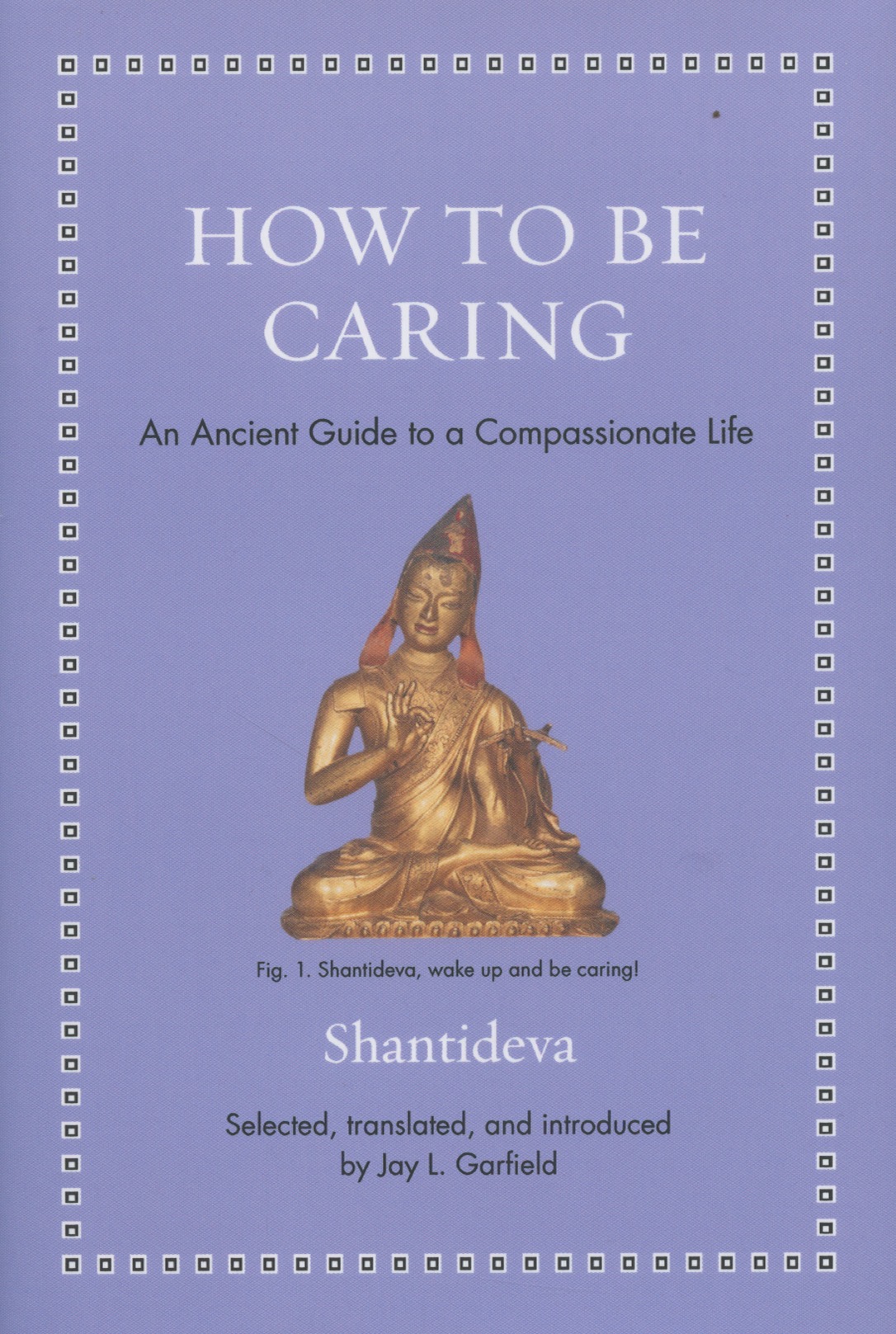
Written by the medieval Indian Buddhist monk Shantideva, The Bodhicaryavatara is one of the most beloved and frequently taught works in Buddhism and a favorite of the Dalai Lama. An inspiring and powerful poem that uses a gripping, first-person, confessional voice, it is the most systematic work of ethical thought in the Indo-Tibetan Buddhist tradition. And its invaluable insights, exhortations, and encouragements about how we can relieve suffering by becoming more caring and compassionate are universal.

In How to Be Caring, philosopher and Buddhist scholar Jay Garfield presents a lively new translation of selected verses from Shantideva’s text that capture its powerful lessons for all of us. The result is the clearest, most concise, and most accessible introduction to this masterful Buddhist guidebook about how we can change the world by changing ourselves.

Focusing on the life of a bodhisattva, a person committed to attaining awakening for the benefit of all beings, Shantideva argues that the first step to reducing suffering and making the world better is to conquer our own psychopathologies. Urging us to remember that we won’t live forever and therefore need to think about what is most important, the work seeks to inspire us and teach us how to be more generous, thoughtful, polite, patient, committed, and self-aware.

Featuring an introduction and the original Tibetan text on facing pages.(Source: Princeton University Press )

Books2022About this item
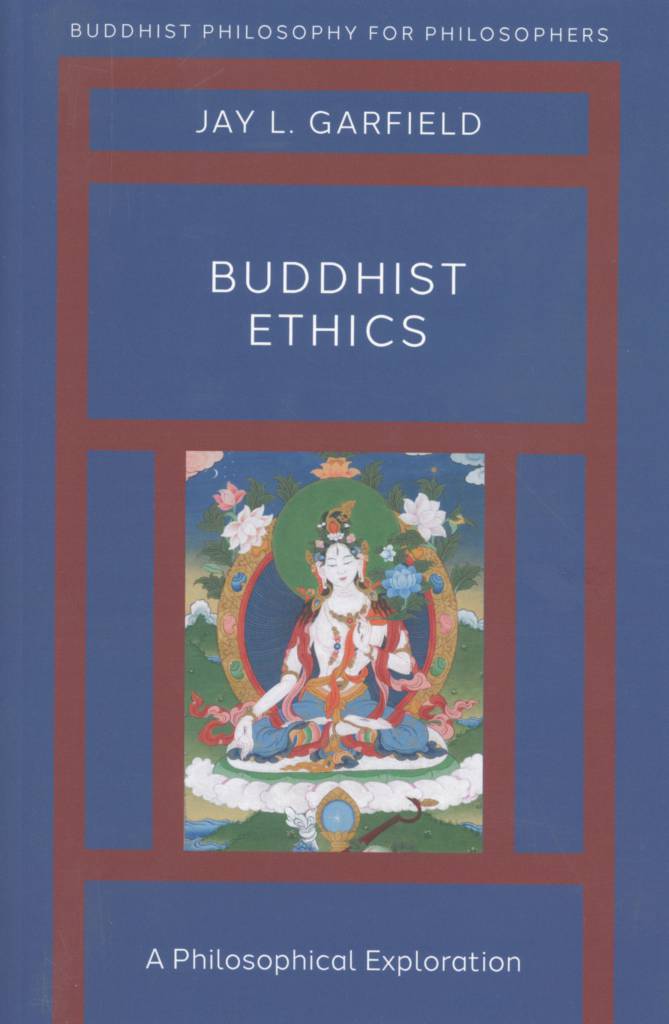
This volume is one of a series of monographs on Buddhist philosophy for philosophers. It presents an outline of Buddhist ethical thought, presenting Buddhist ethical reflection as a distinct approach, or rather set of approaches, to moral philosophy. The book draws on a range of Buddhist philosophers to exhibit the internal diversity of the tradition as well as the lineaments that demonstrate its overarching integrity. This includes early Pāli texts, medieval Indian commentarial literature and philosophical treatises, Tibetan commentaries and treatises, and contemporary Buddhist literature. It argues that Buddhist ethics is best understood not as a species of any Western ethical tradition, but instead as a kind of moral phenomenology, and that it is particularist in its orientation. The book addresses both methodological and doctrinal issues and concludes with a study of the way that Buddhist ethical thought is relevant in the contemporary world. (Source: Oxford University Press)