Madhyamakahṛdayakārikā

From Bodhicitta
< Texts(Redirected from Madhyamakahṛdaya)
Texts/Madhyamakahṛdayakārikā

🤓 Admin Zone 🛠️ hidden to non-admins
मध्यमकहृदयकारिका
Madhyamakahṛdayakārikā
དབུ་མའི་སྙིང་པོའི་ཚིག་ལེའུར་བྱས་པ
dbu ma'i snying po'i tshig le'ur byas pa
Verses on the Heart of the Middle Way (84000)
Text


Please note that many items in our library are simply pages that represent a detailed library catalog entry and citation of someone else's work, presentation, or performance. Read our General Disclaimer for more information.

Description

Madhyamakahṛdaya. (T. Dbu ma’i snying po). In Sanskrit, "Essence of the Middle Way"; the major work of the sixth-century Indian Madhyamaka (and, from the Tibetan perspective, Svātantrika) master Bhāvaviveka (also referred to as Bhavya and Bhāviveka). The text is written in verse, accompanied by the author's extensive prose commentary, entitled the Tarkajvālā. The Madhyamakahṛdaya is preserved in both Sanskrit and Tibetan, the Tarkajvālā only in Tibetan. The work is in eleven chapters, the first three and the last two of which set forth the main points in Bhāvaviveka's view of the nature of reality and the Buddhist path, dealing with such topics as bodhicitta, the knowledge of reality (tattvajñāna), and omniscience (sarvajñātā). The intervening chapters set forth the positions (and Bhāvaviveka's refutations) of various Buddhist and non-Buddhist schools, including the Śrāvaka, Yogācāra, Sāṃkhya, Vaiśeṣika, Vedānta, and Mīmāṃsā. These chapters (along with Śāntarakṣita's Tattvasaṃgraha) are a valuable source of insight into the relations between Madhyamaka and the other Indian philosophical schools of the day. The chapter on the śrāvakas, for example, provides a detailed account of the reasons put forth by the mainstream Buddhist schools as to why the Mahāyāna sūtras are not the word of the Buddha. Bhāvaviveka's response to these charges, as well as his refutation of Yogācāra in the subsequent chapter, are particularly spirited. (Source: "Madhyamakahṛdaya." In The Princeton Dictionary of Buddhism, 487–88. Princeton University Press, 2014. http://www.jstor.org/stable/j.ctt46n41q.27.)
Quoted in the aligned translations
Reference
Bhāvaviveka (slob dpon chen po b+ha bya). madhyamakahṛdayakārikā [मध्यमकहृदयकारिका]. dbu ma'i snying po'i tshig le'ur byas pa [དབུ་མའི་སྙིང་པོའི་ཚིག་ལེའུར་བྱས་པ]. [Verses on the Heart of the Middle Way (84000)]. Tengyur, RKTST 3200 http://www.rkts.org/cat.php?id=3200&typ=2.
Interconnections
1 Recensions
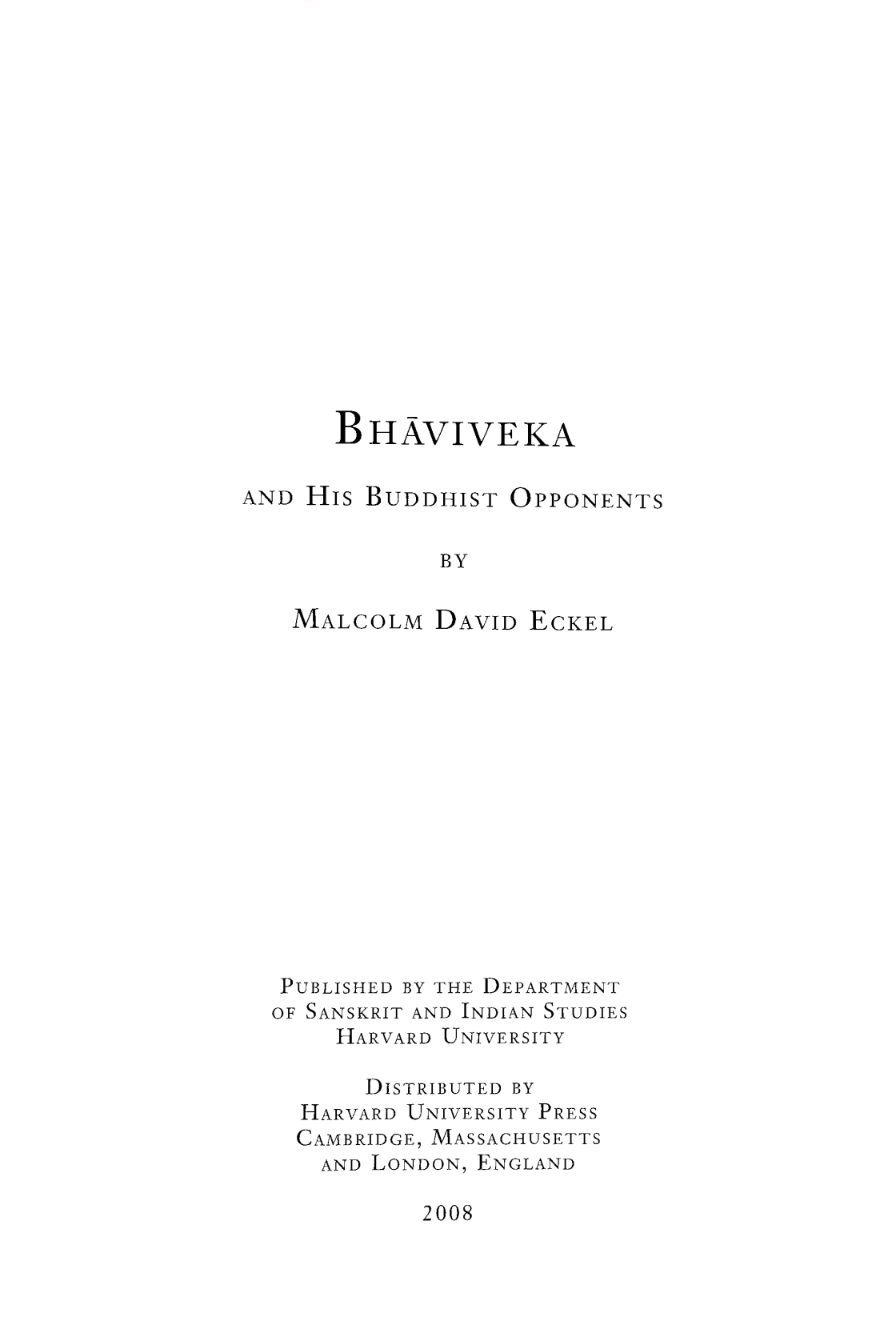
Bhāviveka and his Buddhist Opponents-front.jpg
Books2008About this item
Bhāviveka (ca. 500–560 CE) lived at a time of unusual creativity and ferment in the history of Indian Buddhist philosophy. The Mahayana movement was emerging as a vigorous and self-conscious intellectual force, while the earlier traditions of the eighteen "schools" (nikaya) resisted the authority of the Mahayana and continued to elaborate the fundamental concepts of Buddhist thought.

Bhāviveka’s "Verses on the Heart of the Middle Way" (Madhyamakahṛdayakārikā) with their commentary, known as "The Flame of Reason" (Tarkajvālā), give a unique and authoritative account of the intellectual differences that stirred the Buddhist community in this creative period.

Bhāviveka and His Buddhist Opponents gives a clear and accessible translation of Chapters 4 and 5 of this text: the chapters on the Śrāvakas, or eighteen schools, and the Yogācāra, Bhāviveka’s most important Mahayana opponents. The translation is introduced by an essay that situates Bhāviveka in the intellectual context of sixth-century India, and it is accompanied by copious notes, commenting on Bhāviveka’s sources and explaining his controversial method. The book also contains a critical edition of the Sanskrit text of Bhāviveka’s verses and the Tibetan translation of the verses and commentary. (Source: Harvard University Press)
2 Classical commentaries
Bhavaviveka HAR-cropped.jpg
Classical WorksAbout this item
The Madhyamakahṛdayavṛttitarkajvālā (Tibetan: Dbu ma'i snying po'i 'grel pa rtog ge 'bar ba) is an influential sixth-century commentary written by the Indian Madhyamaka philosopher Bhāvaviveka (or Bhavya) on his own verse text, the Madhyamakahṛdayakārikā. It is a foundational text in the Yogācāra-Madhyamaka dialogue.

The text functions as a comprehensive commentary (vṛtti) that utilizes logic and debate (tarka) to explain and defend Bhāvaviveka's understanding of Madhyamaka, often known as Svātantrika.

It provides an in-depth analysis of various Buddhist and non-Buddhist philosophical systems. Notably, it refutes the Yogācāra school's view on reality and the path to Buddhahood.The text addresses important philosophical topics, including:

  • The Buddha's Omniscience: Chapter 10 defends the omniscience of the Buddha against critics, using examples from the Buddha's life.
  • "Non-production from Others": It refutes the Sautrāntika, Vaibhāṣika, and Vaiśeṣika schools regarding the nature of causality and existence.
  • Distinction between Conventional and Ultimate Reality: Bhāviveka argues that the "imagined nature" exists conventionally, but ultimately, things are empty.
It is a vital text for understanding the development of Madhyamaka philosophy in India and its reception in Tibet.
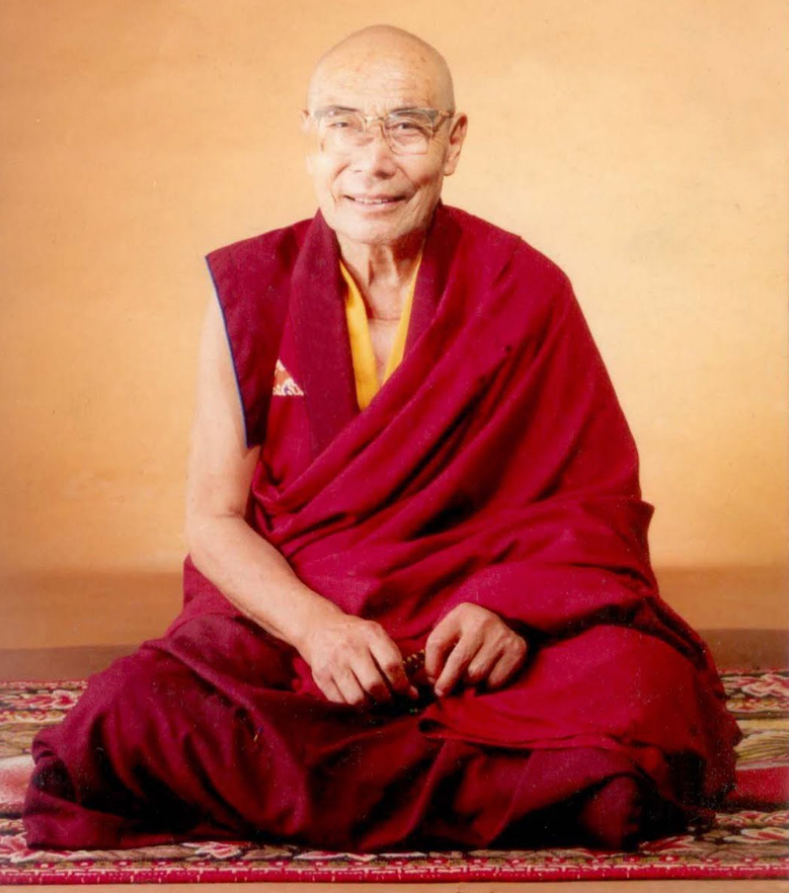
Kunga Wangchuk.jpg
Classical WorksAbout this item
slob dpon legs ldan 'byed kyis mdzad pa'i dbu ma snying po'i mchan 'grel [སློབ་དཔོན་ལེགས་ལྡན་འབྱེད་ཀྱིས་མཛད་པའི་དབུ་མ་སྙིང་པོའི་མཆན་འགྲེལ།]. [An Annotated Commentary on the Madhyamakahṛdaya Composed by the Master Bhāvaviveka].
1 Partial translations
Bhāviveka and his Buddhist Opponents-front.jpg
Books2008About this item
Bhāviveka (ca. 500–560 CE) lived at a time of unusual creativity and ferment in the history of Indian Buddhist philosophy. The Mahayana movement was emerging as a vigorous and self-conscious intellectual force, while the earlier traditions of the eighteen "schools" (nikaya) resisted the authority of the Mahayana and continued to elaborate the fundamental concepts of Buddhist thought.

Bhāviveka’s "Verses on the Heart of the Middle Way" (Madhyamakahṛdayakārikā) with their commentary, known as "The Flame of Reason" (Tarkajvālā), give a unique and authoritative account of the intellectual differences that stirred the Buddhist community in this creative period.

Bhāviveka and His Buddhist Opponents gives a clear and accessible translation of Chapters 4 and 5 of this text: the chapters on the Śrāvakas, or eighteen schools, and the Yogācāra, Bhāviveka’s most important Mahayana opponents. The translation is introduced by an essay that situates Bhāviveka in the intellectual context of sixth-century India, and it is accompanied by copious notes, commenting on Bhāviveka’s sources and explaining his controversial method. The book also contains a critical edition of the Sanskrit text of Bhāviveka’s verses and the Tibetan translation of the verses and commentary. (Source: Harvard University Press)
4 A topic of
Bhāviveka and his Buddhist Opponents-front.jpg
Books2008About this item
Bhāviveka (ca. 500–560 CE) lived at a time of unusual creativity and ferment in the history of Indian Buddhist philosophy. The Mahayana movement was emerging as a vigorous and self-conscious intellectual force, while the earlier traditions of the eighteen "schools" (nikaya) resisted the authority of the Mahayana and continued to elaborate the fundamental concepts of Buddhist thought.

Bhāviveka’s "Verses on the Heart of the Middle Way" (Madhyamakahṛdayakārikā) with their commentary, known as "The Flame of Reason" (Tarkajvālā), give a unique and authoritative account of the intellectual differences that stirred the Buddhist community in this creative period.

Bhāviveka and His Buddhist Opponents gives a clear and accessible translation of Chapters 4 and 5 of this text: the chapters on the Śrāvakas, or eighteen schools, and the Yogācāra, Bhāviveka’s most important Mahayana opponents. The translation is introduced by an essay that situates Bhāviveka in the intellectual context of sixth-century India, and it is accompanied by copious notes, commenting on Bhāviveka’s sources and explaining his controversial method. The book also contains a critical edition of the Sanskrit text of Bhāviveka’s verses and the Tibetan translation of the verses and commentary. (Source: Harvard University Press)
Ham Hyoung Seok.jpg
Articles2021About this item
Whether or not the Buddha really died from eating a rotten pork dish, it appears certain that, during the earliest period of the Buddhist tradition in India, meat was not comprehensively prohibited for ordained monks and nuns. Certain restrictions were applied in their partaking of meat, but the Buddhist canon unambiguously records that the Buddha refused to adopt vegetarianism when it was proposed by his cousin, or the saṅgha-splitter, Devadatta. The most commonly cited permission for meat-eating for the ordained is epitomized in the concept of "pure in three aspects" (trikoṭiśuddha) according to which a Buddhist monk or nun can eat donated meat unless she or he has directly seen, heard, or suspected that an animal was killed specifically for his or her own sake. This conditional allowance of a meat diet came to be completely banned, however, in several Mahāyāna sūtras that appeared in the first half of the first millennium, including most famously, the Laṅkāvatāra.

Nearly all of the Indic materials that record discussions of meat-eating are canonical, that is, believed to have been spoken by the Buddha himself and therefore of a prescriptive nature. The one exception is the anti-vegetarian polemic that consists of seven verses accompanied by auto-commentary in the ninth Mīmāṃsā chapter of the Madhyamakahṛdayakārikā composed by the sixth-century Madhyamaka scholar, Bhāviveka (500-570 CE). This text is noteworthy because it documents an active defense of a Buddhist meat diet against others' censure. However, while he refutes his non-Buddhist opponent's claims, Bhāviveka eventually contradicts a pro-vegetarian Mahāyāna sūtra, the Laṅkāvatāra. This paper argues that Bhāviveka's anti-vegetarian discourse cannot avoid being read as a critique, even though he did not intend for it to be so.



Read this article here.
Kunga Wangchuk.jpg
Classical WorksAbout this item
slob dpon legs ldan 'byed kyis mdzad pa'i dbu ma snying po'i mchan 'grel [སློབ་དཔོན་ལེགས་ལྡན་འབྱེད་ཀྱིས་མཛད་པའི་དབུ་མ་སྙིང་པོའི་མཆན་འགྲེལ།]. [An Annotated Commentary on the Madhyamakahṛdaya Composed by the Master Bhāvaviveka].


Madhyamakahṛdayakārikā/Full text