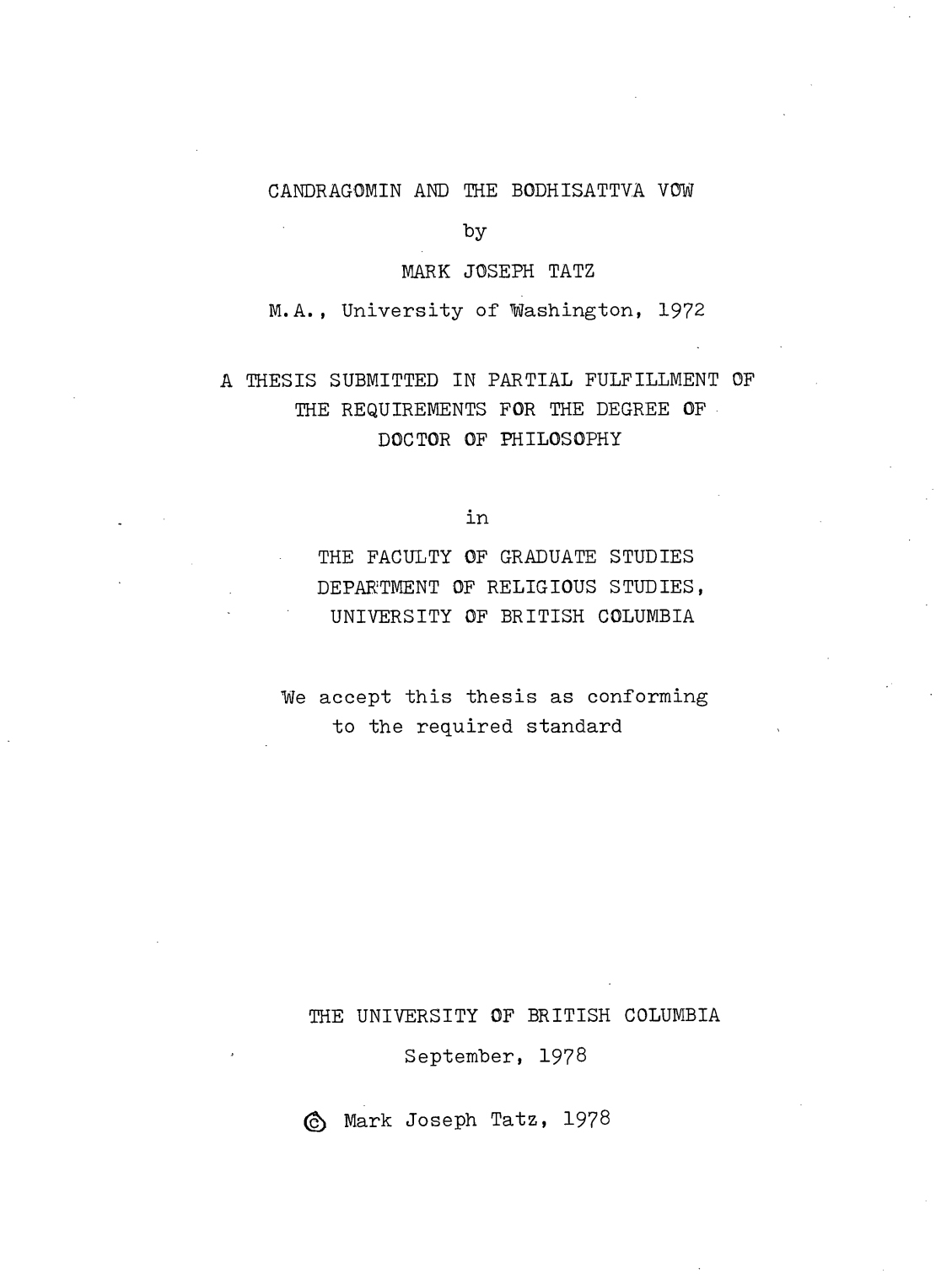
Candragomin and the Bodhisattva Vow
| 🤓 Admin Zone 🛠️ hidden to non-admins | |

Description
This dissertation presents, in two parts, a study of the life and works of the Indian Buddhist philosopher, teacher and litterateur Candragomin, and the study and translation of his own and associated treatises on the bodhisattva vow.
Taking the divisions in order: Part One is concerned with the life and works of Cg, beginning with a chapter on his date. Adducing new evidence and applying modern methodology to this controversial topic, it is determined that Cg, the University of Nalanda philosopher known to Tibetan and Chinese traditions, lived in the last three quarters of the seventh century, and that all the sixty-odd works attributed to him in the Tibetan canon may in fact be his, with the important exception of the Candra system of Sanskrit grammar.
Chapter Two studies the role played by Cg, in the traditional Tibetan accounts of his life, as exponent of Yogācāra philosophy and personification of the lay bodhisattva ideal. Chapter Three is a translation of Cg's fifty-one verse Praise in Confession (Deśana-stava) with its commentary (vṛtti) by Buddhaśānti , from the Tibetan translation. Semi-autobiographical in nature, this poem surveys the standard doctrines and practices of Buddhism in one of its most productive eras, an unusually candid and informative account of the problems encountered by a layman in his attempts at religious practice. Working in the high poetic (kāvya) style, Cg and his commentator apply, to his own life, the theoretical principles set forth in his Twenty Verses on the Bodhisattva Vow. The introductory remarks and annotation examine the methods of Rin-chen bzang-po (958–1055), dean of Tibetan translators, and the English rendering is a prototype for the translation of kāvya from a Tibetan version.
Part Two consists of a translation from the Tibetan (with reference to the parallel Sanskrit passages of Asaṅga) of Cg's didactic and historically important work on the bodhisattva vow (the Bodhisattva-saṁvara-viṁśaka)—a mnemonic condensation of the Chapter on Morality (śīla-paṭala) of the Bodhisattva-bhūmi—with the commentary upon it by the ninth century philosopher Śāntarakṣita. An introductory essay probes the bodhisattva figure as described in these and in later exegetical and synoptic treatises—especially in the "Three Vows" genre developed in Tibet upon late Indian models—the bodhisattva's aspirations and his means of fulfilling them, as distinguished from the aspirations and methods of "lesser vehicle" Buddhism. The importance of these works in understanding the ideals of the Greater Vehicle, as expressed in the moral code of the bodhisattva and the definition of his social relationships, cannot be underestimated. This dissertation is the first extensive study of bodhisattva morality, and of the ceremony for taking the bodhisattva vow, as it is elaborated in Yogācāra literature. The introductory essay also explores the role of the Viṁśaka and its commentary in the introduction of Buddhism into Tibet by Śāntarakṣita.
Detailed annotation to the translation incorporates bibliographical data and exegetical material drawn chiefly from scriptural (sūtra ) sources of the Chapter on Morality, commentaries to it by Guṇaprabha, Jinaputra and Samudramegha, and commentaries to the Twenty Verses itself by Bodhibhadra and Grags-pa rgyal-mtshan. The Byang-chub gzhung-lam of Tsong-kha-pa (1357–1419) has been quoted at length for its lucid and comprehensive account of reasoning upon these subjects by the various authors, teachers and schools of Indo-Tibetan Buddhism.
Seven appendices to the dissertation include edited Tibetan texts and the translation of subsidiary literature on the bodhisattva vow.