Please note that many items in our library are simply pages that represent a detailed library catalog entry and citation of someone else's work, presentation, or performance. Read our General Disclaimer for more information.
This is Mipam Rinpoche's answer to Drakar Tulku's objections to some points in his commentary on the ninth chapter of the Bodhicaryāvatāra (Nor bu ke ta ka).
Type of Commentary: Author's response to Drakar Tulku's objections to his commentary on the ninth chapter, Nor bu ke ta ka Length: 126 Tradition: Nyingma
Mi pham rgya mtsho. བརྒལ་ལན་ཉིན་བྱེད་སྣང་བ།, (Brgal lan nyin byed snang ba).
Spyod 'jug sher le brgal lan nyin byed snang ba.
In Spyod 'jug shes rab le'u'i tshig don go slar bshad pa, 465-579. Khreng tu'u: Si khron mi rigs dpe skrun khang, 1993.
In Gsung 'bum/ Mi pham rgya mtsho, Vol. 13: 97-221. Gangtok: Sonam Topgay Kazi, 1975.
In Gsung 'bum/ Mi pham rgya mtsho: The expanded redaction of the complete works of collected writings of the famed Nyingma polymath, Jamgon Ju Mipam Gyatso, Vol. 14: 97-190. Paro, Bhutan: Lama Ngodrup and Sherab Drimey, 1984-1993.
In Gsung 'bum/ mi pham rgya mtsho, Vol 18: 161-273. Khreng tu'u: Gangs can rig gzhung dpe rnying myur skyobs lhan tshogs, 2007.
In Gsung 'bum/ 'jam dbyangs rnam rgyal rgya mtsho, Vol. 13: 97-190. No Publication Data.
In Mi pham gsung 'bum las gzhung 'grel skor, Vol. 22: 120-204. Khreng tu'u: 'Jam dpal d+hI yig ser po'i dpe skrun tshogs pa, 2008
In 'Ju mi pham bka' 'bum, Vol. 18: 189-322. Chengdu: Si khron mi rigs dpe skrun khang, 2012.
In Sher 'grel nor bu ke ta ka, 118-227. Gser rta rdzong: Gser thang bla rung lnga rig nang bstan slob gling, n.d.
In Collection of mKhas btsun bzang po in Bauddha Nath.
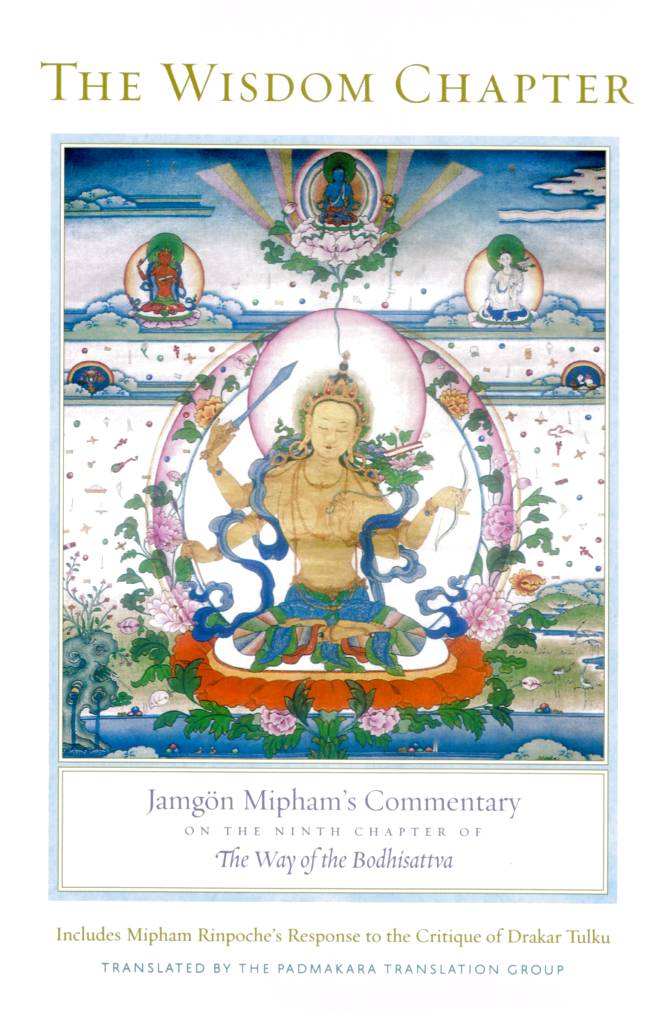
An English translation of Mipam Gyatso's commentary to the ninth chapter of Śāntideva's Bodhicaryāvatāra by the Padmakara Translation Group.
3 Scholarship
[[Articles/Introduction to Gzhan gyis brtsad pa'i lan mdor bsdus pa rigs lam rab gsal de nyid snang byed: An Answer to Blo-bzang-rab-gsal's Refutation of the Author's 'Sher le nor bu ke ta ka' and Its Defence, the Brgal lan nyin byed snang ba|Smith, E. Gene. Introduction to Gzhan gyis brtsad pa'i lan mdor bsdus pa rigs lam rab gsal de nyid snang byed: An Answer to Blo-bzang-rab-gsal's Refutation of the Author's 'Sher le nor bu ke ta ka' and Its Defence, the Brgal lan nyin byed snang ba, by 'Jam mgon Mi pham rgya mtsho of 'Ju, 1–11. Gangtok, Sikkim: Sonam T. Kazi, 1969. ]]
Articles1969About this item
This is E. Gene Smith's introduction to Mipam Gyatso's text. It discusses the Bodhicaryāvatāra and the controversy engendered by Mipam's commentary on the ninth chapter.
This is chap. 16 in E. Gene Smith's book Among Tibetan Texts. It discusses the Bodhicaryāvatāra and the controversy engendered by Mipam's commentary on the ninth chapter.
In the following excerpt from The Wisdom Chapter: Jamgön Mipham's Commentary on the Ninth Chapter of "The Way of the Bodhisattva", Wulstan Fletcher and Helena Blankleder focus on Mipham's Light of the Day Star, his response to Drakar Lobzang Palden Tenzin Nyendrak's criticism of his commentary on the ninth chapter of the Bodhicaryāvatāra. The debate between Mipham, a Nyingma scholar, and Drakar Tulku, a Gelukpa scholar, regarding the interpretation of Śāntideva's "Wisdom Chapter" in the Bodhicaryāvatāra is discussed in detail. Their differing views on the nature of arhatship and the realization of emptiness in Hīnayāna and Mahāyāna traditions are explored along with biographical information on Drakar Tulku and his contributions to Buddhist scholarship.
This examination offers insight into the intellectual and cultural milieu of early twentieth-century Tibet, showcasing the interconnectedness of scholarship and religious practice. It is also valuable to better understand the complexities involved in interpreting Buddhist texts translated from Sanskrit into Tibetan.
This is the first polemical text written by the author to refute Mipam's commentary on the ninth chapter of the Bodhicaryāvatāra (Nor bu ke ta ka). The author aims to elucidate the key point of the profound Middle Way (zab mo dbu ma'i gnad) while pointing out and negating Mipam's "misreadings" of them.
In the following excerpt from The Wisdom Chapter: Jamgön Mipham's Commentary on the Ninth Chapter of "The Way of the Bodhisattva", Wulstan Fletcher and Helena Blankleder focus on Mipham's Light of the Day Star, his response to Drakar Lobzang Palden Tenzin Nyendrak's criticism of his commentary on the ninth chapter of the Bodhicaryāvatāra. The debate between Mipham, a Nyingma scholar, and Drakar Tulku, a Gelukpa scholar, regarding the interpretation of Śāntideva's "Wisdom Chapter" in the Bodhicaryāvatāra is discussed in detail. Their differing views on the nature of arhatship and the realization of emptiness in Hīnayāna and Mahāyāna traditions are explored along with biographical information on Drakar Tulku and his contributions to Buddhist scholarship.
This examination offers insight into the intellectual and cultural milieu of early twentieth-century Tibet, showcasing the interconnectedness of scholarship and religious practice. It is also valuable to better understand the complexities involved in interpreting Buddhist texts translated from Sanskrit into Tibetan.
An English translation of Mipam Gyatso's commentary to the ninth chapter of Śāntideva's Bodhicaryāvatāra by the Padmakara Translation Group.
Śāntideva (ཞི་བ་ལྷ་). Bodhicaryāvatāra [बोधिचर्यावतार]. byang chub sems dpa'i spyod pa la 'jug pa [བྱང་ཆུབ་སེམས་དཔའི་སྤྱོད་པ་ལ་འཇུག་པ།]. [The Way of the Bodhisattva]. Tengyur, RKTST 3216 http://www.rkts.org/cat.php?id=3216&typ=2.
Nyingma - The Nyingma, which is often described as the oldest tradition of Tibetan Buddhism, traces its origin to Padmasambhava, who is said to have visited Tibet in the eighth century. Tib རྙིང་མ་
Gotra - Disposition, lineage, or class; an individual's gotra determines the type of enlightenment one is destined to attain. Skt गोत्र Tib རིགས་ Ch 鍾姓,種性
Bodhisattva - A person who seeks enlightenment for the sake of others. In Mahāyāna Buddhism, a bodhisattva is a compassionate being who is training on the path to buddhahood and aspires to eliminate the suffering of all beings and take all sentient beings to the state of enlightenment. The Mahāyāna sūtras including those on buddha-nature generally have bodhisattvas as the main audience or interlocutors for the Buddha's discourses. Skt बोधिसत्त्व Tib བྱང་ཆུབ་སེམས་དཔའ། Ch 菩薩
Geluk - The Geluk tradition traces its origin to Tsongkhapa, who propagated a modified version of the Kadampa lojong and lamrim teachings. It is the dominant tradition of Tibet, having established its control of the government under the figure of the Dalai Lama. Tib དགེ་ལུགས་
Hīnayāna - The mainstream teachings and the early schools of Buddhism which primarily taught individual liberation through practice-focused renunciation and monasticism, considered lesser than the later movement of the Greater Vehicle (Mahāyāna), which professed enlightenment for all sentient beings and promoted compassion. Skt हीनयान Tib ཐེག་དམན། Ch 小乘
Mahāyāna - Mahāyāna, or the Great Vehicle, refers to the system of Buddhist thought and practice which developed around the beginning of the Common Era, focusing on the pursuit of the state of full enlightenment of the Buddha through the realization of the wisdom of emptiness and the cultivation of compassion. Skt महायान Tib ཐེག་པ་ཆེན་པོ། Ch 大乘