The Perfection of Wisdom (Conze 1973)
From Bodhicitta
< BooksBooks/The Perfection of Wisdom (Conze 1973)
| 🤓 Admin Zone 🛠️ hidden to non-admins | |
The Perfection of Wisdom in Eight Thousand Lines & Its Verse Summary
Book
Please note that many items in our library are simply pages that represent a detailed library catalog entry and citation of someone else's work, presentation, or performance. Read our General Disclaimer for more information.

Description
After the Torah, the Koran and the Gospels, the Indian literature of the Perfection of Wisdom has had the greatest impact on the religious consciousness of mankind. Its composition extended for over seven hundred years, and here we offer the reader the first two works which were composed in South India between 100 B.C. and A.D. 100. These documents are not only indispensable to those who wish to understand the mentality of the East, they still carry a potent spiritual message; and those who desire to diminish their personal worries y the disciplined contemplation of spiritual; thought could make no better choice. (Source Accessed June 25, 2021)
Citation
Conze, Edward, trans. The Perfection of Wisdom in Eight Thousand Lines & Its Verse Summary. Bolinas, CA: Four Seasons Foundation, 1973.
Interconnections
2 Full translation of

The Perfection of Wisdom in Eight Thousand Lines, like other sūtras on the Perfection of Wisdom, deals with the topic of emptiness and the understanding of the ultimate truth or the way things are. Modern scholars date the sūtra roughly to the 2nd and 1st century BC and consider it to be the earliest sūtra on which other Perfection of Wisdom sūtras are based. Its adherents claim the sūtra to be a part of the words of the Buddha. It is believed to have been taken to the subterranean world and brought back to the human world by Nāgārjuna. It is sometimes known as the Condensed Mother (ཡུམ་བསྡུས་པ་), the term Mother referring to the Perfection of Wisdom which gives rise to all buddhas and bodhisattvas. It is said to be the condensed version of the long version in one hundred thousand lines and the middle version in twenty-five thousand lines. Having spread across Asia and beyond and having been translated into many languages, it is one of the most common books to be found in the Buddhist Himalayas.
The sūtra takes the form of a series of dialogues between the Buddha Śākyamuni, Subhūti, Śāriputra, and others, such as Indra, the king of gods, and a goddess of the Ganges. In the final chapters, the sūtra contains the inspirational narratives of Sadāprarudita and his quest for the teachings on the Perfection of Wisdom from the Bodhisattva Dharmodgata. The sūtra is also one of the earliest Mahāyāna sources proclaiming the luminous nature of the mind.

Rattnaguṇasaṃcayagāthā. (T. Yon tan rin po che sdud pa tshigs su bcad pa; C. Fomu baodezang bore boluomi jing; J. Butsumo hōtokuzō hannya haramitsukyō; K. Pulmo podǒkchang panya paramil kyǒng 佛母寶德藏般若波羅蜜經. In Sanskrit, "Verses on the Collection of Precious Qualities," the longer title is Prajñāpāramitāratnaguṇasaṃcayagāthā, or "Verses on the Collection of the Precious Qualities of the Perfection of Wisdom." The Ratnaguṇasaṃcayagāthā epitomizes the early Mahāyāna in its emphasis on the emptiness (śūnyatā) of the aggregates (skandha) and its praise of the path of the bodhisattva over that of the arhat. The text is considered to be of particular importance in the history of the Mahāyāna because many of its verses, particularly those that appear early in the text, may represent some of the earliest expressions of Mahāyāna philosophy and may date as far back as 100 BCE. Another indication of the text’s antiquity is that it was translated into Chinese as early as the second century CE. The only extant Sanskrit version is that edited in the eighth century by Haribhadra to conform to the structure of the Abhisamayālaṃkāra, making the precise order of the original verses difficult to determine. Many Mahāyāna sūtras are composed of alternating verse and prose. The verses of the Ratnaguṇasaṃcayagāthā are written in an ancient meter, suggesting to some that they constitute part of an original sūtra, with the Aṣṭasāhasrikāprajñāpāramitā ("Perfection of Wisdom in Eight Thousand Lines") supplying the prose section. However, because the verses that appear in the Ratnaguṇasaṃcayagāthā are not in all cases identical to those in the Aṣṭasāhasrikā, the Ratnaguṇasaṃcayagāthā may have originally been a separate work. It appears as the verse recapitulations in the Chinese translation of the Aṣṭasāhasrikā and as the eighty-fourth chapter of the Aṣṭadaśasāhasrikāprajñāpāramitā ("Perfection of Wisdom in Eighteen Thousand Lines") in its Tibetan translation. (Source: "Ratnaguṇasaṃcayagāthā." In The Princeton Dictionary of Buddhism, 702. Princeton University Press, 2014. http://www.jstor.org/stable/j.ctt46n41q.27.)
4 Other editions

A translation of the Perfection of Wisdom in 8000 Lines in two versions, in verse in the Prajñāpāramitāsañcayagāthā and in prose in the Aṣṭasāhasrikāprajñāpāramitā.

A translation of the Perfection of Wisdom in 8000 Lines in two versions, in verse in the Prajñāpāramitāsañcayagāthā and in prose in the Aṣṭasāhasrikāprajñāpāramitā.

A translation of the Perfection of Wisdom in 8000 Lines in two versions, in verse in the Prajñāpāramitāsañcayagāthā and in prose in the Aṣṭasāhasrikāprajñāpāramitā.

After the Torah, the Koran and the Gospels, the Indian literature of the Perfection of Wisdom has had the greatest impact on the religious consciousness of mankind. Its composition extended for over seven hundred years, and here we offer the reader the first two works which were composed in South India between 100 B.C. and A.D. 100. These documents are not only indispensable to those who wish to understand the mentality of the East, they still carry a potent spiritual message; and those who desire to diminish their personal worries y the disciplined contemplation of spiritual; thought could make no better choice. (Source Accessed June 25, 2021)
1 Related
-front.jpg)
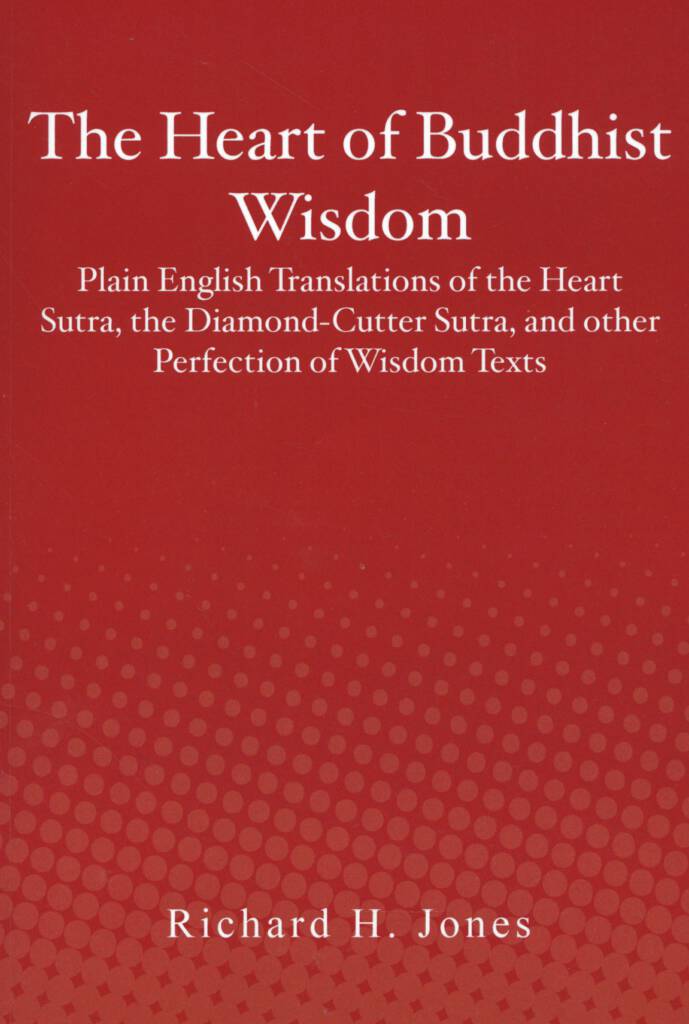
This book consists of revised selections from the 1975 edition of Edward Conze's The Large Sutra on Perfect Wisdom and his 1973 edition of The Perfection of Wisdom.