The Marvelous Companion: Life Stories of the Buddha

From Bodhicitta
< BooksBooks/The Marvelous Companion: Life Stories of the Buddha

🤓 Admin Zone 🛠️ hidden to non-admins
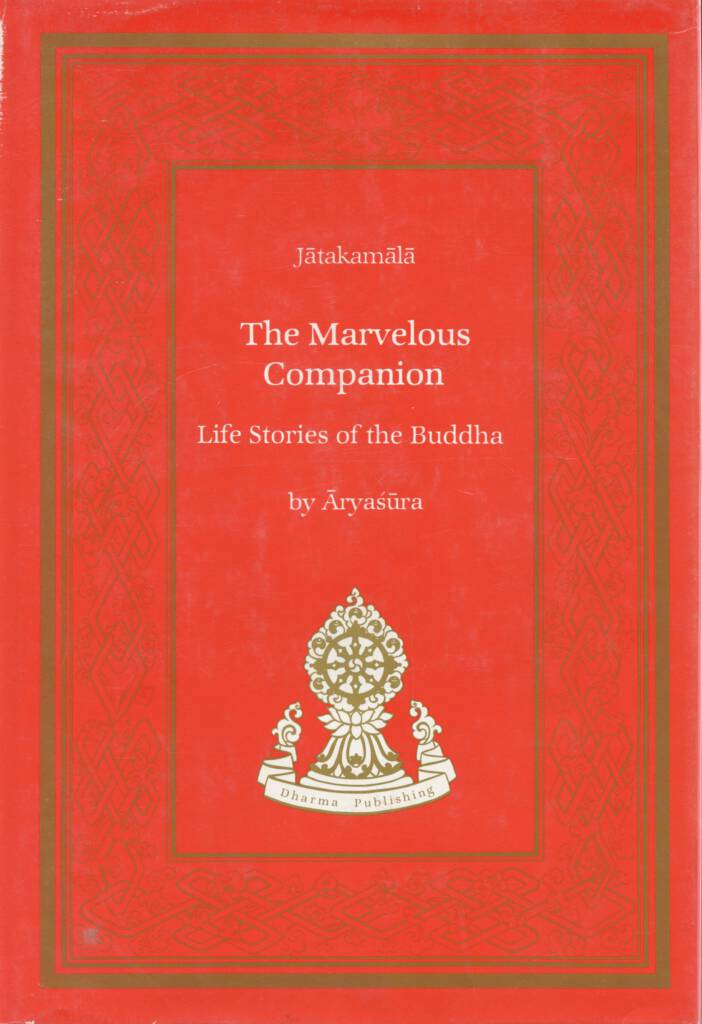
The Marvelous Companion: Life Stories of the Buddha. Jātakamālā
Book


Please note that many items in our library are simply pages that represent a detailed library catalog entry and citation of someone else's work, presentation, or performance. Read our General Disclaimer for more information.
The Marvelous Companion Life Stories of the Buddha-front.jpg

Description

The Marvelous Companion: Aryashura's Jatakamala is a retelling of thirty-four Jatakas, accounts of the Buddha's previous lives, by the great first century Indian master and poet. This book is essentially a rewording into modern English of an earlier translation by Joseph Speyer, undertaken to make it more accessible to Dharma students.

This particular collection of Jatakas, retold by a renowned Buddhist master and poet, enriches understanding of karma and conveys attitudes and actions that develop perfect compassion. The Jatakas can serve as occasions to reflect upon the moral choices in our lives and open our eyes to the reality of karma, helping us develop the insight and discipline we need to acknowledge and change destructive patterns of behavior. This work is dedicated to Western Dharma students with the wish that the teachings it conveys will illuminate their understanding of karma, the indomitable strength of virtue, and the enlightening power of Bodhisattva compassion.

With 34 line drawings by Rosalyn White, working to the directions of Tarthang Tulku. A glossary of Sanskrit terms round out the presentation. Its language is highly accessible and relatable. (Source: Dharma Publishing)

Citation
Āryaśūra. The Marvelous Companion: Life Stories of the Buddha. Jātakamālā. Tibetan Translation Series. Berkeley CA: Dharma Publishing, 1983.
Table of contents
  • Publisher's Prefacexiii
  • Publisher's Introductionxv
  • Jātaka 1: The Tigress2
  • Jātaka 2: King of the Shibis10
  • Jātaka 3: A Small Portion of Gruel20
  • Jātaka 4: The Merchant28
  • Jātaka 5: The Invincible One34
  • Jātaka 6: The Hare42
  • Jātaka 7: Ajastya the Ascetic52
  • Jātaka 8: The Strength of Love62
  • Jātaka 9: Vishvantara76
  • Jātaka 10: The Sacrifice96
  • Jātaka 11: Shakra106
  • Jātaka 12: The Brahman112
  • Jātaka 13: She Who Drives Men Mad118
  • Jātaka 14: Suparaga128
  • Jātaka 15: The Fish138
  • Jātaka 16: The Baby Quail144
  • Jātaka 17: The Jar148
  • Jātaka 18: The Wealthy Prince156
  • Jātaka 19: The Lotus Roots162
  • Jātaka 20: The Treasurer174
  • Jātaka 21: The Story of Kuddhabodhi184
  • Jātaka 22: The Noble Geese194
  • Jātaka 23: The Wise One212
  • Jātaka 24: The Great Ape230
  • Jātaka 25: The Fabulous Sharabha Deer240
  • Jātaka 26: The Ruru Deer248
  • Jātaka 27: The Monkey King260
  • Jātaka 28: The Teacher of Restraint270
  • Jātaka 29: A Visitor from Brahmaloka286
  • Jātaka 30: The Elephant298
  • Jātaka 31: Sutasoma308
  • Jātaka 32: Prince of the Iron House330
  • Jātaka 33: The Buffalo342
  • Jātaka 34: The Woodpecker348
  • Glossary355
Interconnections
1 Full translation of
Sutra portrait.jpg
Classical WorksAbout this item
Jātakamālā. (T. Skyes pa'i rabs kyi rgyud; C. Pusa benshengman lun; J. Bosatsu honjōmanron; K. Posal ponsaengman non 菩薩本生鬘論). In Sanskrit, "Garland of Birth Stories," by the poet Śūra [alt. Āryaśūra; c. second-century CE], a collection of thirty-four jātaka tales related in an elegant and elliptical literary style. Each story includes Śūra's introduction relating the specific point of morality illustrated in the story. This narrative is in mixed prose and verse (a style that comes to be termed campū), with a variety of different meters employed. The beauty of Śūra's literary renderings was so renowned that the Jātakamālā often came to be even more widely read than the Jātaka collections themselves. In Tibet it is a custom for a senior monk to give an explanation of one of the tales from the Jātakamālā on the opening day of the Smon lam chen mo (Great Prayer Festival). The story surrounding the Chinese "translation" of the Jātakamālā, the Pusa benshengman lun ("Treatise on the Bodhisattva's Garland of Birth Stories"), may be one of the strangest tales in the annals of the translation of Buddhist texts. As modern scholarship has shown, the Chinese "translators" had so much difficulty in construing Śūra's elaborate style that they managed to produce an "apocryphal" scripture while having the Sanskrit text right in front of them. Working without dictionary or grammar, or the luxury of an Indian paṇḍita to help them construe the text, and apparently faced with an impossible deadline, the translators simply resorted to forgery: where they found a few random words of Śūra's that they could construe, they lifted wholesale from other texts stories that happened to contain the same words. Except for the titles of some of the stories, there is almost nothing in the Chinese translation that corresponds to Śūra's Sanskrit. (Source: "Jātakamālā." In The Princeton Dictionary of Buddhism, 381–82. Princeton University Press, 2014. http://www.jstor.org/stable/j.ctt46n41q.27.)