| 🤓 Admin Zone 🛠️ hidden to non-admins | |
The Heroic Heart: Awakening Unbound Compassion
Book
Please note that many items in our library are simply pages that represent a detailed library catalog entry and citation of someone else's work, presentation, or performance. Read our General Disclaimer for more information. You can find more information about this item on the publisher website.

Description
This is a modern commentary on The Thirty-Seven Verses on the Practice of a Bodhisattva.
Each chapter of this book opens with a verse from The Thirty-Seven Verses on the Practice of a Bodhisattva. The text relied upon here was translated from the Tibetan by the Padmakara Translation Group and previously published in The Heart of Compassion by Dilgo Khyentse Rinpoche. It is followed with commentary by Jetsunma Tenzin Palmo. (Source: Book Introduction)
Citation
Palmo, Jetsunma Tenzin. The Heroic Heart: Awakening Unbound Compassion. Boulder: Shambhala Publications, 2022.
Publisher Link
Table of contents
- Acknowledgments ix
- Introduction 1
- 1. Making Life Meaningful 11
- 2. Abandon Attachment and Aversion 19
- 3. Benefiting from Solitude 26
- 4. Remembering Impermanence 31
- 5. Valuing Good Friends 34
- 6. Relying on Spiritual Teachers 37
- 7. Going for Refuge 44
- 8. Valuing Virtue 52
- 9. Recognizing the Truth of Things 58
- 10. Valuing Others 62
- 11. Practicing Kindness and Compassion 70
- 12. Embracing Adversity 78
- 13. Bringing Suffering onto the Path 85
- 14. Not Retaliating When We Are Harmed 88
- 15. Respecting Even Our Enemies 94
- 16. Showing Kindness When We Are Wronged 97
- 17. Respecting Those Who Disrespect Us 102
- 18. Being Compassionate When Things Are Difficult 110
- 19. Recognizing What Is Truly Valuable 113
- 20. Giving Peace a Chance 118
- 21. Dropping Greed 127
- 22. Embracing the Nondual 133
- 23. Recognizing the Illusion 148
- 24. Letting Go of the Illusion 156
- 25. Practicing Generosity 167
- 26. Practicing Discipline 171
- 27. Practicing Patience 175
- 28. Practicing Diligence 177
- 29. Practicing Concentration 182
- 30. Practicing Wisdom 186
- 31. Examining Oneself 189
- 32. Abandoning Criticizing Others 192
- 33. Not Profiting from the Dharma 194
- 34. Giving Up Harsh Speech 197
- 35. Cutting Negative Emotions 199
- 36. Being Mindful 202
- 37. Dedicating on Behalf of Others 208
- Notes 213
- Suggested Further Reading 217
- About the Author 219
Interconnections
1 Modern commentary of

Gyalse Tokme Zangpo's (1295–1369) highly influential work on Mind Training (blo sbyong) that outlines the training of a bodhisattva in a series of thirty-seven verses is still very popular today with Buddhist practitioners around the world. The colophon states: "This was composed at the Jewel Cave of Ngulchu by the monk Tokme [Zangpo], expounder of scripture and reasoning, for the benefit of myself and others." Since he gathered together all the paths of the bodhisattvas and composed them in the form of thirty-seven verses, the title is clearly fitting.
1 Related

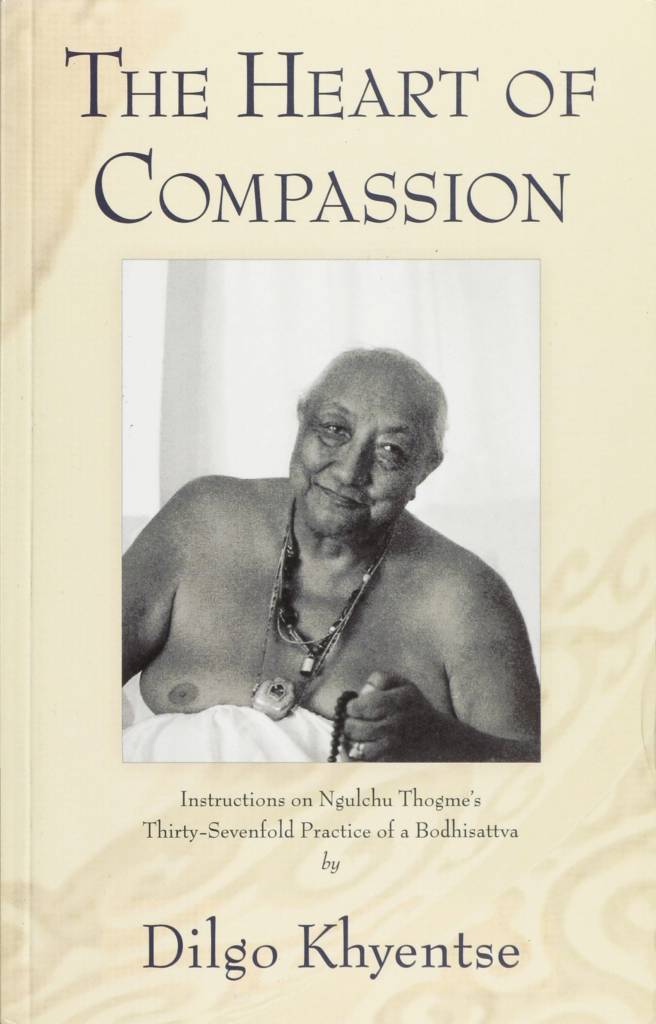
What would be the practical implications of caring more about others than about yourself? This is the radical theme of this extraordinary set of instructions, a training manual composed in the fourteenth century by the Buddhist hermit Ngulchu Thogme, here explained in detail by one of the great Tibetan Buddhist masters of the twentieth century, Dilgo Khyentse. In the Mahayana tradition, those who have the courage to undertake the profound change of attitude required to develop true compassion are called bodhisattvas. Their great resolve—to consider others’ needs as paramount, and thus to attain enlightenment for the sake of all living creatures—carries them beyond the limits imposed by the illusions of “I” and “mine,” culminating in the direct realization of reality, transcending dualistic notions of self and other. This classic text presents ways that we can work with our own hearts and minds, starting wherever we find ourselves now, to unravel our small-minded preoccupations and discover our own potential for compassion, love, and wisdom. Many generations of Buddhist practitioners have been inspired by these teachings, and the great masters of all traditions have written numerous commentaries. Dilgo Khyentse’s commentary is probably his most extensive recorded teaching on Mahayana practice. (Source: Shambhala Publications)