| 🤓 Admin Zone 🛠️ hidden to non-admins | |
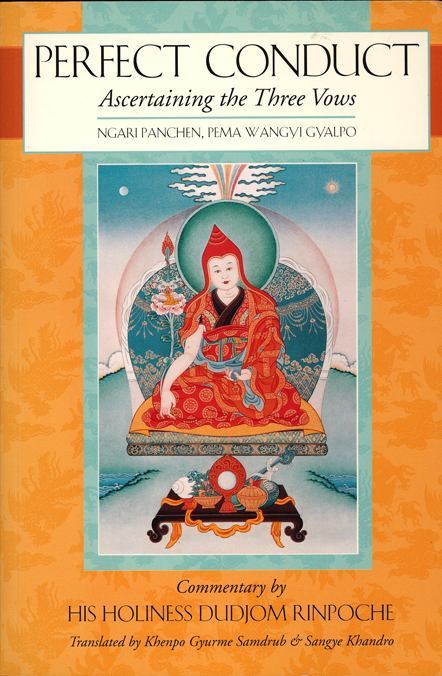
Perfect Conduct: Ascertaining the Three Vows
Book
Please note that many items in our library are simply pages that represent a detailed library catalog entry and citation of someone else's work, presentation, or performance. Read our General Disclaimer for more information. You can find more information about this item on the publisher website.

Description
All religions teach codes of ethical behavior. So too does Buddhism. This books is a translation of an indispensable exposition of the three sets of vows that are central to Tibetan Buddhist codes of discipline—the pratimoksa vows of individual liberation; the vows of the bodhisattva, who selflessly strives for the liberation of all beings; the vows of the esoteric path of tantra.
Here, the late Dudjom Rinpoche provides his authoritative commentary on the role of ethics and morality in Buddhist practice, outlining in detail the meaning and scope of the vows, and giving practical advice on maintaining the vows as supportive tools in the journey toward enlightenment.(Source: Wisdom Publications)
Citation
Wangyal, Ngari Panchen Pema, and Dudjom Rinpoche. Perfect Conduct: Ascertaining the Three Vows. Translated by Khenpo Gyurme Samdrub and Sangye Khandro. Boston: Wisdom Publications, 1996.
Publisher Link
Table of contents
- Prefacevii
- Introductionxv
- Translators Notexix
- The Commentary, Including The Root Text1
- First: The Initial Virtue3
- Second: The Intermediate Virtue7
- Chapter One: A Brief Explanation of the Stages of the Main Teaching7
- Chapter Two: An Explanation of the Prātimokṣa-vinaya14
- Chapter Three: The Bodhisattva Vows63
- Chapter Four: Secret Mantra100
- Chapter Five: An Explanation of How to Practice the Three Vows Together without Conflict141
- Third: The Concluding Virtue149
- Commentators Note153
- Translation Of The Root Text, Ascertaining The Three Vows155
- Outline Of The Commentary175
- Notes191
Interconnections
1 Full translation of

Ngari Paṇchen's widely influential work on the three vows from the Nyingma perspective.