Das Mahāparinirvāṇasūtra - Vol. 1 (Waldschmidt 1950)

From Bodhicitta
Books/Das Mahāparinirvāṇasūtra - Vol. 1 (Waldschmidt 1950)

🤓 Admin Zone 🛠️ hidden to non-admins
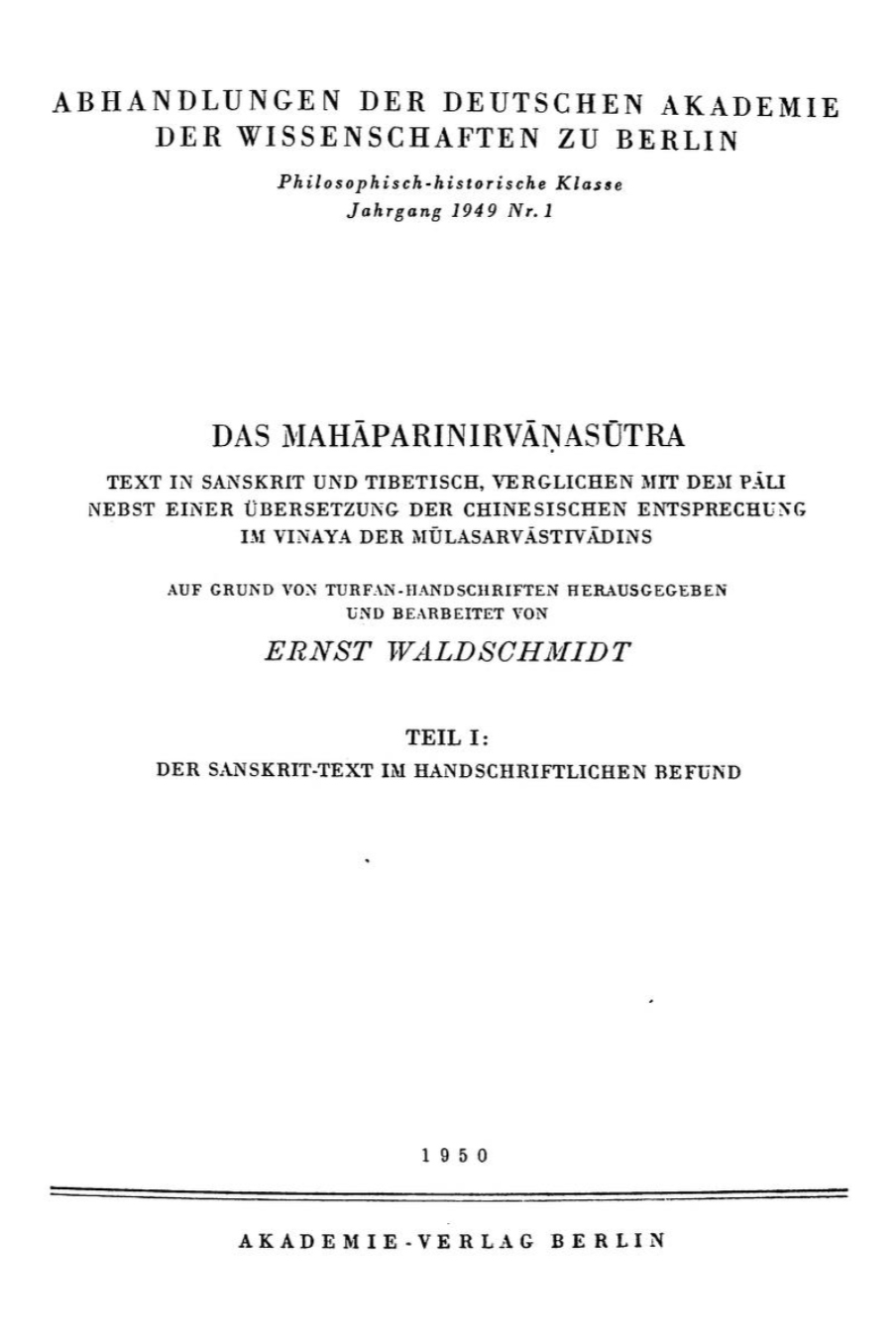
Das Mahāparinirvānasūtra: Text in Sanskrit und Tibetisch, verglichen mit dem Pāli nebst einer Übersetzung der chinesischen Entsprechung im Vinaya der Mūlasarvāstivādins. Auf Grund von Turfan-Handschriften Herausgegeben. Teil 1, Der Sanskrit-Text im handschriftlichen Befund
Book


Please note that many items in our library are simply pages that represent a detailed library catalog entry and citation of someone else's work, presentation, or performance. Read our General Disclaimer for more information.

Description

The Mahāparinirvāṇasūtra text in Sanskrit and Tibetan compared with the Pāli, together with a translation of the Chinese equivalent in the Vinaya of the Mūlasarvāstivādins. Part 1: The Sanskrit text in the manuscript record.
Citation
Waldschmidt, Ernst, ed. and trans. Das Mahāparinirvānasūtra: Text in Sanskrit und Tibetisch, verglichen mit dem Pāli nebst einer Übersetzung der chinesischen Entsprechung im Vinaya der Mūlasarvāstivādins. Auf Grund von Turfan-Handschriften Herausgegeben. Teil 1, Der Sanskrit-Text im handschriftlichen Befund. Abhandlungen der Deutschen Akademie der Wissenschaften zu Berlin, Philosophisch-Historische Klasse 1949, 1. Berlin: Akademie Verlag, 1950.on
Interconnections
1 Recension of
Classical WorksAbout this item
There are three translations in the Tibetan canon under this name:
  1. Mahāparinirvāṇasūtra (RKTSK 119)
  2. Mahāparinirvāṇasūtra (RKTSK 120)
  3. Mahāparinirvāṇasūtra (RKTSK 121)


The Mahāparinirvāṇasūtra is one of the main scriptural sources for buddha-nature in China and Tibet. Set around the time of Buddha's passing or Mahāparinirvāṇa, the sūtra contains teachings on buddha-nature equating it with the dharmakāya—that is, the complete enlightenment of a buddha. It also asserts that all sentient beings possess this nature as the buddhadhātu, or buddha-element, which thus acts as a cause, seed, or potential for all beings to attain enlightenment. Furthermore, the sūtra includes some salient features related to this concept, such as the single vehicle and the notion that the dharmakāya is endowed with the four pāramitās of permanence, bliss, purity, and a self.

It may be noted that there are three different texts with similar titles in the Chinese and Tibetan canons. Of the three Tibetan texts with Mahāparinirvāṇa in their title, a short one (Derge Kangyur, No. 121) called Āryamahāparinirvāṇasūtra contains prophecies of events in the centuries after the Buddha's Mahāparinirvāṇa but has nothing on buddha-nature. Thus, this is not the Mahāparinirvāṇāsūtra which is considered as a Tathāgatagarbhasūtra. The two which deal with buddha-nature are Mahāyānasūtras and contain detailed accounts of the final teachings of the Buddha. The first sūtra, the longer one covering two volumes of Derge Kangyur (mdo sde Nya and Ta) is a translation from Chinese, while the second one is a translation from Sanskrit. They appear to be two different recensions of the same original sūtra as they have similar titles and overlapping content. However, the one translated from Chinese is much longer and also contains information on the events after the Buddha entered Mahāparinirvāṇa.
1 Partial translation of
Classical WorksAbout this item
There are three translations in the Tibetan canon under this name:
  1. Mahāparinirvāṇasūtra (RKTSK 119)
  2. Mahāparinirvāṇasūtra (RKTSK 120)
  3. Mahāparinirvāṇasūtra (RKTSK 121)


The Mahāparinirvāṇasūtra is one of the main scriptural sources for buddha-nature in China and Tibet. Set around the time of Buddha's passing or Mahāparinirvāṇa, the sūtra contains teachings on buddha-nature equating it with the dharmakāya—that is, the complete enlightenment of a buddha. It also asserts that all sentient beings possess this nature as the buddhadhātu, or buddha-element, which thus acts as a cause, seed, or potential for all beings to attain enlightenment. Furthermore, the sūtra includes some salient features related to this concept, such as the single vehicle and the notion that the dharmakāya is endowed with the four pāramitās of permanence, bliss, purity, and a self.

It may be noted that there are three different texts with similar titles in the Chinese and Tibetan canons. Of the three Tibetan texts with Mahāparinirvāṇa in their title, a short one (Derge Kangyur, No. 121) called Āryamahāparinirvāṇasūtra contains prophecies of events in the centuries after the Buddha's Mahāparinirvāṇa but has nothing on buddha-nature. Thus, this is not the Mahāparinirvāṇāsūtra which is considered as a Tathāgatagarbhasūtra. The two which deal with buddha-nature are Mahāyānasūtras and contain detailed accounts of the final teachings of the Buddha. The first sūtra, the longer one covering two volumes of Derge Kangyur (mdo sde Nya and Ta) is a translation from Chinese, while the second one is a translation from Sanskrit. They appear to be two different recensions of the same original sūtra as they have similar titles and overlapping content. However, the one translated from Chinese is much longer and also contains information on the events after the Buddha entered Mahāparinirvāṇa.
2 Other volumes
Books1951About this item
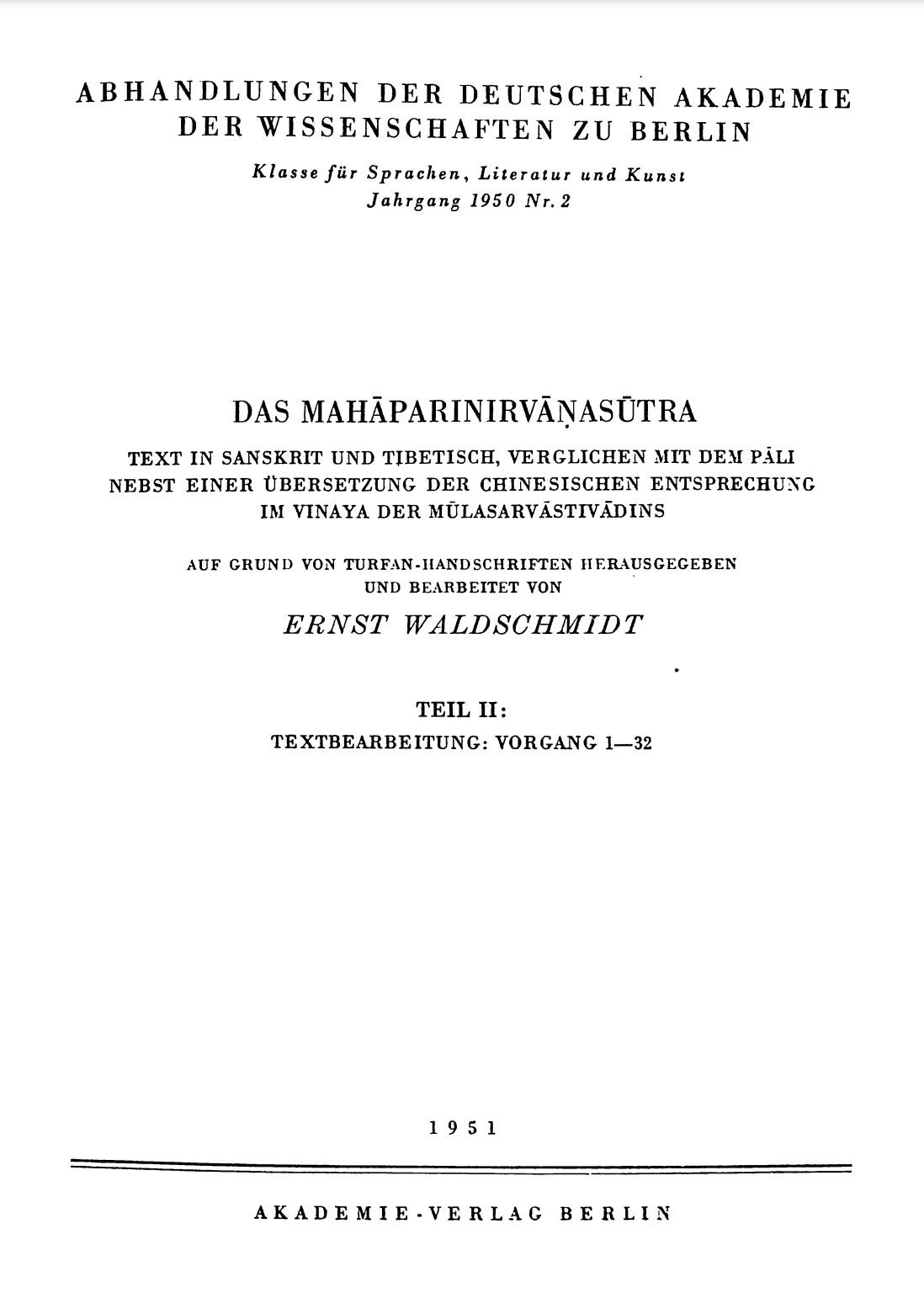
The Mahāparinirvāṇasūtra. Text in Sanskrit and Tibetan, Compared with the Pāli along with a translation of the Chinese equivalent in the vinaya of the Mūlasarvāstivādins. Edited on the basis of Turfan handwritings and edited by Ernst Waldschmidt. Part 2: Text edit: Procedure 1–32.