Candrakīrti’s Madhyamakāvatārabhāṣya: Chapters 1 to 5
From Bodhicitta
< Books
Books/Candrakīrti’s Madhyamakāvatārabhāṣya: Chapters 1 to 5| 🤓 Admin Zone 🛠️ hidden to non-admins | |
Candrakīrti's Madhyamakāvatārabhāṣya: Chapters 1 to 5
Book
Please note that many items in our library are simply pages that represent a detailed library catalog entry and citation of someone else's work, presentation, or performance. Read our General Disclaimer for more information. You can find more information about this item on the publisher website.

Description
This book contains a strictly scholarly edition of the first five chapters of a Sanskrit work that presents the stages on the path to enlightenment according to the "Great Vehicle" of Buddhism. The author of this work, Candrakīrti (c. 570–650), is one of the most important proponents of the Madhyamaka, the "Middle Way." A central theme of this school is the emptiness, or insubstantiality, of all things and living beings. Bodhisattvas devote themselves to developing the highest insight that comprehends this emptiness, as well as to perfecting a series of ethical and character virtues, such as generosity, right conduct, and patience, in order to attain perfect buddhahood. Unlike the followers of the "Lesser Vehicle," bodhisattvas, out of their great compassion, vow to postpone entry into nirvana until they have attained buddhahood. Only the attainment of buddhahood endows them with the extensive abilities that enable them to provide comprehensive assistance to living beings. This edition, presented here for the first time, is based on the only surviving manuscript, which has only recently become accessible and has been preserved in Tibet for centuries. Edited in the original language, the text not only provides a better understanding of Candrakīrti's philosophical views and his interpretations of issues relevant to salvation, but also a more accurate assessment of his contribution to an important phase of Indian Buddhism.
Funded by: Austrian Science Fund (FWF) - Independent Publications (Source Accessed Oct 9, 2025)
Citation
Lasic, Horst, Xuezhu Li, and Anne MacDonald, eds. Candrakīrti's Madhyamakāvatārabhāṣya: Chapters 1 to 5. Sanskrit Texts from the Tibetan Autonomous Region 22. Beijing: China Tibetology Publishing House and the Austrian Academy of Sciences Press, 2022.
Publisher Link
Table of contents
- Acknowledgmentsix
- Introductionxi
- On the manuscriptxi
- akṣara examplesxxii
- Principles, editorial signs, abbreviationsxxix
- 1. Principles of the critical editionxxix
- 2. Principles of the diplomatic editionxxxi
- 3. Editorial signsxxxi
- 4. Abbreviationsxxxiii
- On the manuscriptxi
- Critical edition1
- Diplomatic edition71
- Bibliography114
- Index locorum124
Interconnections
1 Recension of

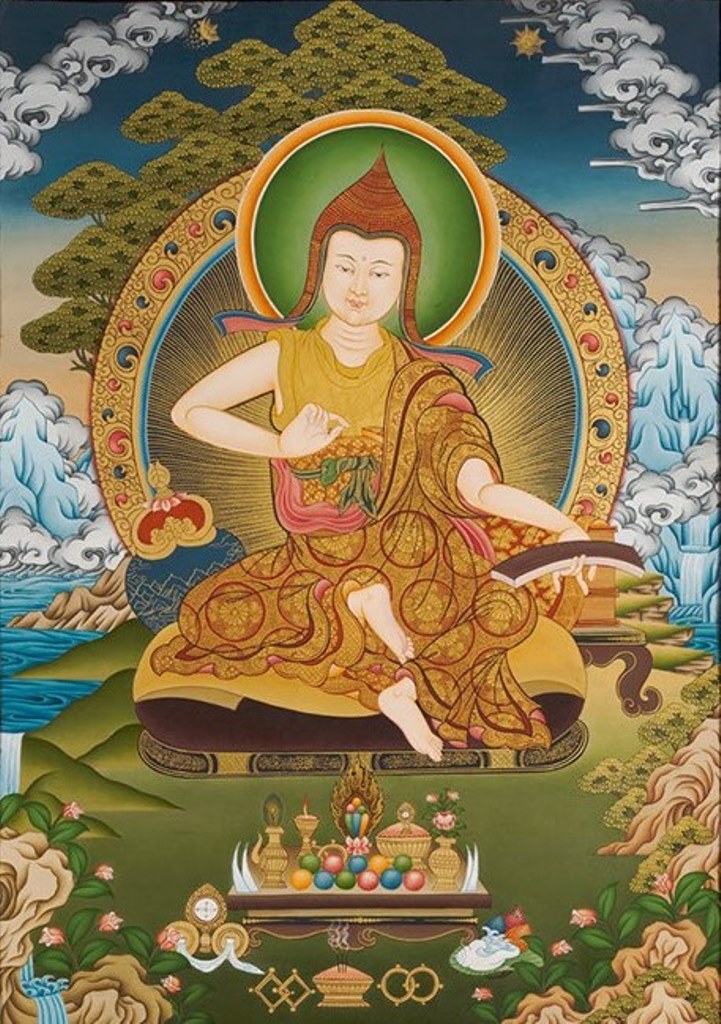
Candrakīrti's Madhyamakāvatārabhāṣya (Commentary on the Entrance to the Middle Way) is an auto-commentary on his root text, the Madhyamakāvatāra, composed in seventh-century India. As one of the most important texts in Indo-Tibetan Buddhist philosophy, it presents Candrakīrti's systematic exposition of Nāgārjuna's Madhyamaka philosophy. The text is organized around the ten bodhisattva stages, though the sixth chapter—on the perfection of wisdom—is by far the most extensive and philosophically significant, containing detailed analyses of emptiness, the two truths (conventional and ultimate), and extensive polemics against competing Buddhist schools, particularly the Yogācāra and Bhāvaviveka's Madhyamaka interpretation.
Candrakīrti is known for his distinctive prasaṅga approach, using reductio ad absurdum arguments to refute opponents without establishing positive theses, and for rejecting autonomous syllogisms in favor of purely dialectical reasoning. While his interpretation was initially less influential in India than Bhāvaviveka's, it became dominant in Tibet after translation, where the Madhyamakāvatārabhāṣya became a foundational text for the Geluk school and other traditions. It remains central to Tibetan monastic curricula today, serving as the definitive commentary on Madhyamaka emptiness philosophy.