Buddhist Mahâyâna Texts (Cowell 1894)
| 🤓 Admin Zone 🛠️ hidden to non-admins | |

Description
Part. I, (1-207) The Buddha-karita of Asvaghosha, translated from the Sanskrit by E.B. Cowell.
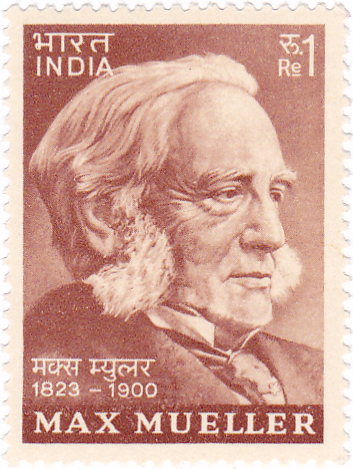
Part. II, (1-203) The larger Sukhâvatî-vyûha, the smaller Sukhâvatî-vyûha, the Vagrakkhedikâ, the larger Pragñâ-pâra-mitâ-hridaya-sûtra, the smaller Pragñâ-pâramitâ-hridaya-sûtra, translated by F. Max Müller. The Amitâyur-dhyâna-sûtra, translated by J. Takakusu.
The texts of Part. II are translated from the Sanskrit, except the Amitâyur-dhyâna-sûtra, which is from a Chinese translation. (Source Accessed Aug 16, 2021)


-front.jpg)

In order to make this collection of Mahâyâna works more complete and useful to students in Japan I have added a translation of the Vajrakkhedikâ, which is much studied in Japan, and the Sanskrit text of which was published by me in an editio princeps—in the Anecdota Oxoniensia, 1881.
The Vajrakkhedikâ, or the Diamond-cutter, is one of the most widely read and most highly valued metaphysical treatises in Buddhist literature. In Japan the Vajrakkhedikâ and the Pragñâpâramitâhṛdaya are read chiefly by the followers of the Shin-gon sect, founded by Kô-Bô, the great disciple of the famous Hiouen-thsang, in 816 A. D. The temples of this sect in Japan amount to 12,943. Written originally in Sanskrit, it has been translated into Chinese, Tibetan, Mongol, and Mandshu. Its full title is Vajrakkhedikâ Pragñâ-pâramitâ, i.e. the Diamond-cutter, the perfection of wisdom, or, as it has sometimes been rendered, 'the Transcendent Wisdom.' Mr. Bunyiu Nanjio in his Catalogue of the Tripiṭaka, p. I, has shown that it forms the ninth section of the Mahapragñâ-pâramitâ-sûtra, and that it agrees with the Tibetan translation of the text in 300 ślokas.
An account of the Tibetan translation was given as far back as 1836 by Csoma Körösi in his Analysis of the Sherchiu, the second division of the Kanjur, published in the Asiatic Researches, vol. xx, p. 393 seq. Our text is there described as the Diamond-cutter or the Sutra of wonderful effects, in which Sâkya in a colloquial manner instructs Subhûti, one of his principal disciples, in the true meaning of the Pragñâ-pâramitâ. The Tibetans., we are told, pay great respect to this Sûtra, and copies of it are found in consequence in great abundance[1].
The first Chinese translation[2] is ascribed to Kumâragîva of the latter Tsin dynasty (A.D. 384-417). An English translation of this Chinese translation was published by the Rev. S. Beal in the Journal of the Royal Asiatic Society, 1864-5.
There are several more Chinese translations, one by Bodhiruki (A. D. 509), one by Paramârtha (A. D. 562), one by Hiouen-thsang (A. D. 648), one by I-tsing (A. D. 703), one by Dharmagupta of the Sui dynasty (A. D. 589-618).
The text and German translation of the Tibetan translation were published in 1837 by M. Schmidt in the Mémoires de I'Académie de St. Petersbourg, tom. iv, p. 186.
The Mongolian translation was presented by the Baron Schiling de Canstadt to the Library of the Institut de France.
The Mandshu translation is in the possession of M, de Harlez, who with the help of the Tibetan, Mandshu, and Chinese versions has published a valuable French translation of the Sanskrit text of the Vagrakkhedikâ in the Journal Asiatique, 1893. (Müller, introduction to the Vagrakkhedikâ, xii–xiii)
Notes
- See also L. Feer in Annales du Musée Guimet, vol. ii, p. 201.
- See preface to my edition of the Vagrakkhedikâ, Anecd. Oxon., 1881.