Samādhirāja (Mitra)

From Bodhicitta
< ArticlesArticles/Samādhirāja (Mitra)

🤓 Admin Zone 🛠️ hidden to non-admins
Samādhirāja
Chapter in a Book


Please note that many items in our library are simply pages that represent a detailed library catalog entry and citation of someone else's work, presentation, or performance. Read our General Disclaimer for more information.

Description

No abstract given. Here are the first relevant paragraphs:

A work of the class called Vyákarana, or narrative, in which various forms of meditations are described at length, pre-eminence being given to a meditation or Samádhi called 'the king of Samádhis'. Its object is to show the process by which a votary of Buddha may rise to the highest eminence, each chapter showing a step in the gradual progress of the human mind in its moral condition, and reciting one or more stories on moral excellence in illustration of the different stages of that progress. The principal interlocutors are Buddha and Chandraprabha, and the scene is laid on the Gṛidhrakúṭa hill where Buddha expounded the principles of a religion which showers its blessings at all its stages, at the beginning, at the middle, and at the end. (Mitra, preliminary remarks, 207-8)

Citation
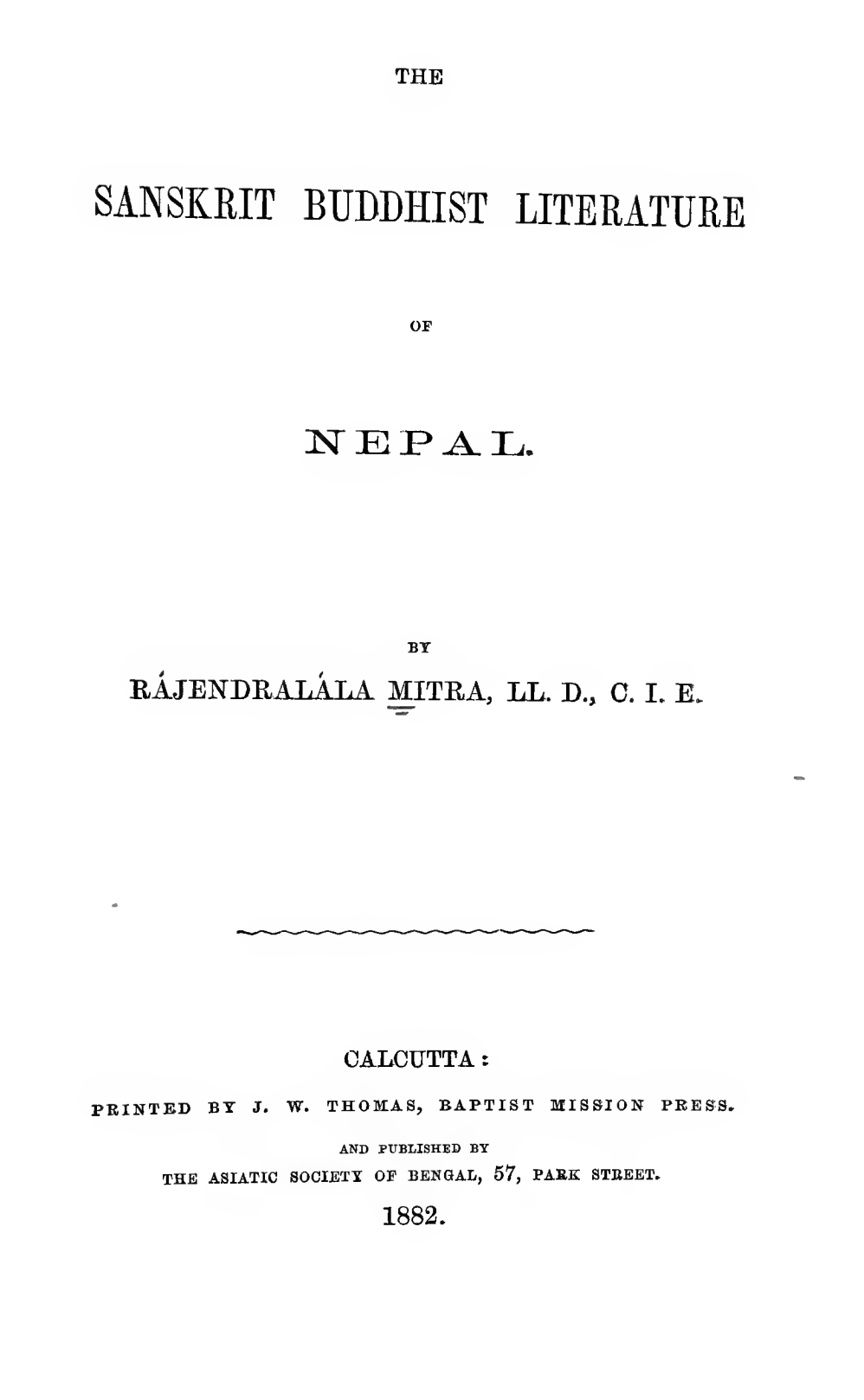
Mitra, Rajendralal. "Samādhirāja." In The Sanskrit Buddhist Literature of Nepal, 207–21. Calcutta: Asiatic Society of Bengal, 1882. https://archive.org/details/sanskritbuddhist00asiauoft/page/206/mode/2up.
Interconnections
1 Recension of
Sutra portrait.jpg
Classical WorksAbout this item
This sūtra, much quoted in later Buddhist writings for its profound statements especially on the nature of emptiness, relates a long teaching given by the Buddha mainly in response to questions put by a young layman, Candraprabha. The samādhi that is the subject of the sūtra, in spite of its name, primarily consists of various aspects of conduct, motivation, and the understanding of emptiness; it is also a way of referring to the sūtra itself. The teaching given in the sūtra is the instruction to be dedicated to the possession and promulgation of the samādhi, and to the necessary conduct of a bodhisattva, which is exemplified by a number of accounts from the Buddha's previous lives. Most of the teaching takes place on Vulture Peak Mountain, with an interlude recounting the Buddha's invitation and visit to Candraprabha's home in Rājagṛha, where he continues to teach Candraprabha before returning to Vulture Peak Mountain. In one subsequent chapter the Buddha responds to a request by Ānanda, and the text concludes with a commitment by Ānanda to maintain this teaching in the future. (Source: 84000)
1 Chapter or part of
The Sanskrit Buddhist Literature of Nepal (1882)-front.jpg
Books1882About this item
A catalogue of the manuscripts presented by Brian Houghton Hodgson to the Asiatic Society of Bengal, preceded by an account of the donor, with lists of his works.
1 Scholarship on
Sutra portrait.jpg
Classical WorksAbout this item
This sūtra, much quoted in later Buddhist writings for its profound statements especially on the nature of emptiness, relates a long teaching given by the Buddha mainly in response to questions put by a young layman, Candraprabha. The samādhi that is the subject of the sūtra, in spite of its name, primarily consists of various aspects of conduct, motivation, and the understanding of emptiness; it is also a way of referring to the sūtra itself. The teaching given in the sūtra is the instruction to be dedicated to the possession and promulgation of the samādhi, and to the necessary conduct of a bodhisattva, which is exemplified by a number of accounts from the Buddha's previous lives. Most of the teaching takes place on Vulture Peak Mountain, with an interlude recounting the Buddha's invitation and visit to Candraprabha's home in Rājagṛha, where he continues to teach Candraprabha before returning to Vulture Peak Mountain. In one subsequent chapter the Buddha responds to a request by Ānanda, and the text concludes with a commitment by Ānanda to maintain this teaching in the future. (Source: 84000)