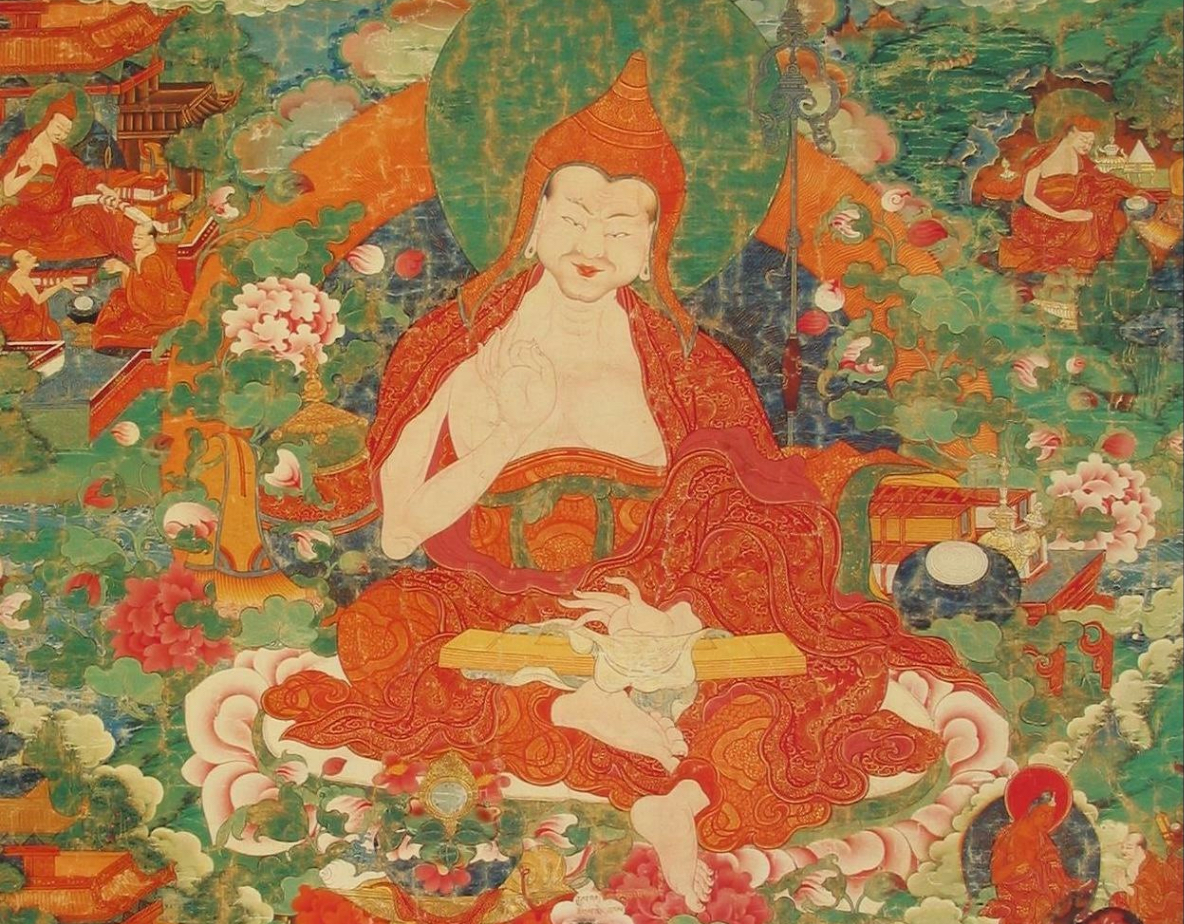
Bodhisattva-Bhūmi: A Text-Book of the Yogācāra School
From Bodhicitta
< Articles
Articles/Bodhisattva-Bhūmi: A Text-Book of the Yogācāra School| 🤓 Admin Zone 🛠️ hidden to non-admins | |
Bodhisattva-Bhūmi: A Text-Book of the Yogācāra School: An English Summary with Notes and Illustrative Extracts from Other Buddhist Works
Journal Article
Please note that many items in our library are simply pages that represent a detailed library catalog entry and citation of someone else's work, presentation, or performance. Read our General Disclaimer for more information.
Description
The 1906 work by Bendall and de la Vallée Poussin was groundbreaking Western scholarship that provided the first English summary of the Bodhisattvabhūmi, a foundational Yogācāra text attributed to Asaṅga that serves as Buddhism's most comprehensive manual on bodhisattva practice. Their article in Le Muséon made this crucial text—which covers bodhisattva ethics, vows, practices, and the progressive stages of spiritual development toward buddhahood—accessible to European academics for the first time, complete with notes and comparative extracts from other Buddhist works, thus introducing Western scholarship to one of the most important treatises on the bodhisattva path in Mahāyāna Buddhism.
Citation
Bendall, Cecil, and Louis de la Vallée Poussin. "Bodhisattva-Bhūmi: A Text-Book of the Yogācāra School: An English Summary with Notes and Illustrative Extracts from Other Buddhist Works." Le Muséon 7 (1906): 213–30.
Interconnections
1 Scholarship on

The Bodhisattvabhūmi (literally "The Stage of a Bodhisattva") stands as one of the most comprehensive and systematic expositions of the Mahāyāna Buddhist path from classical India. Formally the fifteenth section of the massive Yogācārabhūmi corpus, this foundational treatise provides an encyclopedic manual detailing the entire spiritual trajectory of a bodhisattva—from the initial arising of the "mind of awakening" (bodhicitta) to the ultimate attainment of perfect buddhahood.
Traditionally attributed to Ārya Asaṅga (c. fourth–fifth century CE) through revelation from the future buddha Maitreya, the text likely represents a compilation of earlier materials (c. 230–300 CE) that predates the fully developed Yogācāra philosophical system. Its existence in multiple Chinese translations from the early fifth century onward confirms its early date and widespread influence across Asian Buddhism.