| 🤓 Admin Zone 🛠️ hidden to non-admins | |
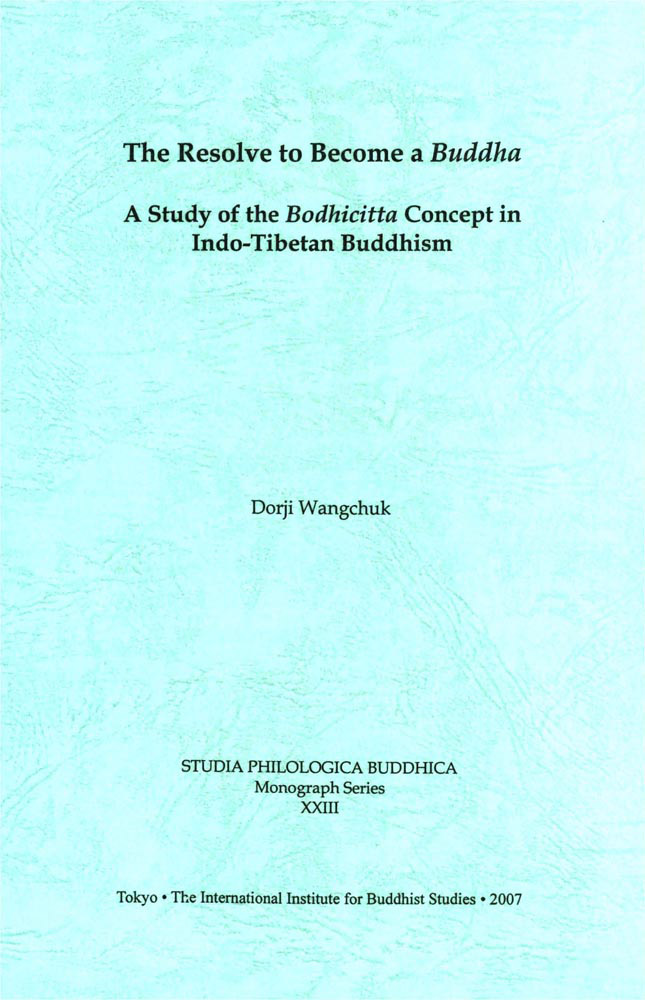
The Resolve to Become a Buddha: A Study of the Bodhicitta Concept in Indo-Tibetan Buddhism
Book
Please note that many items in our library are simply pages that represent a detailed library catalog entry and citation of someone else's work, presentation, or performance. Read our General Disclaimer for more information.

Description
Becoming a buddha ('Awakened One') under the Bodhi tree (Ficus religiosa) was undoubtedly the most significant event in the career of the historical Buddha, and may be considered the starting point of Buddhism. According to both Mahāyāna ('Greater Vehicle') and Hīnayāna ('Lesser Vehicle') or non-Mahāyāna, the historical Buddha had sometime in the distant past resolved to become a buddha, thereby launching out on the career of a bodhisattva, that is, a sentient being who strives to attain the highest state of awakening. A major distinction between non-Mahāyāna and Mahāyāna, however, is that for the former the status of being a bodhisattva or buddha is confined to the historical Buddha (or a few others like him), while the ultimate soteriological goal of a disciple is Arhatship (that is, the final state of a saint who has attained release from the cycle of birth and death) primarily for oneself. For the latter, by contrast, even an ordinary sentient being is capable of undertaking the long and arduous career of a bodhisattva by generating bodhicitta and finally becoming a buddha (just like the historical Buddha himself), primarily for the sake of many other sentient beings. In sum, a person who possesses or has generated bodhicitta is considered to be a bodhisattva, and the form of Buddhism concerned with the theory and practice of a bodhisattva is known as Mahāyāna. The idea of bodhicitta in the sense of the resolve to become a buddha is hence the bedrock of Mahāyāna, and is what distinguishes a bodhisattva from a śrāvaka, Mahāyāna from non-Mahāyāna. It is presupposed by all forms of Mahāyāna Buddhism including Vajrayāna ('Diamond Vehicle'), or tantric Mahāyāna.
Multiple internal and external factors must have contributed to the formation and further development of the concept of bodhicitta. The psychological need of the Buddhists to make up in one way or another for the demise of the historical Buddha may have been one of the principal internal factors that contributed to the formation of the idea of the resolve to become a buddha. Such an idea would not have lacked the doctrinal justification or legitimisation that it needed, for the non-Mahāyāna sources seem to abound in doctrinal elements that could easily be used to underpin the concept of bodhicitta. In its early phase of development, the idea of generating bodhicitta probably meant only the initial resolve to become a buddha, a momentous decision made by an aspirant seeking Buddhahood (buddhatva). This was seen as an indispensable but not necessarily a sufficient condition for the attainment of Buddhahood. However, gradually the idea came to encompass the entire theory and practice of a bodhisattva and to be considered not only a necessary but in fact a sufficient condition for such an attainment. In the course of time, even the true reality that a bodhisattva or buddha experiences as a spiritual event, the meditative insight or gnosis by means of which the true reality is experienced, and all conceivable resources or means—be they psycho-physiological, visual, verbal, or visional impulses that could be employed for becoming a buddha—came to be regarded as bodhicitta. It is this idea as found explicated in Indian and Tibetan Mahāyāna Buddhism that the present study seeks to examine. (Wangchuk, introductory remarks, 21–22)
Multiple internal and external factors must have contributed to the formation and further development of the concept of bodhicitta. The psychological need of the Buddhists to make up in one way or another for the demise of the historical Buddha may have been one of the principal internal factors that contributed to the formation of the idea of the resolve to become a buddha. Such an idea would not have lacked the doctrinal justification or legitimisation that it needed, for the non-Mahāyāna sources seem to abound in doctrinal elements that could easily be used to underpin the concept of bodhicitta. In its early phase of development, the idea of generating bodhicitta probably meant only the initial resolve to become a buddha, a momentous decision made by an aspirant seeking Buddhahood (buddhatva). This was seen as an indispensable but not necessarily a sufficient condition for the attainment of Buddhahood. However, gradually the idea came to encompass the entire theory and practice of a bodhisattva and to be considered not only a necessary but in fact a sufficient condition for such an attainment. In the course of time, even the true reality that a bodhisattva or buddha experiences as a spiritual event, the meditative insight or gnosis by means of which the true reality is experienced, and all conceivable resources or means—be they psycho-physiological, visual, verbal, or visional impulses that could be employed for becoming a buddha—came to be regarded as bodhicitta. It is this idea as found explicated in Indian and Tibetan Mahāyāna Buddhism that the present study seeks to examine. (Wangchuk, introductory remarks, 21–22)
Citation
Wangchuk, Dorji. The Resolve to Become a Buddha: A Study of the Bodhicitta Concept in Indo-Tibetan Buddhism. Studia Philologica Buddhica Monograph Series 23. Tokyo: International Institute for Buddhist Studies, 2007. https://dorjipenjore.files.wordpress.com/2014/08/the-resolve-to-become-a-buddha-a-study-of-the-bodhicitta-concept-in-indo-tibetan-buddhism.pdf.
Interconnections
1 Recension of
.jpg)
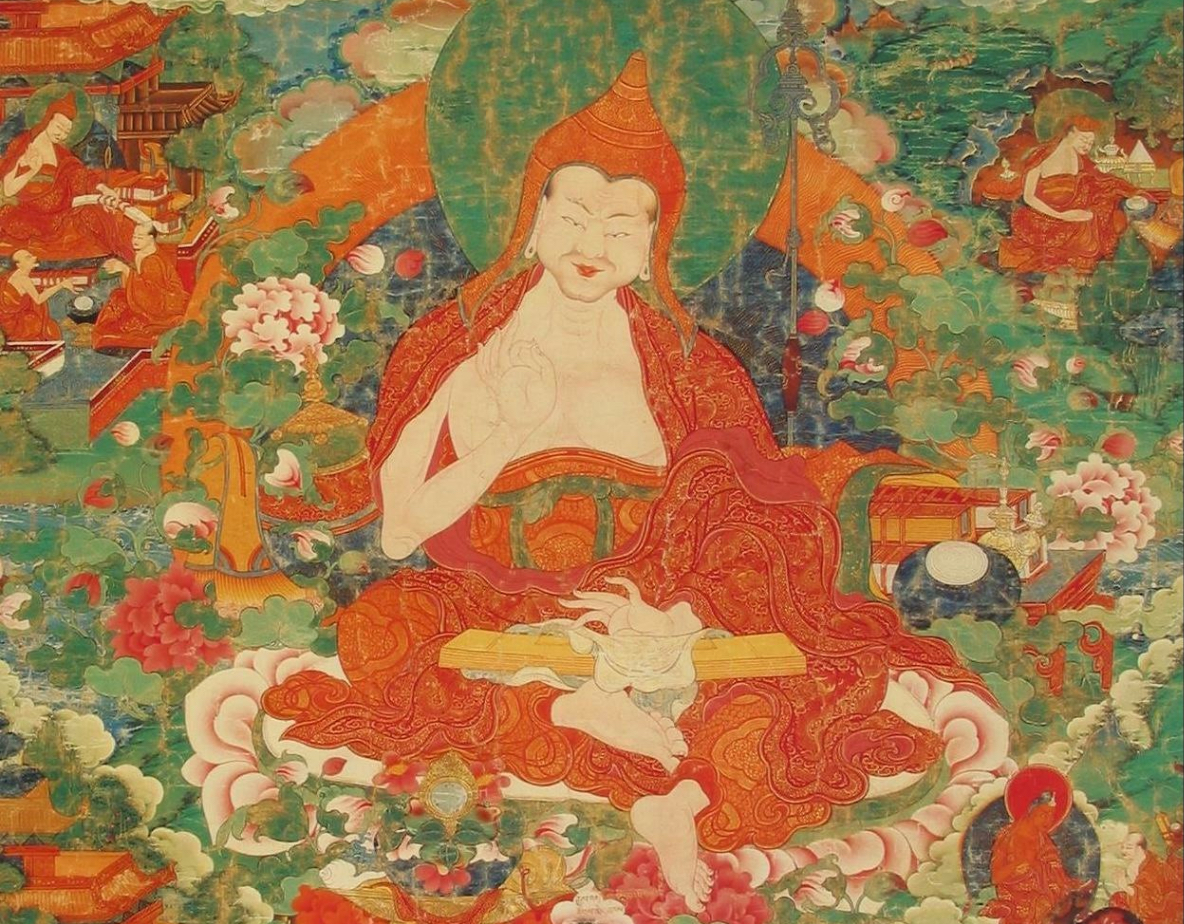
The Bodhisattvabhūmi (literally "The Stage of a Bodhisattva") stands as one of the most comprehensive and systematic expositions of the Mahāyāna Buddhist path from classical India. Formally the fifteenth section of the massive Yogācārabhūmi corpus, this foundational treatise provides an encyclopedic manual detailing the entire spiritual trajectory of a bodhisattva—from the initial arising of the "mind of awakening" (bodhicitta) to the ultimate attainment of perfect buddhahood.
Traditionally attributed to Ārya Asaṅga (c. fourth–fifth century CE) through revelation from the future buddha Maitreya, the text likely represents a compilation of earlier materials (c. 230–300 CE) that predates the fully developed Yogācāra philosophical system. Its existence in multiple Chinese translations from the early fifth century onward confirms its early date and widespread influence across Asian Buddhism.