Texts/Blo sbyong brgya rtsa/Full text: Difference between revisions
From Bodhicitta
< Texts | Blo sbyong brgya rtsaTexts/Blo sbyong brgya rtsa/Full text
No edit summary Tag: Reverted |
No edit summary Tag: Manual revert |
||
| Line 2: | Line 2: | ||
|FullTextSource=[[Theg pa chen po blo sbyong brgya rtsa (Tibetan Classics)]] | |FullTextSource=[[Theg pa chen po blo sbyong brgya rtsa (Tibetan Classics)]] | ||
|FullTextDate=2025-11-18 | |FullTextDate=2025-11-18 | ||
|PdfLink=Jinpa-2004-Theg-pa-chen-po-blo-sbyong-brgya-rtsa.pdf | |PdfLink=File:Jinpa-2004-Theg-pa-chen-po-blo-sbyong-brgya-rtsa.pdf | ||
}} | }} | ||
Latest revision as of 20:43, 18 November 2025
བློ་སྦྱོང་བརྒྱ་རྩ།
FULL TEXT
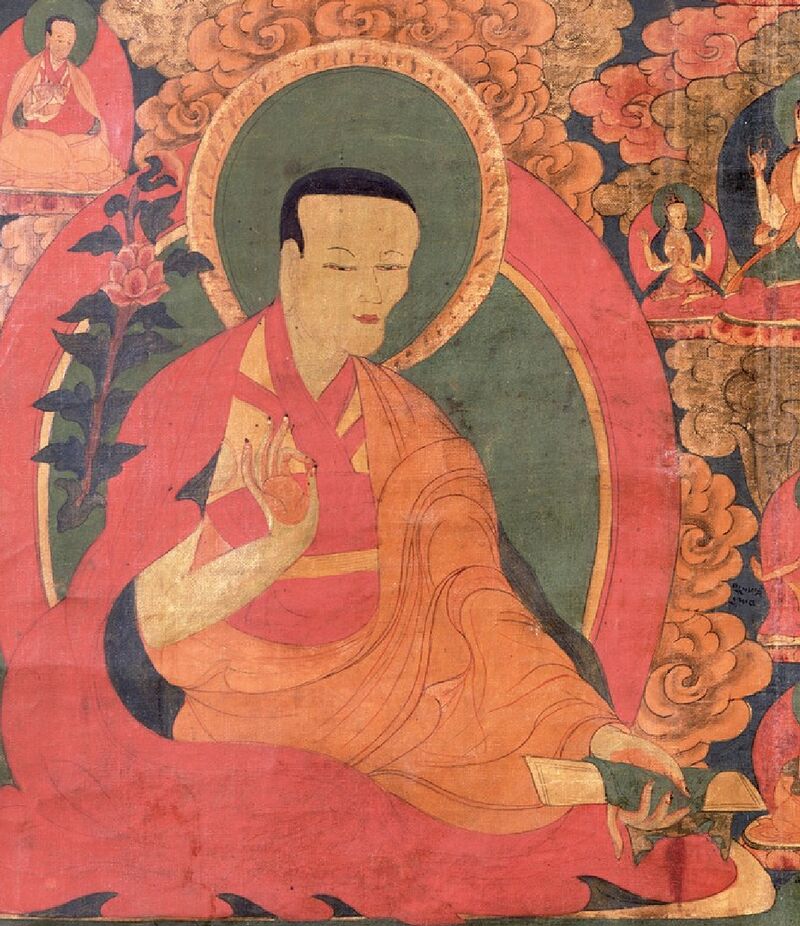
Description
Theg pa chen po blo sbyong rgya rtsa
Compiled by Shonu Gyalchok (ca. fourteenth-fifteenth centuries) and Konchok Gyaltsen (1388-1469)
Compiled in the fifteenth century, Mind Training: The Great Collection (Theg pa chen po blo sbyong rgya rtsa) represents the earliest anthology of a special genre of Tibetan spiritual literature known simply as "mind training" or lojong in Tibetan. Tibetans revere the mind training tradition for its pragmatic and down-to-earth advice, especially the teachings on "transforming adversities into favorable opportunities." This volume contains forty-three individual texts, including the most important works of the mind training cycle, such as Serlingpa's Leveling out All Conceptions, Atisa's Bodhisattva's Jewel Garland, Langri Thangpa's Eight Verses on Mind Training, and Chekawa's Seven-Point Mind Training, together with the earliest commentaries on these seminal texts as well as other independent works. These texts expound the systematic cultivation of such altruistic thoughts and emotions as compassion, love, forbearance, and perseverance. Central to this discipline are the diverse practices for combating our habitual self-centeredness and the afflictive emotions and way of being that arise from it. (Source: Mind Training: The Great Collection translated by Thupten Jinpa)| Reference | blo sbyong brgya rtsa [བློ་སྦྱོང་བརྒྱ་རྩ།]. |
|---|---|
| People | Zhönu Gyalchok, Müchen Sempa Chenpo Könchok Gyaltsen |
