Books/Relative Truth, Ultimate Truth (Tsering 2008): Difference between revisions
From Bodhicitta
< BooksBooks/Relative Truth, Ultimate Truth (Tsering 2008)
No edit summary |
No edit summary |
||
| Line 3: | Line 3: | ||
|FullRead=No | |FullRead=No | ||
|DisableRedirects=No | |DisableRedirects=No | ||
|TableOfContents=*{{i|Foreword by Lama Zopa Rinpoche | ix |}} | |||
*{{i|Preface | xi |}} | |||
*{{i|Editor's Preface | xv |}} | |||
*{{i| '''1. The Evolution of Buddhist Thought''' | 1 |}} | |||
*{{i| LOGIC AND EMOTION | 1 |}} | |||
**{{i| The Long View | 1 |}} | |||
**{{i| Harnessing Our Emotions | 3 |}} | |||
**{{i| Listening, Contemplating, and Meditating | 6 |}} | |||
*{{i|THE EVOLUTION OF BUDDHIST THOUGHT | 8 |}} | |||
**{{i| Buddhism in India | 9 |}} | |||
**{{i| The Four Schools | 12 |}} | |||
**{{i| Buddhism in Tibet | 14 |}} | |||
*{{i|'''2. The Base and the Path within the Four Schools''' | 17 |}} | |||
* {{i|THE TIBETAN SYSTEM OF STUDY | 17 |}} | |||
**{{i| The Base of the Path | 18 |}} | |||
**{{i| The Two Truths as the Base | 20 |}} | |||
**{{i| The Path | 21 |}} | |||
**{{i| The Results of the Path | 23 |}} | |||
*{{i| THE CORE CONCEPTS OF TIBETAN BUDDHISM | 23 |}} | |||
**{{i| Buddhist Tenets | 23 |}} | |||
**{{i| Impermanence | 26 |}} | |||
**{{i| Selflessness | 27 |}} | |||
*{{i|ARRIVING AT RIGHT VIEW | 31 |}} | |||
*{{i|'''3. The Vaibhashika School''' | 35 |}} | |||
*{{i| THE GREAT EXPOSITION | 35 |}} | |||
*{{i| DIVISIONS OF PHENOMENA | 36 |}} | |||
**{{i| Compounded and Uncompounded Phenomena | 37 |}} | |||
*{{i| THE VAIBHASHIKA VIEW OF THE TWO TRUTHS | 39 |}} | |||
**{{i| Conventional Truth and Imputed Existence | 42 |}} | |||
**{{i| Ultimate Truth and Substantial Existence | 45 |}} | |||
**{{i| Ultimate Truth, Selflessness, and Emptiness | 47 |}} | |||
**{{i| Partless Particles and Partless Moments of Consciousness | 48 |}} | |||
*{{i|'''4. The Sautrantika School''' | 53 |}} | |||
*{{i| THE SUTRA SCHOOL | 53 |}} | |||
* {{i|EXISTENT OBJECTS | 55 |}} | |||
**{{i| Things and Nothings | 55 |}} | |||
**{{i| Specifically Characterized and Generally Characterized Phenomena | 58 |}} | |||
**{{i| Real and Unreal Existent Objects | 60 |}} | |||
**{{i| The Relationship of Mind and Object | 64 |}} | |||
**{{i| The Reality of Material Objects | 65 |}} | |||
*{{i|ULTIMATE TRUTH AND CONVENTIONAL TRUTH | 69 |}} | |||
**{{i| Ultimate Truth in Sautrantika | 69 |}} | |||
**{{i| Conventional Truth in Sautrantika | 71 |}} | |||
*{{i|'''5. The Chittamatra School''' | 75 |}} | |||
*{{i|THE TEXTS USED IN CHITTAMATRA | 75 |}} | |||
*{{i|CHITTAMATRA'S BASE, PATH, AND RESULT | 76 |}} | |||
*{{i|THE THREE NATURES | 79 |}} | |||
**{{i| Dependent Nature | 80 |}} | |||
**{{i| Imputed Nature | 80 |}} | |||
**{{i| Perfect Nature | 82 |}} | |||
*{{i|THE MIND-BASIS-OF-ALL | 83 |}} | |||
**{{i| The Features of Mind-Basis-of-All | 85 |}} | |||
**{{i| The Properties of Mind-Basis-of-All | 88 |}} | |||
**{{i| Afflictive Mental Consciousness | 90 |}} | |||
*{{i|HOW AN OBJECT EXISTS ACCORDING TO CHITTAMATRA | 92 |}} | |||
*{{i|ULTIMATE TRUTH AND CONVENTIONAL TRUTH ACCORDING TO CHITTAMATRA | 94 |}} | |||
*{{i|'''6. The Madhyamaka School''' | 99 |}} | |||
*{{i|THE MAJOR TEXTS AND TEACHERS OF THE MADHYAMAKA SCHOOL | 99 |}} | |||
*{{i|THE TWO SUBSCHOOLS | 101 |}} | |||
*{{i|THE IMPORTANCE OF THE TWO TRUTHS FOR MADHYAMAKA | 102 |}} | |||
*{{i|CONVENTIONAL TRUTH IN MADHYAMAKA | 105 |}} | |||
**{{i| The Meaning of Samvriti Satya | 105 |}} | |||
**{{i| The Accuracy of Direct Valid Cognizers | 109 |}} | |||
**{{i| How Inferences Realize an Object | 111 |}} | |||
**{{i| The Existence of External Objects | 114 |}} | |||
**{{i| Real and Unreal Conventional Truths | 115 |}} | |||
*{{i|ULTIMATE TRUTH IN MADHYAMAKA | 116 |}} | |||
**{{i| Emptiness | 116 |}} | |||
**{{i| The Meaning of Paramarta Satya | 117 |}} | |||
**{{i| Ultimate Mind | 119 |}} | |||
**{{i| Ultimate Existence | 121 |}} | |||
**{{i| Ultimate Truth | 123 |}} | |||
*{{i|'''7. Illusion and Reality '''| 125 |}} | |||
*{{i|THE RELATIONSHIP BETWEEN THE TWO TRUTHS | 125 |}} | |||
**{{i| One Entity, Different Isolates | 128 |}} | |||
**{{i| The Faults If the Two Truths Were Different Entities | 129 |}} | |||
*{{i|HOW THINGS EXIST | 131 |}} | |||
**{{i| The Truth That Conceals | 131 |}} | |||
**{{i| How Things Exist Conventionally | 133 |}} | |||
**{{i| The Sequence of Realizing the Two Truths | 136 |}} | |||
**{{i| How Realized Beings Perceive Relative Truths | 139 |}} | |||
*{{i|ILLUSION AND REALITY | 141 |}} | |||
*{{i|WISDOM OR DOGMA? | 145 |}} | |||
*{{i|Glossary | 149 |}} | |||
*{{i|Bibliography | 157 |}} | |||
*{{i|Notes | 161 |}} | |||
*{{i|Index | 167 |}} | |||
*{{i|About the Authors | 177 |}} | |||
*{{i|The Foundation of Buddhist Thought | 179 |}} | |||
|CheckQuotes=No | |CheckQuotes=No | ||
|TermTopics=Two Truths | |TermTopics=Two Truths | ||
}} | }} | ||
Latest revision as of 19:19, 7 January 2026
| 🤓 Admin Zone 🛠️ hidden to non-admins | |
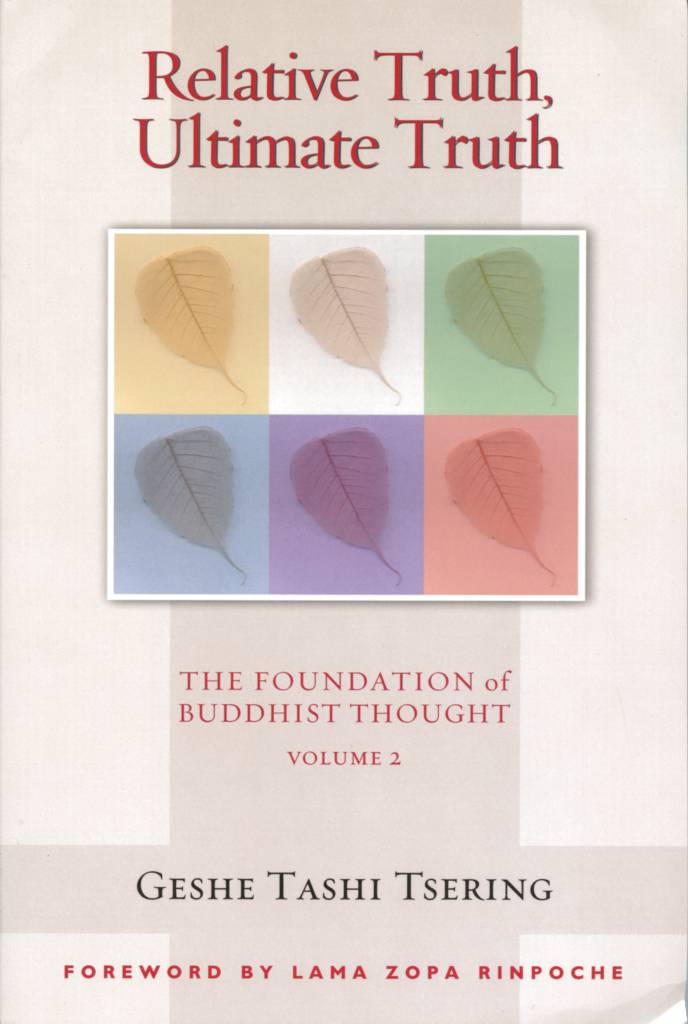
Relative Truth, Ultimate Truth
Book
Please note that many items in our library are simply pages that represent a detailed library catalog entry and citation of someone else's work, presentation, or performance. Read our General Disclaimer for more information. You can find more information about this item on the publisher website.

Description
Relative Truth, Ultimate Truth is a clear and remarkably practical presentation of a core Buddhist teaching on the nature of reality. Geshe Tashi Tsering provides readers with an excellent opportunity to enhance not only their knowledge of Buddhism, but also a powerful means to profoundly enhance their view of the world.
The Buddhist teaching of the "two truths" is the gateway to understanding the often-misunderstood philosophy of emptiness. This volume is an excellent source of support for anyone interested in cultivating a more holistic and transformative understanding of the world around them and ultimately of their own consciousness. (Source Accessed Jan 7, 2026)
Citation
Tsering, Geshe Tashi. Relative Truth, Ultimate Truth. The Foundation of Buddhist Thought 2. Somerville, MA: Wisdom Publications, 2008.
Publisher Link
Table of contents
- Foreword by Lama Zopa Rinpoche ix
- Preface xi
- Editor's Preface xv
- 1. The Evolution of Buddhist Thought 1
- LOGIC AND EMOTION 1
- The Long View 1
- Harnessing Our Emotions 3
- Listening, Contemplating, and Meditating 6
- THE EVOLUTION OF BUDDHIST THOUGHT 8
- Buddhism in India 9
- The Four Schools 12
- Buddhism in Tibet 14
- 2. The Base and the Path within the Four Schools 17
- THE TIBETAN SYSTEM OF STUDY 17
- The Base of the Path 18
- The Two Truths as the Base 20
- The Path 21
- The Results of the Path 23
- THE CORE CONCEPTS OF TIBETAN BUDDHISM 23
- Buddhist Tenets 23
- Impermanence 26
- Selflessness 27
- ARRIVING AT RIGHT VIEW 31
- 3. The Vaibhashika School 35
- THE GREAT EXPOSITION 35
- DIVISIONS OF PHENOMENA 36
- Compounded and Uncompounded Phenomena 37
- THE VAIBHASHIKA VIEW OF THE TWO TRUTHS 39
- Conventional Truth and Imputed Existence 42
- Ultimate Truth and Substantial Existence 45
- Ultimate Truth, Selflessness, and Emptiness 47
- Partless Particles and Partless Moments of Consciousness 48
- 4. The Sautrantika School 53
- THE SUTRA SCHOOL 53
- EXISTENT OBJECTS 55
- Things and Nothings 55
- Specifically Characterized and Generally Characterized Phenomena 58
- Real and Unreal Existent Objects 60
- The Relationship of Mind and Object 64
- The Reality of Material Objects 65
- ULTIMATE TRUTH AND CONVENTIONAL TRUTH 69
- Ultimate Truth in Sautrantika 69
- Conventional Truth in Sautrantika 71
- 5. The Chittamatra School 75
- THE TEXTS USED IN CHITTAMATRA 75
- CHITTAMATRA'S BASE, PATH, AND RESULT 76
- THE THREE NATURES 79
- Dependent Nature 80
- Imputed Nature 80
- Perfect Nature 82
- THE MIND-BASIS-OF-ALL 83
- The Features of Mind-Basis-of-All 85
- The Properties of Mind-Basis-of-All 88
- Afflictive Mental Consciousness 90
- HOW AN OBJECT EXISTS ACCORDING TO CHITTAMATRA 92
- ULTIMATE TRUTH AND CONVENTIONAL TRUTH ACCORDING TO CHITTAMATRA 94
- 6. The Madhyamaka School 99
- THE MAJOR TEXTS AND TEACHERS OF THE MADHYAMAKA SCHOOL 99
- THE TWO SUBSCHOOLS 101
- THE IMPORTANCE OF THE TWO TRUTHS FOR MADHYAMAKA 102
- CONVENTIONAL TRUTH IN MADHYAMAKA 105
- The Meaning of Samvriti Satya 105
- The Accuracy of Direct Valid Cognizers 109
- How Inferences Realize an Object 111
- The Existence of External Objects 114
- Real and Unreal Conventional Truths 115
- ULTIMATE TRUTH IN MADHYAMAKA 116
- Emptiness 116
- The Meaning of Paramarta Satya 117
- Ultimate Mind 119
- Ultimate Existence 121
- Ultimate Truth 123
- 7. Illusion and Reality 125
- THE RELATIONSHIP BETWEEN THE TWO TRUTHS 125
- One Entity, Different Isolates 128
- The Faults If the Two Truths Were Different Entities 129
- HOW THINGS EXIST 131
- The Truth That Conceals 131
- How Things Exist Conventionally 133
- The Sequence of Realizing the Two Truths 136
- How Realized Beings Perceive Relative Truths 139
- ILLUSION AND REALITY 141
- WISDOM OR DOGMA? 145
- Glossary 149
- Bibliography 157
- Notes 161
- Index 167
- About the Authors 177
- The Foundation of Buddhist Thought 179
Interconnections