((by SublimeText.Mediawiker)) |
((by SublimeText.Mediawiker)) |
||
| Line 9: | Line 9: | ||
|text=Śāntideva's ''Bodhicaryāvatāra'' is undoubtedly one of the great classics of Indian Mahāyāna Buddhism. What sets it apart from other highly esteemed exemplars of Buddhist philosophical literature is its pragmatic approach to the bodhisattva path, making it both accessible and relatable to generations upon generations of aspiring practitioners. Written in the first person, Śāntideva states in the opening verses that "I wrote it only to habituate my mind," thus much of the treatise reads as an inner dialogue with the author addressing himself directly with a mixture of encouragement and admonishment- at times courageous and at others self-effacing. Most of all, Śāntideva utilizes reasoned argument as a means to internalize the intricacies of his philosophical studies and the foundations of the bodhisattva way of life. Therefore, his presentation of the path is not merely an overview of the theoretical underpinnings of the Mahāyāna philosophical traditions, though that can be found within its pages as well. Rather, the ''Bodhicaryāvatāra'' is an invitation to follow Śāntideva's lead and join the ranks of bodhisattvas walking upon this very path. | |text=Śāntideva's ''Bodhicaryāvatāra'' is undoubtedly one of the great classics of Indian Mahāyāna Buddhism. What sets it apart from other highly esteemed exemplars of Buddhist philosophical literature is its pragmatic approach to the bodhisattva path, making it both accessible and relatable to generations upon generations of aspiring practitioners. Written in the first person, Śāntideva states in the opening verses that "I wrote it only to habituate my mind," thus much of the treatise reads as an inner dialogue with the author addressing himself directly with a mixture of encouragement and admonishment- at times courageous and at others self-effacing. Most of all, Śāntideva utilizes reasoned argument as a means to internalize the intricacies of his philosophical studies and the foundations of the bodhisattva way of life. Therefore, his presentation of the path is not merely an overview of the theoretical underpinnings of the Mahāyāna philosophical traditions, though that can be found within its pages as well. Rather, the ''Bodhicaryāvatāra'' is an invitation to follow Śāntideva's lead and join the ranks of bodhisattvas walking upon this very path. | ||
}} | }} | ||
<div> | |||
The notion of the path (''marga'') has many varied iterations throughout the Buddhist traditions. From early instances such as the Eightfold Path,<ref>These eight are correct view, intention, speech, action, livelihood, effort, mindfulness, and concentration.</ref> the last of the Four Truths expounded by the Buddha in his first teaching at Sarnath, which details the different disciplines of Buddhist practice, to the more developmental model of the Five Paths<ref>These five are the paths of accumulation, joining, seeing, meditation, and no-more-learning.</ref> that details successive stages of accomplishment and their corresponding shifts in focus. In the Mahāyāna, these five are commonly correlated with the ten bodhisattva grounds or stages (''bhūmi''), which begin from the the path of seeing, the third of the five. In terms of the trainings of a bodhisattva known as the six pāramitās, transcendent actions or perfections,<ref>These six are generosity, discipline, patience, diligence, meditative concentration, and wisdom.</ref> these are more in line with the presentation of the Eightfold Path, in that they are prescriptive instructions on how to conduct oneself in order to progress along the aforementioned paths and grounds. It is in this regard that sūtra based Mahāyāna is alternatively referred to as the Pāramitāyāna. Therefore, if we set aside the more technical usages of the term and consider the notion of the path more broadly as a well-worn route or a course of action, then it is possible to view Śāntideva's narrative in the ''Bodhicaryāvatāra'' as an articulation of his personal take on the bodhisattva path. | |||
Śāntideva's overall presentation of the bodhisattva path in the ''Bodhicaryāvatāra'' is fairly straightforward and involves the gradual development of the necessary skills to maintain steady progress and avoid lapses in motivation or discipline that inhibit spiritual growth. However, for the novice, they must first develop interest and confidence in the benefits of bodhicitta and thereby aspire to embody this altruistic attitude by taking the bodhisattva vow and committing themself to following the path. This initial stage involves engagement with various preparations needed on the side of the aspirant in order to align their outlook to the proper motivation, so that the vow will take root in the mind and bear fruit through its application. The bodhisattva path is then presented as the practice of the six pāramitās: generosity, discipline, patience, diligence, meditative concentration, and wisdom. The first of these is actually discussed in the context of mind training prior to taking the vow,<ref> It is a more aspirational form of generosity, rather than the practice of this pāramitā proper.</ref> while discipline and patience are then explained in the context of maintaining one's commitment and stabilizing bodhicitta, while the latter three pāramitās are explained in the context of enhancing and further increasing or perfecting bodhicitta. Though, as Śāntideva puts it, the first five pāramitās were taught for sake of the sixth, wisdom, which corresponds to the direct experience of the true nature of reality, which in Śāntideva's Middle Way tradition is the perfect understanding of the emptiness of self and phenomena. The achievement of this corresponds to the attainment of the first bodhisattva ground or stage (''bhūmi''), known as Immense Joy (''pramuditā''), and from then on one is no longer considered an ordinary person, but rather a Noble One (''ārya'') capable of truly benefiting themselves and others. Therefore, Śāntideva's presentation covers the period starting from the initial spark of interest in the bodhisattva path up until the first major developmental plateau that is reached by traversing it. | |||
Though it is a fairly recent 19th century Tibetan development, the ''Bodhicaryāvatāra'' is one of the very few Indian treatises that came to be taught widely outside of the confines of the traditional monastic curriculum and make the leap from a scholastic to a more public setting with largely lay audiences. Therefore, according to this tradition popularized by the famed Patrul Rinpoche, the chapters of the treatise are delineated based on the schema presented in a well known aspiration prayer that is believed to be of Indian origin, but is ubiquitous in the Tibetan tradition. As Patrul's student Khenpo Kunpal explains in ''[[The Nectar of Manjushri's Speech]]'', | |||
</div> | |||
=== Some featured resources === | === Some featured resources === | ||
Revision as of 05:41, 23 June 2022
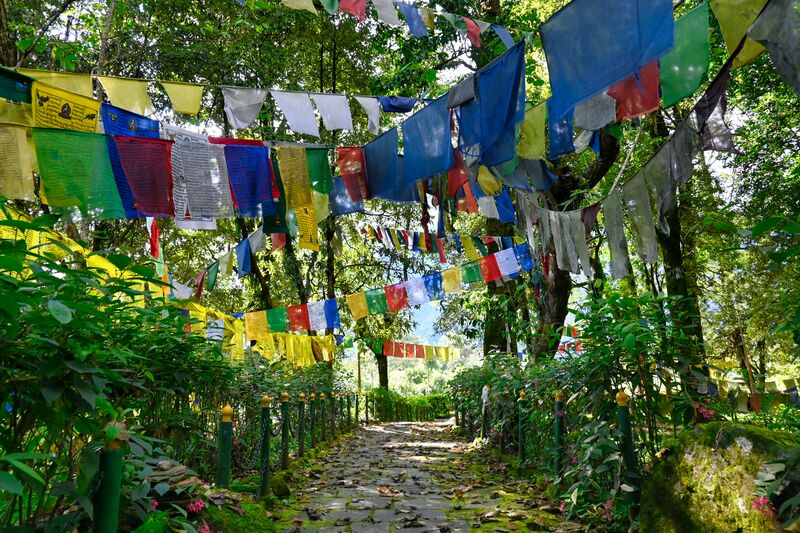
Śāntideva's Bodhicaryāvatāra is undoubtedly one of the great classics of Indian Mahāyāna Buddhism. What sets it apart from other highly esteemed exemplars of Buddhist philosophical literature is its pragmatic approach to the bodhisattva path, making it both accessible and relatable to generations upon generations of aspiring practitioners. Written in the first person, Śāntideva states in the opening verses that "I wrote it only to habituate my mind," thus much of the treatise reads as an inner dialogue with the author addressing himself directly with a mixture of encouragement and admonishment- at times courageous and at others self-effacing. Most of all, Śāntideva utilizes reasoned argument as a means to internalize the intricacies of his philosophical studies and the foundations of the bodhisattva way of life. Therefore, his presentation of the path is not merely an overview of the theoretical underpinnings of the Mahāyāna philosophical traditions, though that can be found within its pages as well. Rather, the Bodhicaryāvatāra is an invitation to follow Śāntideva's lead and join the ranks of bodhisattvas walking upon this very path.
The notion of the path (marga) has many varied iterations throughout the Buddhist traditions. From early instances such as the Eightfold Path,[1] the last of the Four Truths expounded by the Buddha in his first teaching at Sarnath, which details the different disciplines of Buddhist practice, to the more developmental model of the Five Paths[2] that details successive stages of accomplishment and their corresponding shifts in focus. In the Mahāyāna, these five are commonly correlated with the ten bodhisattva grounds or stages (bhūmi), which begin from the the path of seeing, the third of the five. In terms of the trainings of a bodhisattva known as the six pāramitās, transcendent actions or perfections,[3] these are more in line with the presentation of the Eightfold Path, in that they are prescriptive instructions on how to conduct oneself in order to progress along the aforementioned paths and grounds. It is in this regard that sūtra based Mahāyāna is alternatively referred to as the Pāramitāyāna. Therefore, if we set aside the more technical usages of the term and consider the notion of the path more broadly as a well-worn route or a course of action, then it is possible to view Śāntideva's narrative in the Bodhicaryāvatāra as an articulation of his personal take on the bodhisattva path.
Śāntideva's overall presentation of the bodhisattva path in the Bodhicaryāvatāra is fairly straightforward and involves the gradual development of the necessary skills to maintain steady progress and avoid lapses in motivation or discipline that inhibit spiritual growth. However, for the novice, they must first develop interest and confidence in the benefits of bodhicitta and thereby aspire to embody this altruistic attitude by taking the bodhisattva vow and committing themself to following the path. This initial stage involves engagement with various preparations needed on the side of the aspirant in order to align their outlook to the proper motivation, so that the vow will take root in the mind and bear fruit through its application. The bodhisattva path is then presented as the practice of the six pāramitās: generosity, discipline, patience, diligence, meditative concentration, and wisdom. The first of these is actually discussed in the context of mind training prior to taking the vow,[4] while discipline and patience are then explained in the context of maintaining one's commitment and stabilizing bodhicitta, while the latter three pāramitās are explained in the context of enhancing and further increasing or perfecting bodhicitta. Though, as Śāntideva puts it, the first five pāramitās were taught for sake of the sixth, wisdom, which corresponds to the direct experience of the true nature of reality, which in Śāntideva's Middle Way tradition is the perfect understanding of the emptiness of self and phenomena. The achievement of this corresponds to the attainment of the first bodhisattva ground or stage (bhūmi), known as Immense Joy (pramuditā), and from then on one is no longer considered an ordinary person, but rather a Noble One (ārya) capable of truly benefiting themselves and others. Therefore, Śāntideva's presentation covers the period starting from the initial spark of interest in the bodhisattva path up until the first major developmental plateau that is reached by traversing it.
Though it is a fairly recent 19th century Tibetan development, the Bodhicaryāvatāra is one of the very few Indian treatises that came to be taught widely outside of the confines of the traditional monastic curriculum and make the leap from a scholastic to a more public setting with largely lay audiences. Therefore, according to this tradition popularized by the famed Patrul Rinpoche, the chapters of the treatise are delineated based on the schema presented in a well known aspiration prayer that is believed to be of Indian origin, but is ubiquitous in the Tibetan tradition. As Patrul's student Khenpo Kunpal explains in The Nectar of Manjushri's Speech,
Some featured resources[edit]
Theme Bibliography[edit]
- ↑ These eight are correct view, intention, speech, action, livelihood, effort, mindfulness, and concentration.
- ↑ These five are the paths of accumulation, joining, seeing, meditation, and no-more-learning.
- ↑ These six are generosity, discipline, patience, diligence, meditative concentration, and wisdom.
- ↑ It is a more aspirational form of generosity, rather than the practice of this pāramitā proper.
