The Reflexive Nature of Awareness (2000)
From Bodhicitta
< Books(Redirected from The Reflexive Nature of Awareness (2000))
Books/The Reflexive Nature of Awareness (2000)
Books/The Reflexive Nature of Awareness (2000)
| 🤓 Admin Zone 🛠️ hidden to non-admins | |
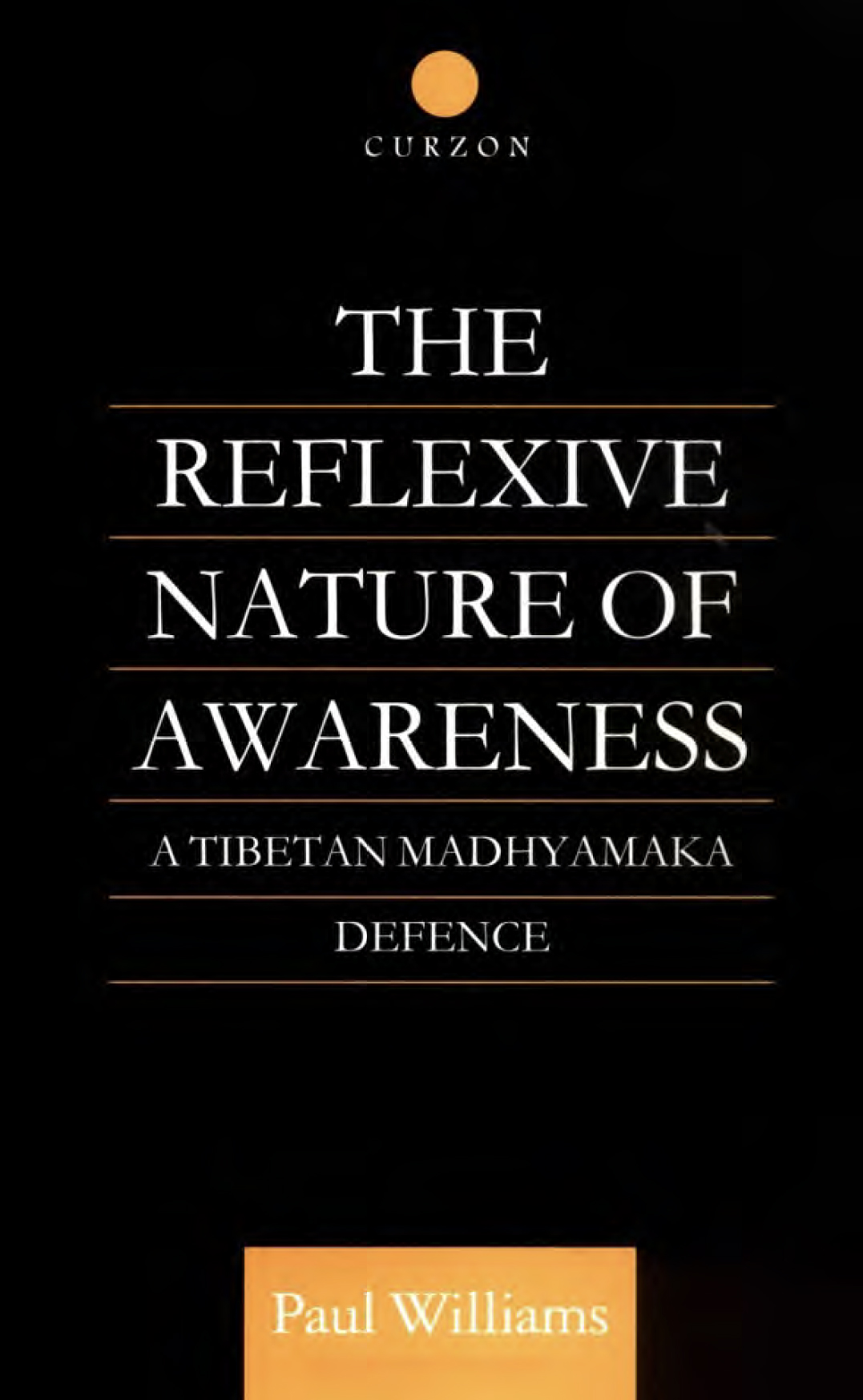
The Reflexive Nature of Awareness: A Tibetan Madhyamaka Defence
Book
Please note that many items in our library are simply pages that represent a detailed library catalog entry and citation of someone else's work, presentation, or performance. Read our General Disclaimer for more information. You can find more information about this item on the publisher website.

Description
According to the Tibetan Tsong Kha pa one of the eight difficult points in understanding Madhyamaka philosophy is the way in which Prāsaṅgika Madhyamaka does not accept even conventionally that reflexivity is an essential part of awareness — that in being aware there is also an awareness of being aware (rang rig). One of the most sysyematic and detailed refutations of Tsong kha pa's approach to this issue can be found in the commentary to the ninth chapter of the Bodhicaryaāvatāra by the rNyingma lama Mi pham (1846–1912), together with Mi pham's own replies to his subsequent critics. In the course of this Mi pham reveals a vision of what is going on in the Madhyamaka which is rather different from the more familiar Tibetan approach of Tsong kha pa.
Paul Williams places this controversy in its Indian and Tibetan context. He traces in detail Mi pham's position in his commentary on the Bodhicaryaāvatāra, the attack of one of his opponents, and his response, as well as indicating ways in which this controversy over the nature of awareness may be important within the context of Mi pham's rNyingma heritage of rDzogs chen thought and practice.
This book is the first book length study of its subject, and also includes a reprint of a previous paper by Williams on the reflexive nature of awareness, as well as the relevant Tibetan texts from Mi pham. The book will be of interest to all students of Indian and Tibetan Madhyamaka, as well as associated areas of Buddhist thought such as Yogācāra and the philosophy of Dharmakīrti. It will also be of value to those concerned with the intelectual foundations of rDzogs chen. (Source: Back cover of Routledge 2013 edition)
Paul Williams places this controversy in its Indian and Tibetan context. He traces in detail Mi pham's position in his commentary on the Bodhicaryaāvatāra, the attack of one of his opponents, and his response, as well as indicating ways in which this controversy over the nature of awareness may be important within the context of Mi pham's rNyingma heritage of rDzogs chen thought and practice.
This book is the first book length study of its subject, and also includes a reprint of a previous paper by Williams on the reflexive nature of awareness, as well as the relevant Tibetan texts from Mi pham. The book will be of interest to all students of Indian and Tibetan Madhyamaka, as well as associated areas of Buddhist thought such as Yogācāra and the philosophy of Dharmakīrti. It will also be of value to those concerned with the intelectual foundations of rDzogs chen. (Source: Back cover of Routledge 2013 edition)
Citation
Williams, Paul. The Reflexive Nature of Awareness: A Tibetan Madhyamaka Defence. Delhi: Motilal Banarsidass, 2000. First published 1998 by Curzon Press (Richmond, UK).
Publisher Link
Interconnections
1 Other editions

Paul Williams places the controversy over the nature of awareness in its Indian and Tibetan context, tracing in detail Mi pham's position in his commentary on the Bodhicaryāvatāra.
2 Scholarship on

An "Introduction to Bodhisattva Practice," the Bodhisattvacaryāvatāra is a poem about the path of a bodhisattva, in ten chapters, written by the Indian Buddhist Śāntideva (fl. c. 685–763). One of the masterpieces of world literature, it is a core text of Mahāyāna Buddhism and continues to be taught, studied, and commented upon in many languages and by many traditions around the world. The main subject of the text is bodhicitta, the altruistic aspiration for enlightenment, and the path and practices of the bodhisattva, the six perfections (pāramitās). The text forms the basis of many contemporary discussions of Buddhist ethics and philosophy.

Written by Prajñākaramati (950–1030), the Bodhicaryāvatārapañjikā is considered to be the most important Indian commentary on the Bodhicaryāvatāraby Śāntideva. This commentary explains the words in the verses (tshig 'grel), with additional commentaries on difficult points. Excluding The Dedication Chapter, it has only nine chapters.