Saptāṅgasaddharmacaryāvatāra
From Bodhicitta
| 🤓 Admin Zone 🛠️ hidden to non-admins | |
सप्ताङ्गसद्धर्मचर्यावतार
Saptāṅgasaddharmacaryāvatāra
དམ་པའི་ཆོས་སྤྱོད་ལ་འཇུག་པའི་ཡན་ལག་བདུན་པ།
dam pa'i chos spyod la 'jug pa'i yan lag bdun pa
The Seven-branches of Entering into Proper Dharma Practice (84000)
Text
Please note that many items in our library are simply pages that represent a detailed library catalog entry and citation of someone else's work, presentation, or performance. Read our General Disclaimer for more information.


Description
Lists of the seven branches (yan lag bdun; saptāṅga) vary. In this short text by the influential Kashmiri scholar Śākyaśrībhadra, which is included in the Tengyur (Toh 3980), the seven are: 1) prostration, 2) offering, 3) taking refuge, 4) confession, 5) rejoicing, 6) generating bodhicitta, and 7) making prayers of aspiration. (Source Accessed June 8, 2026)
Reference
Śākyaśrībhadra (kha che'i paN+Di ta chen po shAkya shrI b+ha dra). saptāṅgasaddharmacaryāvatāra [सप्ताङ्गसद्धर्मचर्यावतार]. dam pa'i chos spyod la 'jug pa'i yan lag bdun pa [དམ་པའི་ཆོས་སྤྱོད་ལ་འཇུག་པའི་ཡན་ལག་བདུན་པ།]. [The Seven-branches of Entering into Proper Dharma Practice (84000)]. Tengyur, RKTST 3320 http://www.rkts.org/cat.php?id=3320&typ=2.
Interconnections
1 Full translations

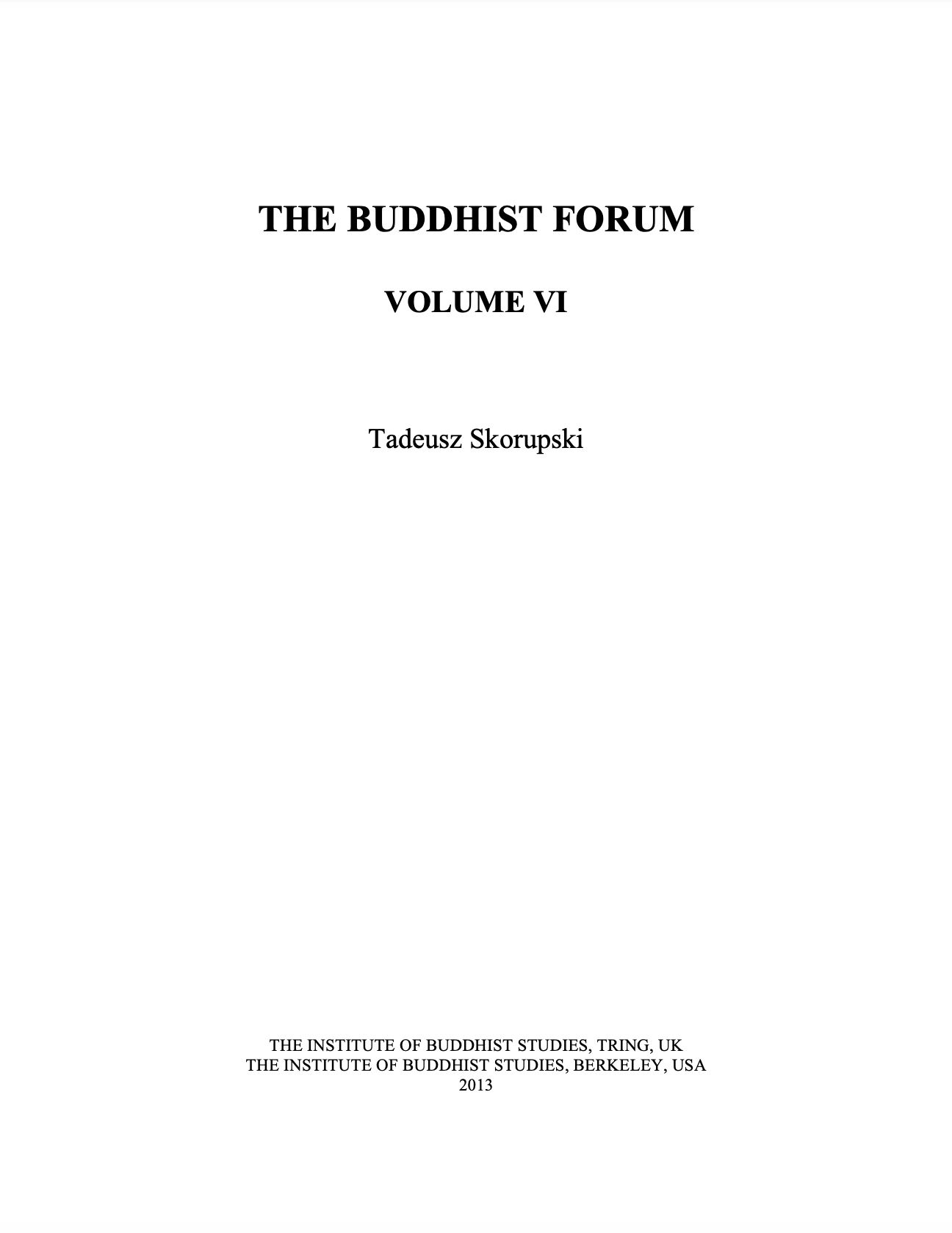
The Buddhist Forum, Volume VI, authored by Tadeusz Skorupski, brings together original scholarship and primary texts in translation tracing the Bodhisattva ideal from its earliest formulations in Indian Buddhism through its Mahāyāna and Vajrayāna elaborations. The volume opens with a wide-ranging historical survey of the Bodhisattva concept, examining its development across early Buddhist schools, the divergent positions of the Sthaviras and Mahāsāṅghikas, and its eventual reformulation as a universal path in Mahāyāna and Tantric Buddhism. This is followed by primary texts in Skorupski's translation that give practical expression to the ideals surveyed: Bodhibhadra's Bodhisattva Vow, Śākyaśrībhadra's Sevenfold Practice of the Dharma, and a series of liturgical and ritual texts encompassing eulogies of the Buddha's twelve deeds, hymns to the thirty-five confession Buddhas, devotional offerings to the Ḍākinīs, and sādhana literature covering self-generation, maṇḍala visualization, and the victorious vase. The volume further includes rites for the dying and deceased — transference of consciousness, liberation through hearing in the intermediate state, cremation ceremony, and the byang chog effigy ritual — alongside two substantial contributions: Abhayākaragupta's Jyotirmañjarī and a critical edition and study of Chapter Two of the Saṃpuṭa-tantra in Sanskrit and Tibetan. Together, these contributions illuminate the doctrinal history, devotional life, and ritual practice that constitute the living tradition of the Bodhisattva ideal across Buddhist India and Tibet.
1 Partial translations

Extracted from Śākyaśrībhadra's Seven Branches for Practising the Sacred Dharma (Saptāṅgasaddharmacaryāvatāra), these verses for taking refuge and generating bodhicitta are often recited independently of their original source.
1 Scholarship
The Buddhist Forum, Volume VI, authored by Tadeusz Skorupski, brings together original scholarship and primary texts in translation tracing the Bodhisattva ideal from its earliest formulations in Indian Buddhism through its Mahāyāna and Vajrayāna elaborations. The volume opens with a wide-ranging historical survey of the Bodhisattva concept, examining its development across early Buddhist schools, the divergent positions of the Sthaviras and Mahāsāṅghikas, and its eventual reformulation as a universal path in Mahāyāna and Tantric Buddhism. This is followed by primary texts in Skorupski's translation that give practical expression to the ideals surveyed: Bodhibhadra's Bodhisattva Vow, Śākyaśrībhadra's Sevenfold Practice of the Dharma, and a series of liturgical and ritual texts encompassing eulogies of the Buddha's twelve deeds, hymns to the thirty-five confession Buddhas, devotional offerings to the Ḍākinīs, and sādhana literature covering self-generation, maṇḍala visualization, and the victorious vase. The volume further includes rites for the dying and deceased — transference of consciousness, liberation through hearing in the intermediate state, cremation ceremony, and the byang chog effigy ritual — alongside two substantial contributions: Abhayākaragupta's Jyotirmañjarī and a critical edition and study of Chapter Two of the Saṃpuṭa-tantra in Sanskrit and Tibetan. Together, these contributions illuminate the doctrinal history, devotional life, and ritual practice that constitute the living tradition of the Bodhisattva ideal across Buddhist India and Tibet.
1 A topic of
The Buddhist Forum, Volume VI, authored by Tadeusz Skorupski, brings together original scholarship and primary texts in translation tracing the Bodhisattva ideal from its earliest formulations in Indian Buddhism through its Mahāyāna and Vajrayāna elaborations. The volume opens with a wide-ranging historical survey of the Bodhisattva concept, examining its development across early Buddhist schools, the divergent positions of the Sthaviras and Mahāsāṅghikas, and its eventual reformulation as a universal path in Mahāyāna and Tantric Buddhism. This is followed by primary texts in Skorupski's translation that give practical expression to the ideals surveyed: Bodhibhadra's Bodhisattva Vow, Śākyaśrībhadra's Sevenfold Practice of the Dharma, and a series of liturgical and ritual texts encompassing eulogies of the Buddha's twelve deeds, hymns to the thirty-five confession Buddhas, devotional offerings to the Ḍākinīs, and sādhana literature covering self-generation, maṇḍala visualization, and the victorious vase. The volume further includes rites for the dying and deceased — transference of consciousness, liberation through hearing in the intermediate state, cremation ceremony, and the byang chog effigy ritual — alongside two substantial contributions: Abhayākaragupta's Jyotirmañjarī and a critical edition and study of Chapter Two of the Saṃpuṭa-tantra in Sanskrit and Tibetan. Together, these contributions illuminate the doctrinal history, devotional life, and ritual practice that constitute the living tradition of the Bodhisattva ideal across Buddhist India and Tibet.