Kāmāvavādakasūtra/Full text
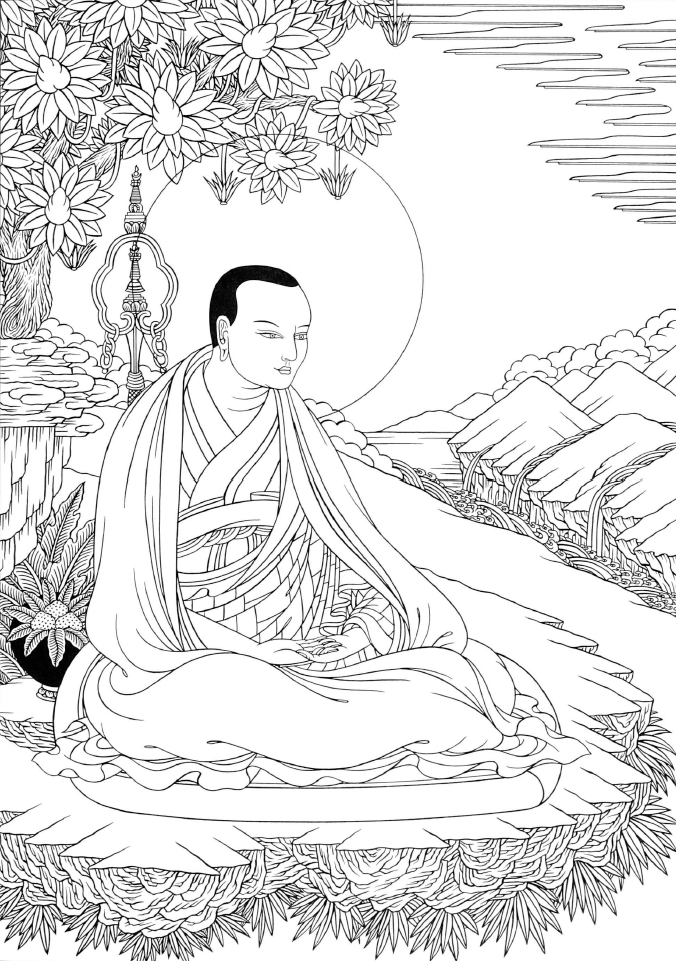
From Bodhicitta
< Texts‎ | KāmāvavādakasūtraTexts/Kāmāvavādakasūtra/Full text

कामाववादकसूत्र
Kāmāvavādakasūtra
The Sūtra of Advice on Desire
FULL TEXT


Description
The Kāmāvavādakasūtra ('Dod pa gdams pa'i mdo, "Sūtra of Instruction on Desires") is a Buddhist sūtra preserved in the Go Gondhla Kangyur (RKTSK 914), translated by the Indian preceptor Kamalagupta together with Rinchen Zangpo and Shakya Lodrö. The sūtra is set at Śrāvastī, in Anāthapiṇḍada's park in Prince Jeta's grove, and consists largely of the Buddha's direct exhortation to a monk to abandon attachment to sensual pleasure. It opens with the urgent injunction to "turn the mind away from sensual pleasures," describing the path of desire as fearful, thorny, and dark, and compares sensual pleasures to a disease, a tumor, an arrow, and a baited hook, as well as to traps for deer, nets for birds, snares for monkeys, and a mass of flame for moths. The deer-trap simile in particular has a parallel in the Pāli Ariyapariyesanā Sutta (MN 26), suggesting the text draws on a shared body of early Buddhist imagery and literary stock also attested in the Pāli canonical tradition. The text goes on to detail the karmic consequences of pursuing desire across successive rebirths (as beef-eaters, snakes, frogs, thieves, and others), catalogues an extensive litany of the body's illnesses and miseries, and closes with the same urgent reminder that "the time for seeking sensual pleasures has passed; the time for seeking the Dharma has come." The Buddha's teaching culminates in an exposition of the Four Noble Truths, after which the monk addressed attains the fruit of stream-entry.

This text corresponds to the Kāmāpavādakasūtra ("Sūtra that Warns against Sensual Pleasures") cited by Śāntideva in the Śikṣāsamuccaya immediately following his citation of the Saptamaithunasaṃyuktasūtra (see Bendall, Śikṣāsamuccaya, Bibliotheca Buddhica 1, St. Petersburg, 1897–1902; Goodman, The Training Anthology of Śāntideva, Oxford University Press, 2016, pp. 80–81, n. 18). Neither Bendall nor Goodman identified a Tibetan canonical equivalent for the passage. Comparison of the Sanskrit-derived English translation against the Tibetan of RKTSK 914 confirms the identification: the opening exhortation, the deer/bird/fish-hook/monkey/moth imagery, the catalogue of karmic rebirths, the litany of bodily miseries, and the closing "time to search for the Dharma" formula all correspond closely between the two. The apavādaka ("warns against") and avavādaka ("instruction on") variance between Bendall/Goodman's Sanskrit title and the Tibetan colophon's title reflects transmission variance rather than two distinct texts.

References:

  • Bendall, Cecil, ed. Śikṣāsamuccaya. Bibliotheca Buddhica 1. St. Petersburg, 1897–1902.
  • Goodman, Charles. The Training Anthology of Śāntideva: A Translation of the Śikṣā-samuccaya. Oxford University Press, 2016. See pp. 80–81, n. 18.
Referencekāmāvavādakasūtra [कामाववादकसूत्र]. 'dod pa gdams pa'i mdo [འདོད་པ་གདམས་པའི་མདོ།]. [The Sūtra of Advice on Desire]. Kangyur, RKTSK 914 http://www.rkts.org/cat.php?id=914&typ=1.
PeopleKamalagupta, Śākya Lodro, Lochen Rinchen Zangpo


[edit]
Source BDRC
"'Dod pa gdams pa'i mdo." In Bka'gyur (gon dho la bris ma), 27:450–61. Gondhala, Lahaul, HP, 1300–1399. Accessed September 18, 2026. http: // purl .bdrc .io /resource /MW2KG5016 _0026 _09 . [BDRC bdr:MW2KG5016_0026_09]
Date 18 September 2026
W2KG5016-v27 img450-461.pdf
Read this text with translation by adding the Dharmamitra Chrome extension to your browser:
Legend
Headers
Root
Commentary
Quotes
W2KG5016-v27 img450-461.pdf
