Daśabhūmikavibhāṣā
From Bodhicitta
| 🤓 Admin Zone 🛠️ hidden to non-admins | |
दशभूमिकविभाषा
Daśabhūmikavibhāṣā
十住毘婆沙論
Shi zhu piposha lun
Discourse on the Ten Stages
Text
Please note that many items in our library are simply pages that represent a detailed library catalog entry and citation of someone else's work, presentation, or performance. Read our General Disclaimer for more information.

Description
Commentary on the Daśabhūmikasūtra, which survives in Chinese. It is attributed to Nāgārjuna.
Reference
Daśabhūmikavibhāṣā [दशभूमिकविभाषा]. Shi zhu piposha lun [十住毘婆沙論]. [Discourse on the Ten Stages]. Chinese Canon.
Interconnections
1 Classical commentary of

Daśabhūmikasūtra. (T. Sa bcu pa'i mdo; C. Shidi jing/Shizhu jing; J. Jūjikyō/Jūjūkyō; K. Sipchi kyǒng/Sipchu kyǒng 十地經. In Sanskrit, "Scripture of the Ten Stages"; the definitive scriptural account of the ten "grounds" or "stages" (daśabhūmi) at the upper reaches of the bodhisattva path (mārga). In the sūtra, each of the ten stages is correlated with seminal doctrines of mainstream Buddhism, as well as with mastery of one of a list of ten perfections (pāramitā) completed in the course of training as a bodhisattva. The sūtra appears as one of the chapters of the Avatamsakasūtra [chapter 31] and also circulated as an independent text. (Source: "Daśabhūmikasūtra." In The Princeton Dictionary of Buddhism, 220. Princeton University Press, 2014. http://www.jstor.org/stable/j.ctt46n41q.27.)
1 Partial translations

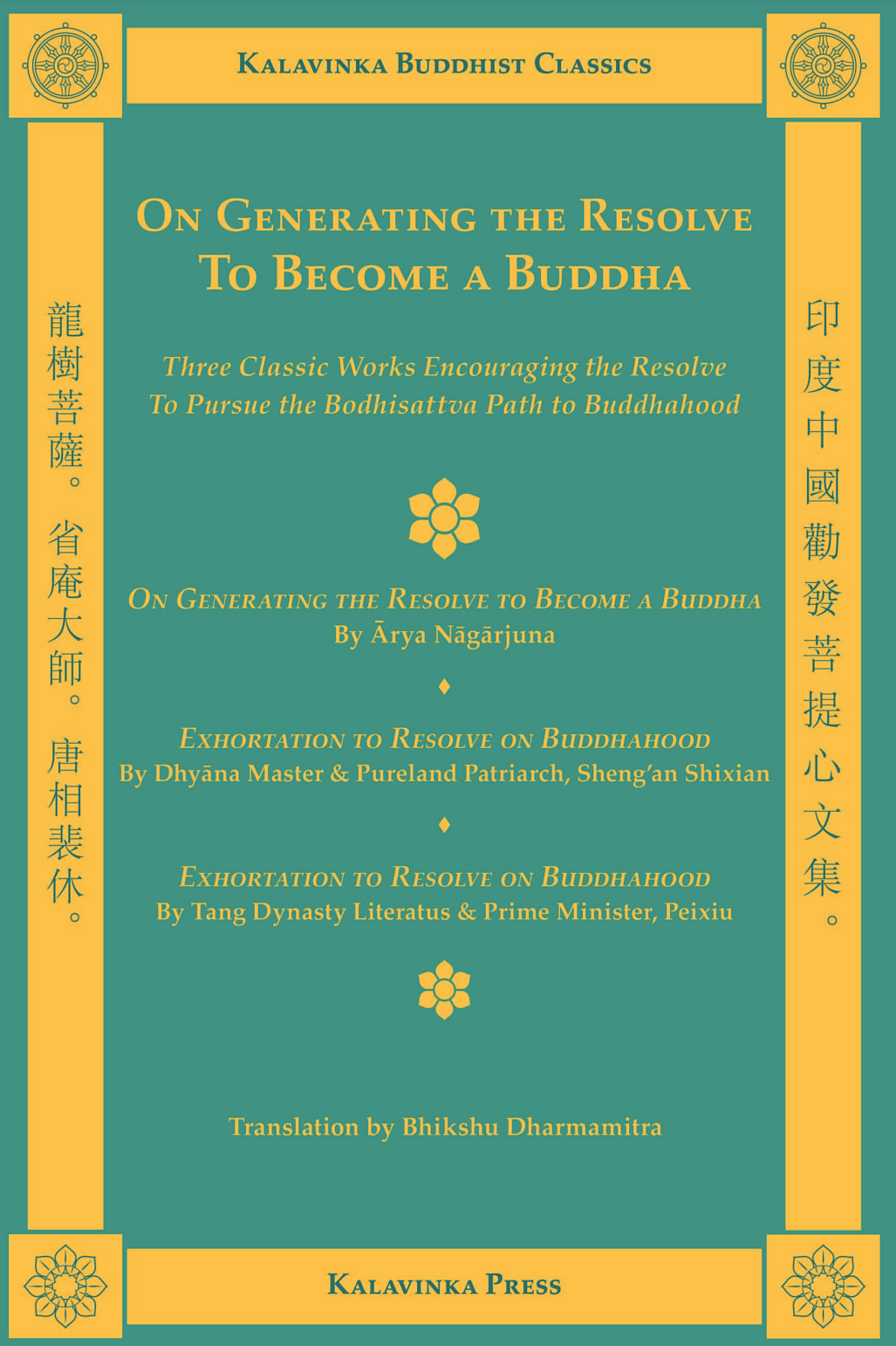
In this volume, Bhikshu Dharmamitra presents translations of three classic works on the bodhisattva vow (bodhicitta) authored by: The early Indian monastic eminence, Arya Nagarjuna (2nd c.); The Dhyana Master and Pureland Patriarch, Sheng'an Shixian (1686-1734); The Tang Dynasty literatus and prime minister, the Honorable Peixiu (797-870). Given that the bodhisattva vow constitutes the very essence of the path to buddhahood, this text can be said to be dedicated to the most important topic in all of Mahayana Buddhism. The translation and notes are by the American monk, Bhikshu Dharmamitra. This volume includes text outlines and facing-page source text in both traditional and simplified scripts. (Source Accessed Jan 15, 2025)
1 A topic of
In this volume, Bhikshu Dharmamitra presents translations of three classic works on the bodhisattva vow (bodhicitta) authored by: The early Indian monastic eminence, Arya Nagarjuna (2nd c.); The Dhyana Master and Pureland Patriarch, Sheng'an Shixian (1686-1734); The Tang Dynasty literatus and prime minister, the Honorable Peixiu (797-870). Given that the bodhisattva vow constitutes the very essence of the path to buddhahood, this text can be said to be dedicated to the most important topic in all of Mahayana Buddhism. The translation and notes are by the American monk, Bhikshu Dharmamitra. This volume includes text outlines and facing-page source text in both traditional and simplified scripts. (Source Accessed Jan 15, 2025)