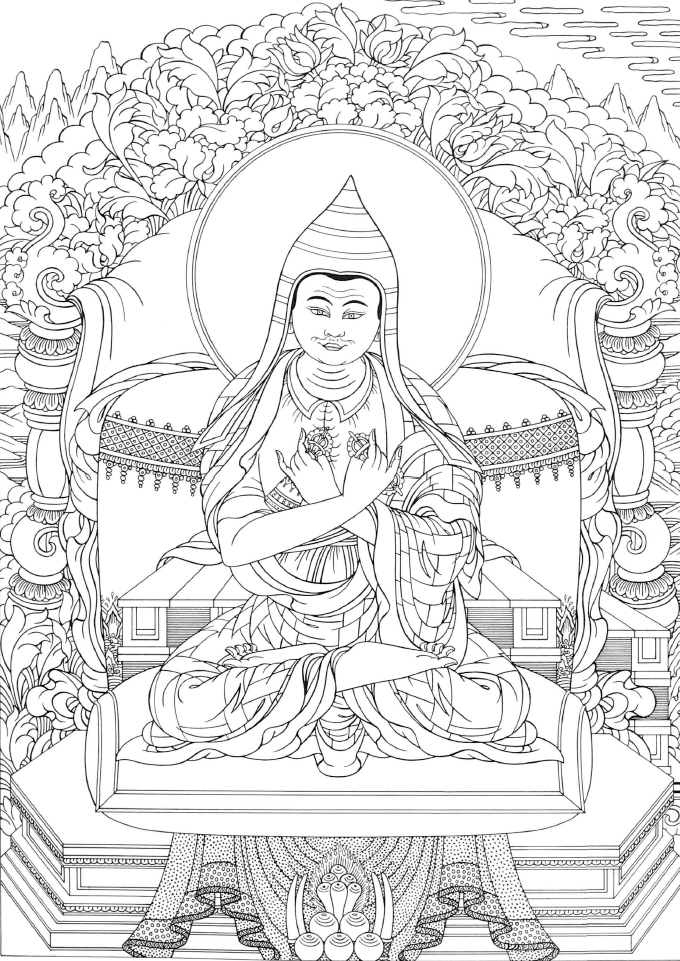
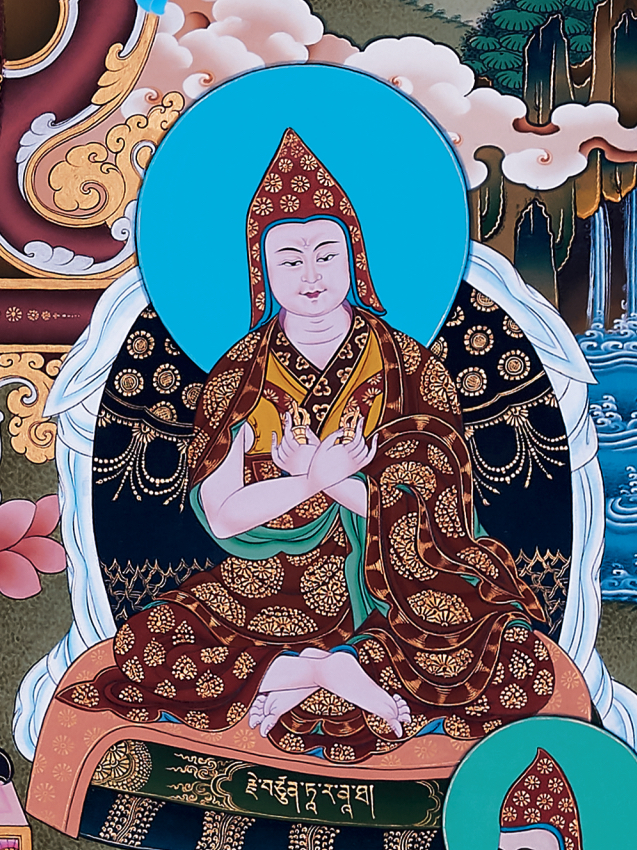
In the history of the Jonang tradition Tāranātha is second in importance only to Dölpopa himself. He was responsible for the Jonang renaissance in U-Tsang during the late sixteenth and early seventeenth centuries, and the widespread revitalization of the zhentong teachings. Like his previous incarnation, Kunga Drolchok, Tāranātha practiced and taught from many different lineages and was nonsectarian in his approach to realization. He was also one of the last great Tibetan translators of Sanskrit texts. The abbot of Jonang Monastery, he emphasized the practice of the Sakya teachings of Lamdre and the esoteric instructions of the Shangpa Kagyu, but he specially focused on the explication of the KālacakraTantra and the practice of its Six-branch Yoga as the most profound of all the teachings given by the Buddha. It is clear in his writings that Tāranātha considered Dölpopa to be the ultimate authority in matters of doctrine and practice. ... read more at

Jonang - The Jonang tradition was established by Dölpopa Sherab Gyaltsen, a thirteenth-century Sakya monk famous for his Zhentong teachings. The Jonang teachings and monasteries were suppressed in Tibet in the seventeenth century but survived in Amdo. Tib ཇོ་ནང་
Gzhan stong - The state of being devoid of that which is wholly different rather than being void of its own nature. The term is generally used to refer to the ultimate, or buddha-nature, being empty of other phenomena such as adventitious defiling emotions but not empty of its true nature. Tib གཞན་སྟོང་
Sakya - The Sakya tradition developed in the eleventh century in the Khön family of Tsang, which maintained an imperial-era lineage of Vajrakīla and which adopted a new teaching from India known as Lamdre. Tib ས་སྐྱ་
Kagyu - The Kagyu school traces its origin to the eleventh-century translator Marpa, who studied in India with Nāropa. Marpa's student Milarepa trained Gampopa, who founded the first monastery of the Kagyu order. As many as twelve subtraditions grew out from there, the best known being the Karma Kagyu, the Drikung, and the Drukpa. Tib བཀའ་བརྒྱུད་
Kālacakra - Can refer to either the Kālacakra Tantra and its derivative texts or to the systematic tantric tradition based on these texts, as well as the deity Kālacakra upon which the associated practices are centered. Skt कालचक्र Tib དུས་ཀྱི་འཁོར་ལོ། Ch 時輪
Tantra - Tantra, when juxtaposed with Sūtra, generally refers to the scriptures and texts which discuss esoteric topics. While the term is used to refer to texts on other topics, it is mostly used to refer to the genre of scriptures and texts on themes and topics associated with Vajrayāna Buddhism. Skt तन्त्र Tib རྒྱུད། Ch 密宗