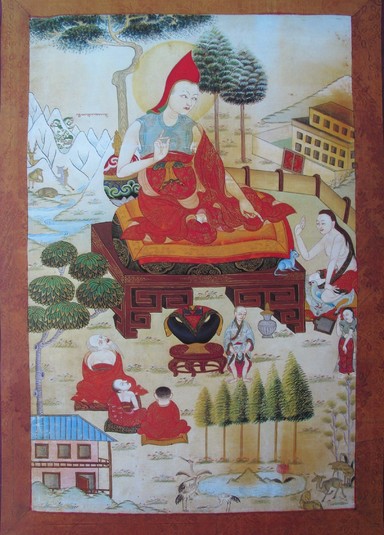
Āryadeva
འཕགས་པ་ལྷ་


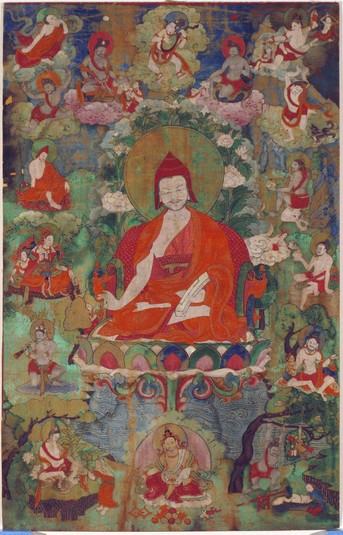
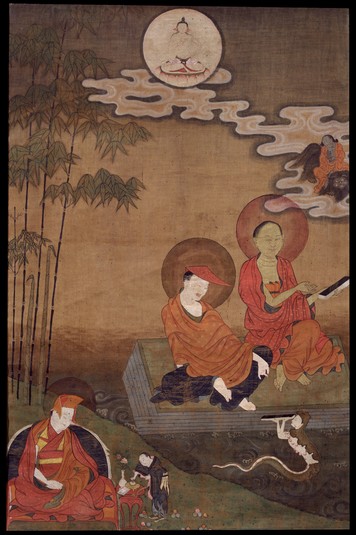

Āryadeva (3rd century), a disciple of Nāgārjuna, is a central figure in the development of early Indian Madhyamaka philosophy. Āryadeva’s Hundred Verses Treatise (Bai lun) was one of the three basic texts of the Chinese Madhyamaka school founded by the central Asian monk Kumārajīva (b. 344–d. 413), which accordingly was called the Sanlun (Jpn. Sanron), or “three-treatise” school. According to the biography that Kumārajīva translated into Chinese, Āryadeva was born into a South Indian Brahmin family, became Nāgārjuna’s disciple, was renowned for his skill in debate, and was murdered by a student of a defeated teacher. Candrakīrti (b. c. 570–d. 650), in his commentary on Āryadeva’s major work, the Four Hundred Verses (Catuḥśataka), reports that Āryadeva was born on the island of Sinhala (Sri Lanka) as a king’s son, renounced his royal status, became a monk, and traveled to South India, where he studied with Nāgārjuna. Some scholars suggest that Āryadeva is the elder deva mentioned in the Mahāvaṃsa and Dīpavaṃsa chronicles of early Sri Lankan religious history. Āryadeva did not write commentaries on Nāgārjuna’s works but, rather, wrote autonomous treatises that defended Madhyamaka beliefs against its Buddhist and non-Buddhist critics. He devotes the first eight chapters to explaining ethical behavior and such practices as generosity, which form the basis for the bodhisattva’s accumulation of merit (puṇya). The latter eight chapters refute wrong views about the independent existence of external phenomena and the self, defending the Madhyamaka philosophy of emptiness and the dependently arisen nature of all things. The Catuḥśataka presents the path to the attainment of buddhahood as structured around these two requisites of merit and knowledge (jñāna). As an introduction to the practices of a bodhisattva, the Catuḥśataka prepares the ground for Śāntideva’s later (c. 8th-century) and more extensive treatment in Introduction to the Practices of a Bodhisattva (Bodhicaryāvatāra). Apart from some fragments of the Catuḥśataka, none of the works the Chinese and Tibetan canons attributed to Āryadeva survive in Sanskrit. From Oxford Bibliogrpahies
See Tillemans article on Āryadeva appearing in the forthcoming 2022 Routledge Handbook of Indian Buddhist Philosophy (McClintock, Edelglass, and Pierre-Julien Harter).
Categories
1 Authored & Translated Works
Library items authored or translated by Āryadeva.
1 Works About Āryadeva
Scholarship and editorial content in which this person is a subject rather than an author.