Manuscripts of the BCA
| 🤓 Admin Zone 🛠️ hidden to non-admins | |
Description
Featured on
Manuscripts in the Catalogue of the NGMCP
Over 20000 mss.[1] have been microfilmed and catalogued by the NGMCP since its inception. These range from palm-leaf mss. up to a millennium old to paper mss. in book-form produced in the first half of the 20th Century.[2] They are written in Sanskrit, Newari, Nepali, Tibetan, Bengali, Singhalese, Gujarati, Hindi, Persian, Kirati, Maithili, Pali, Marathi, Urdu, and Prakrit. The bulk of the mss. are on religious topics, mostly Hindu and Buddhist, but mss. on other topics related to politics, law, poetry, love-making, etc., are also represented. With this impressive abundance of material available it is no wonder that most of it has not been adequately studied as of yet. The catalogue of the NGMCP is primarily based on preliminary investigations of the mss. performed at the time of filming. Some of these observations seem to some extent to have been fairly superficial, based on a first impression of the ms., and all available data have not been included as will be illustrated by the mss. of the BCA. The catalogue lists 41 mss. related to the BCA.[3] Of these 37 are titled "Bodhicaryāvatāra", while there are two "Bodhicaryāvatārabhāṣā", one "Bodhicaryāvatārānuśaṃsāvadāna", and one "Bodhicaryāvatāra(parikathā)". They are either written in Sanskrit, Newari, or a combination thereof, and the scripts used are described as Newari, Devanagari, and, in one case, Maithili. The oldest dated specimen is a palm-leaf ms. from 1180 CE (300 NE), while the most recent one is a paper ms. copied in 1943 CE (2000 VE). As a result of my investigation some of these data have been revised. I have not been able to gain access to all the BCA mss. listed in the NGMCP, and this revision has therefore not been complete. All the revisions that have been made can be found in the appendix, where all mss. related to the BCA known to me have been listed according to where they are kept.
18 mss. have through this examination been positively identified as containing Sanskrit editions of the BCA.[4] Of these five are palm-leaf mss., while the rest are written on paper. I will follow the general supposition that the palm-leaf mss. can be expected to be the older of the two. In addition to this there is one palm-leaf ms. catalogued as "Bodhicaryā[vatāra]", but which I have not been able to positively identify as such.[5] Three mss., catalogued as "Bodhicaryāvatāra", have been identified as containing Sanskrit commentaries, two of which are mss. containing the BCAP. The third, the Bodhicaryāvatāraṭippani (NGMCP B 23/4), was mentioned in passing by La Vallée Poussin (1901-14) in his introduction to the BCAP, but has not received any further attention.[6] As this is the only other commentary, in addition to the BCAP, still available in its original Sanskrit,[7] some extra attention have been allotted it in this discussion. Still, these will only be preliminary observations, and a separate study dedicated solely to this ms. is certainly a desideratum. In addition to this there are two extensive commentaries entitled "Bodhicaryāvatārabhāṣā" written in Sanskrit/Newari. This author does not have the required knowledge of the Newari language necessary to enter into a detailed study of these. Still, some general comments on these mss. will be made, as well as an attempt to relate them to Newari literature in general. This leaves 14 mss. catalogued as Sanskrit editions of the BCA and three catalogued as Newari translations of the same. These were not prioritized, as I concluded, based on information gathered from the catalogue, that they were of later date. I do not suggest that these are not of interest, as they will be valuable in gaining an even more complete picture of the history of the BCA. A future investigation of them would certainly be desirable.
The Sanskrit BCA in Nepal[8]
Of the five palm-leaf mss. investigated only one, NGMCP C 14/2, is dated. The year 300 NE (1180 CE) is stated as the year that it was copied, which would make it over 200 years older than the oldest of the BCA mss. employed for the previous editions.[9] The photos on the microfilm I have investigated are blurred, and several folia are impossible to read. From what I have been able to decipher the ms. seems to be complete and the folia arranged in order. The script is Bhujimol, a Brahmi script characterized by the loops at the head of the letters.[10] Bhujimol was developed from the Gupta script, and is the most ancient form of the Newari script that was used predominantly in the Kathmandu valley. The mss. NGMCP B 23/5 and E 1518/5 are also written in a similar variety of Bhujimol, and might be from the same general time period. The former consists of seven disordered folia, most of them damaged on the right hand side so that we can no longer see the folia numbering. The first folio starts with the homage "namo mañjunāthāya",[11] after which follow the first few verses. Curiously, on the last line of the folio are written a long line of letters/scribbling that do not form words, as if the scribe was practicing his handwriting. The next folio starts with verse 2.13, a folio in the middle has verses from chapter ten, and the last folio ends in verses 4.42. The latter ms., NGMCP E 1518/5, consists of 32 folia, numbered from 1 to 38, with folia numbers 2-6, 11, and 39 missing. The ms. is well preserved, and the microfilm is fairly easy to decipher. The last two mss., NGMCP A 1389/23 and C 14/5, are written in the later Prachalit Newari script.[12] The former consists of 12 folia, and is also damaged on the right hand side. The photos are dark and difficult to decipher, but I have been able to make out a few verses here and there. The ms. contains only the section from verses 8.15 to 9.67, and all folia seem to be ordered correctly. NGMCP C 14/5 consists of 41 folia, and is badly damaged. Only pieces are left of several of the folia. The very first folio seems to be a page from another ms. as it is written in Bhujimol script, and the letters are much larger than those on the rest of the ms. The photo of this is however blurred, and I have not been able to decipher much of it. The rest of the ms. is disordered, with the second folio starting with verse 9.6, and the last with verse 1.31.
Of the 13 paper mss. investigated five are dated, the dates ranging from the middle of the 17th to the middle of the 19th Century CE. NGMCP H 380/8 is the oldest, dated 764 NE (1644 CE). It consists of 17 folia, is written in a Prachalit Newari script, and is, except for some minor damage on the very first folio, complete. It is unusual in that it contains 12 lines per page, while the other mss. contain between five and nine lines. The only other ms. of the BCA containing this many lines is Unk. M, the ms. Minayev (1889) used, which has 14 lines per page.[13] Unk. M is dated 791 NE (1671 CE), and as none of the other mss. considered here, earlier or later, were written with this many lines per page, it could be suggested that it might have been a peculiarity among Newar scribes of the mid 17th Century to arrange the mss. like this. The scribe who copied NGMCP H 380/8 was named Jayamunī Vajrācārya.[14] The dates of the other four mss. are quite close: NGMCP B 97/7 (904 NE; 1784 CE), A 121/8 (950 NE; 1830 CE), B 97/9 (950 NE; 1830 CE), and E 2511/1 (959 NE; 1839 CE). All are written in a Prachalit Newari script, two are complete (A 121/8 and E2511/1), while the other two have a few folia missing. Only in NGMCP E 2511/1 is the scribes name given: Ratnānanda Vajrācārya.[15]
We are then left with eight undated paper mss. Four of the mss. are written in a Prachalit Newari script (NGMCP B 98/5, E 1256/7, E 2355/24, and H 321/7), one in what seems to be a Devanagari script with Newari influence, while three (NGMCP A 121/9, A 915/6, and B 98/9) are in Devanagari script. Generally, judging from their appearance, the mss. written in the Newari script seem to be the oldest. It might be suggested that the Newari script was the script of choice in the earlier part of Newari Buddhism, while Devanagari, a later import from India, became more influential relatively recently.[16] Today, in the Kathmandu valley, it is my impression that it is Devanagari that dominates in most people's daily lives, while the Newari script is reserved more for the specialist. NGMCP B 98/5 is the only one of the paper mss. containing a string hole, a survival from format of the earlier palm-leaf mss. It also has virtually the exact same size as NGMCP H 380/8. These two observations could indicate that it is among the earliest of our paper mss., and we could suggest a date close to the mid 17th Century. The other three Newari script mss. (NGMCP E 1256/7, E 2355/24, H 321/7) seem closer in appearance to those dating from the late 18th to the early 19th Century.[17] NGMCP E 1484/13 seems to be written in a Devanagari script, but the vowel marker e and the consonant bha are undoubtedly Newari in character. Could this ms. be an illustration of a transition in the 19th Century from using the Prachalit Newari script to the standard Devanagari among the Newaris of the Kathmandu valley? More mss. need to be compared before anything certain can be said on this point. The last three paper mss. are all written in a standard Devanagari script. NGMCP A 121/9 appears old and worn, but the format resembles the other mss. dated to the 19th Century. This seems to be true also for the better preserved NGMCP A 915/6. The final ms., NGMCP B 98/9, is a curious case. It seems to be the newest of all mss. investigated, but I will not attempt to provide a more accurate date than that. In addition to the text of the BCA there seems to be comments added here and there. It could be a commentary, but does not seem to be following the regular format of commenting on the text verse by verse. I have not been able to go into a more detailed study of the text, and my best guess so far is that it is the BCA, with some introductory comments to place the text in context.[18]
A Comparison
As a first step towards compiling a new edition of the BCA based on the mss. in Nepal it might be useful to take a few verses and compare the readings of them retained in the different mss. Through this we will be able to move towards an understanding of how they relate with the mss. used for previous editions, as well as begin to see the outlines of how the different mss. of the BCA available to us relate to each other. In other words, based on whether they contain the same correct/incorrect readings, we will be able to say whether some particular mss. may have been copies of other particular earlier mss. For this purpose I have chosen to look at verses 1.2 and 9.19b-20. The reason for choosing these verses is that there already exist various readings, most importantly between Minayev (1889) and La Vallée Poussin (1901-14). It is the aim of this comparison then to decide on which reading seems to be the most plausible.
In Minayev (1889: 155) the verse 1.2 is reproduced like this:
na hi kiṃcid apūrvam atra vācyaṃ na ca saṃgranthanakauśalaṃ mamāsti / ata eva na me parārthacintā svamano bhāvayituṃ kṛtaṃ mayedam //[19]
Śāntideva is here practicing humility towards the task at hand, a traditional way of starting a literary work in Buddhism. On the contrary to what is stated in the verse, Śāntideva was clearly a literary expert and the work was most certainly intended to benefit other beings, as that is what the Bodhisattva's path is all about. But this need not concern us here. What is of interest are the phrases bhāvayituṃ and mayedam. La Vallée Poussin (1901-14: 7) instead gives the phrases vāsayituṃ ("to perfume") and mamedaṃ for these two, and it is this reading that has become the standard for later editions.[20] La Vallée Poussin sites the ŚS as the source for this reading, and comments that neither of the two mss. he employed, Par. dev. 78 and 79, read it like this. The source for this reading seems also to have partially been the BCAP. The ms. La Vallée Poussin used for his BCAP, Kol. G. 3829, is, as I mentioned above, not available to me. The section concerning this verse is also not preserved in the two mss. containing the BCAP available through the NGMCP, A 134/5 and A 915/7-916/1. We can therefore for now rely only on La Vallée Poussin's own edition for commentarial assistance. In the commentary, as handed to us by La Vallée Poussin (1901-14: 8), we are as can be expected given the reading vāsayituṃ. One argument for this reading, apart from the ŚS and Prajñākaramatī's comment, might be that the word bhāvayituṃ appears again in the very next verse. In such a richly ornate language as Sanskrit it could be considered poor literary style to repeat a term in this way. Now, concerning the other phrase we find no help in the BCAP, as even La Vallée Poussin himself reiterates the commentary as saying mayedam. The reading mamedam then is taken solely from the ŚS, while none of the mss. used by La Vallée Poussin or Minayev support it.[21] We turn then to the mss. from Nepal for assistance. All the mss. that have preserved the verse, NGMCP E 1518/5, A 121/8, B 98/5, E 1256/7, E 2355/24, E 2511/1, H 321/7, H 380/8, A 121/9, and A 915/6, give the phrases as bhāvayituṃ and mayedaṃ,[22] in support of Minayev's reading. There is also no support for La Vallée Poussin's reading in neither the Tibetan nor Chinese translations, where we find bsgom phyir and 觀察 (=bhāvayituṃ), with no trace of any perfume, and ngas 'di (=mayedam).[23] Based on this material it can therefore be concluded that Minayev's earlier reading seems to be correct. We have so far not learnt anything about the relationships between the mss.
Concerning verses 9.19b-20 there is a more considerable difference between Minayev and La Vallée Poussin.[24] Minayev (1889: 209) has followed mss. that contain an extra verse here, an anomaly which at first glance, as has been noted by for instance Crosby (1996: 110), seems to be due to a scribal error where the last verse has been to some extent repeated. The verses are reproduced by La Vallée Poussin (1901-14: 394-5), without this error, in the following way:
na hi sphaṭikavan nīlaṃ nīlatve 'nyam apekṣate // tathā kiṃcit parāpekṣam anapekṣaṃ ca dṛśyate / anīlatve na tan nīlaṃ kuryād ātmānam ātmanā //[25]
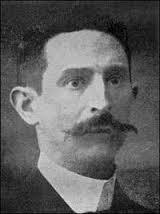
Belgian Indologist and scholar of Buddhist Studies
The meaning of these verses will be discussed in some detail, as they are important in order to understand the different versions that have appeared. The context is Śāntideva's refutation of the views of the Vijñānavādin.[26] Śāntideva's fictional Vijñānavādin has started in verse 9.15b by complaining that if it is like the Mādhyamika Śāntideva has said, that even the deceptive cognition (saṃvṛti) does not exist, how then is the illusion perceived?[27] Śāntideva replies that this critique is unwarranted since the Vijñānavādin agrees that the external illusion is non-existent, and why do we then need anything to perceive it? To this the Vijñānavādin answers that it exists, but only as an expression of the mind. Śāntideva replies by pointing out that if the mind is this very same apparently external illusion, then the subject and object are the same singular thing, and what then perceives what? He points out that the Buddha himself has said that mind cannot perceive mind, in the same way that the blade of a sword cannot cut itself.[28] To this the Vijāñavādin then replies by giving two examples to illustrate how this is still possible through reflective awareness (svasaṃvedana), that of a lamp and of gems, the last being the one the verses above are concerned with. A lamp illuminates its surroundings, and illuminates itself as well. In the same way the mind can perceive its surroundings, and at the same time perceive itself. This example is not appropriate, replies Śāntideva, since there is no darkness in a lamp that needs to be illuminated, and so it can not illuminate itself. It is like a gem then, suggests the Vijñānavādin. There are clear crystals (sphaṭikavan) that can take the colour of blue if something blue is placed closed by, and there are gems that are naturally blue by themselves (nīlaṃ), such as lapis lazuli. Just as there are in this case two types of gems, one dependent on other objects for its appearance (parāpekṣam), and another that is independent (anapekṣaṃ) of these, there are also two types of cognitions, one dependent upon objects, and one independent, which is focussed inwards, perceiving awareness only. The last verse line above is Śāntideva's reply to this. He points out that something that is not blue (anīlatve) cannot make itself blue by itself, since all phenomena depend on causes and conditions. This would also apply to a blue gem, such as lapis lazuli. It is, as all other things, dependent on causes and conditions, and could not have made itself blue by itself. This is therefore not an example that can be employed to illustrate what the Vijñānavādin wishes to illustrate here, a reflective awareness that is independent of external objects.
With this understanding we can begin to look at the other versions available, and Minayev's is not the only one. In the mss. of the BCATib1 recovered from Dūnhuáng we find what must be an earlier version of the verses.[29] As has been discussed above it seems that there have been additions made in the later recension of the BCA in order to clarify points, with mixed results. The verses 9.19b-20 seems then to be an example of such an addition, for in the BCATib1 we are given the following short verse:
/ sngon po dag ni shel lta bur / / sngon po'i rgyu la myi ltos ste / / sngon po nyid du 'dug pa gang / / rang la rang go[30] sngon por byed //[31]
We are here faced with a puzzle. The first line seems straightforward, and is an accurate translation of what has been preserved in La Vallée Poussin's version. The second line, however, only partially resembles the third line of what has been preserved in the Sanskrit edition. And, finally, there is no trace at all of the second line of La Vallée Poussin's edition. This last point could perhaps be explained as an addition, as it only clarifies the example of the gem just mentioned, and does not really add anything of importance. The last line, however, proves to be more difficult to explain. It seems to be saying, using roughly the same words, the exact opposite of the reply of Śāntideva above: "How is it blue? It makes itself blue by itself." Fortunately a commentary to this early edition, the BCAV, has been preserved in the Tg. This commentary seems to explain the verse as a whole as the argument made by the Vijñānavādin.[32] There is no reply made.
Finally, we look at the verses as presented by Minayev (1889: 209):
na hi sphaṭikavan nīlaṃ nīlatve 'nyam apekṣate // tadā kiṃcit parāpekṣam anapekṣaṃ ca dṛśyate / anīlatvena tan nīlaṃ nīlahetur yathekṣyate // nīlam eva hi ko nīlaṃ kuryād ātmānam ātmanā / anīlatvena tan nīlaṃ kuryād ātmānam ātmanā //[33]
As we can see the third and fourth line here are additions when compared to La Vallée Poussin's edition. When compared to the Dūnhuáng ms., however, it seems that the third and fifth line are what has been added, since line four seems to be saying the exact same thing as the second line does there. Could it be that the two later recensions, the ones preserved by Minayev (1889) and La Vallée Poussin (1901-14), were two different attempts at filling in what is left unsaid by Śāntideva in BCA1? I will not attempt to go any further in resolving this issue here, as a more detailed discussion could sidetrack us completely from the matter at hand. What is of more interest to us in this chapter is what can effectively be said concerning the relationships between the mss. of the NGMCP based on the difference that has now been outlined.
What we can conclude from the foregoing discussion is that there must have been at least three stages in the development of the Sanskrit BCA, at least when it comes to verses 9.19b20. The first stage is documented in the mss. recovered at Dūnhuáng. This stage is only available to us in Tibetan translation, as no Sanskrit ms. that I know of has been preserved of this earliest version of the BCA. The second and third stage, however, are amply documented. The second stage, as recorded in La Vallée Poussin (1901-14), is also what has been preserved in both the Tibetan, Chinese, and Mongolian canonical translations. In addition to this I have positively identified seven mss. that contain this version: NGMCP A 915/6, B 97/7, B 97/9, C 14/2, E 1518/5, E 2355/24, and H 321/7. Also, judging from observations La Vallée Poussin (1901-14: 395) made in a footnote to these verses, Par. dev. 79 is also among this group. The third stage, as recorded in Minayev (1889), is preserved in seven of the mss.: NGMCP A 1389/23, A 121/8, B 98/5, E 2511/1, H 380/8, A 121/9, and B 98/9. In addition, judging from the same footnote by La Vallée Poussin, Par. Dev. 78 is also among these, as well as Lon. 2927 and Lon. 13, judging from a footnote by Minayev (1889: 209). As all the mss. of the BCA have been found in Nepal, we will here follow the assumption that they are relatives in the sense that the earlier are the originals from which the later have been copied.
Based on this analysis of verses 9.19b-20 we are then able to construct a first tentative line of descent for these mss., illustrating the three major versions of these verses that have come down to us (see figure below). This is of course only a first step in the understanding of these relationships, and further studies of also other verses will hopefully make this chart more sophisticated.

Prospects for a new edition of the BCA
Considering the large amount of ms. material now available it seems in high time for the job of editing a more accurate version of the Sanskrit BCA to be undertaken. Based on the invaluable work already done by Minayev (1889) and La Vallée Poussin (1898, 1901-14) this will certainly prove to be a less painful task than otherwise expected.[34] Minayev only had three mss. at his disposal, while La Vallée Poussin could support himself on two more. Now that 18 more mss. have here received their first long overdue attention, and the appendix at the end of this thesis lists 34 additional ones,[35] a new edition of the BCA will be based on a much firmer foundation than what was possible earlier. Unfortunately no Sanskrit edition of the earlier version of the BCA (that which formed the basis for BCATib1) has been found. Still, a new edition should include considerations of this material, as it has to some extent provided proof that the Sanskrit edition of the BCA handed down to us has undergone major revisions and additions through the years. A reconstruction of this earlier edition could prove a fun exercise, but would perhaps not yield much of interest. It is my intention to continue to publish material on the BCA at the newly established web-site Bibliotheca Polyglotta[36] launched by Professor Jens Braarvig of the University of Oslo. This will probably prove to be the best platform available for such a new edition of the BCA. -->
Sanskrit Commentaries
The BCAP is the only Sanskrit commentary to the BCA to have been published so far. As was mentioned above, La Vallée Poussin (1901-14) based himself on only one (incomplete) ms. of the BCAP (Kol. G. 3830), as well as a ms. of the 9th chapter only (BCAṬ; Kol G. 3829). An additional two folia of Kol. G. 3830 seem to have been located in Kol. G. 9979, making it possible for us to eventually fill in some earlier presumed lost sections. In addition to this a few additional mss. have fortunately now also been identified in Nepal, two in the NGMCP catalogue (NGMCP A 134/5 and A 915/7-916/1) and two in the Asha archives (Ash. 4148 and 4149). According to the information in Yoshizaki (1991) both the mss. in the Asha archives are modern book copies in Devanagari script. No further information is available concerning the exact contents of these. The two mss. in the NGMCP catalogue are both written in Devanagari, and judging from their appearance on the microfilm photos I would propose (by means of an educated guess) that they are as old as the youngest of the BCA mss. considered above. NGMCP A 915/7-916/1 seems to be the oldest of the two, perhaps copied sometime in the second half of the 19th Century, while A 134/4 was copied sometime during the late 19th to the early 20th Centuries. NGMCP A 915/-916/1 seems to have its folia somewhat mixed up, with folia containing the 9th chapter in the beginning, while folia containing earlier chapters come after that. There are sections missing that are not due to folia having gone missing. The scribe seems to have made this copy from an already incomplete ms., and the sections that are missing coincide with some of those missing from La Vallée Poussin’s edition, indicating that perhaps the scribe was using the same ms. (Kol. G. 3830) that La Vallée Poussin would later use for his edition, or at least a copy of the same. NGMCP A 134/5 starts with the commentary on verse 4.45 and continues to the end of the 9th chapter, with some parts missing. The commentary to the first 44 verses of chapter 4 are also missing in La Vallée Poussin, and so it is probably also true for this ms. that it originates from Kol. G. 3830. A more detailed analysis has not been possible so far.
The existence of the Bodhicaryāvatāraṭippanī (BCAṬIP; NGMCP B 23/4) was, as has been noted above, already mentioned by La Vallée Poussin (1901-14: introduction). It has, however, unfortunately not received any further attention, a curious fact considering the popularity of BCA-studies. The ms. is written on palm-leaf, consists of 27 folia, and is written in a Prachalit Newari script. If I had to guess I would suggest a date somewhere in the 13th–14th Centuries. Judging from the first superficial reading of the first folio of the ms. I first came to the conclusion that the text is in fact Vairocanarakṣita's (11th Century CE) Bodhicaryāvatārapañjikā, which is available in a Tibetan translation.[37] There is a striking similarity in the beginning of these two texts. A more detailed reading of the first folio has however uncovered that the differences are too large to be overlooked, so this conclusion is on hold for the moment. I present below a tentative transcription of this first folio of BCAṬIP, and hope to be able to continue with a more detailed study of this ms. in the near future.
[. . .]
Manuscripts in Newari[38]
We must also say something about the few ms. written in the Newari language. These observations will only be superficial, as a sufficient knowledge of this language is sadly lacking in this author. Furthermore, a discussion connecting these mss. with the broader literary and social history of Newari Buddhism took place in a previous chapter, and will not be repeated here. There are three mss. containing a Newari translation of the BCA (NGMCP E 1375/3, E 1709/5, and E 1789/39),[39] and two containing Newari commentaries (NGMCP E 10/3 and E 1374/25-1375/1). Concerning the translations of the BCA, they have not been examined for this study, and so I rely only on the information gathered from the NGMCP catalogue for information on these. All three translations are written in Devanagari. Only one is dated, the ms. NGMCP E 1789/39, copied in 1072 NE (1952 CE). This last one is a printed book, as is NGMCP E 1709/5, while E 1375/2 is in the traditional loose-leaf ms.-format and can therefore be expected to be older than the other two. The two commentaries, both entitled Bodhicaryāvatārabhāṣā (BCABh), have been made available to me on microfilm, and so some additional information has therefore been gathered. The two texts are reported to have the same author, Ratna Bahādur Vajrācārya (1893-1955), of whom not much is known,[40] but we can then at least conclude that they are probably two editions of the same text. NGMCPE 10/3 is in a modern book format, but seems to be written by hand, while E 1374/25-1375/1 is in the traditional loose leaf ms.-format. The latter is dated to 2000 VE (1943 CE), presumably the date of composition judging from the colophon. The edition in book format has added the full Sanskrit root verses of the BCA, as well as a numbering system, giving a number to each paragraph of the commentary according to which verse it is commenting upon. A further in depth study of these two mss. would be of considerable interest as they could possibly open up an entirely new door in BCA-studies, one found in a Buddhist tradition that has long suffered from a lack of Buddhist scholarly attention.
Notes
- ↑ Excluding the bulk of Tibetan mss.
- ↑ See the catalogue of the NGMCP, http://134.100.72.204:3000/ (extracted from the internet 1st of December 2008).
- ↑ The catalogue also lists 34 mss. containing Tibetan translations of the BCA or commentaries to it.
- ↑ The catalogue lists an additional 13 Sanskrit BCA, but I have not been able to investigate these.
- ↑ This is catalogued as NGMCP A 1389/22. The poor quality of the film as well as a difficult script has made it difficult for me to identify this ms. New digital photographs of this has been ordered, but due to several reasons beyond my control this is taking some time. I therefore hope to be able to identify this ms. for a future study.
- ↑ As will be suggested this commentary bears some resemblence to the Bodhisattvacaryāvatārapañjikā by Vairocanarakṣita (10th Century), Tg sha 95b7-159a3.
- ↑ Not counting the BCATPVD, of which only the introduction containing the life story of Śāntideva has been preserved; see discussion above.
- ↑ I do not here consider the mss. kept at the Asha archives, as catalogued by Yoshizaki (1991). There are apparently five additional Sanskrit BCA mss. there. See the appendix for more information on these.
- ↑ 7 Lon. 2927 is dated 519 NE (1399 CE), making it the oldest dated mss. of the BCA used for previous editions. The oldest of all the dated mss. is Kol. G. 3830, from 198 NE (1078 CE), containing the BCAṬ.
- ↑ See Bühler (1977, 1896), Śākya (1973), and Śhākya (2002) for script-charts.
- ↑ There is a wide variety of homages in the different manuscripts: "oṃ namaḥ śrīvajrasatvāya" (NGMCP A 121/8), "oṃ namaḥ sarvabuddhabodhisatvebhyaḥ" (NGMCP A 121/9, B 98/5, E2511/1, and H 380/8), "oṃ namo ratnatrayāya" (NGMCP A 915/6 and E 2355/24), "namas tārāyai" (NGMCP B 23/4), and "oṃ namo buddhāya" (NGMCP E 10/3, E 1256/7, E 1518/5, and H 321/7).
- ↑ At this stage the script had received a more formal looking style, with a straight line on top. Based on this script the formal caligraphic Rañjana (la ñdza in Tibetean) script developed, which is used to write Newari, as well as ornate mantras in Buddhist monasteries of Tibet and beyond.
- ↑ NGMCP E 10/3 contains 22 lines, but this is a ms. of the 20th Century in book format, not the traditional format with loose leaves, and is therefore not counted.
- ↑ A vajrācārya is a Vajrayāna ritual master. The Vajrācārya are the highest ranking of the two Buddhist castes of Newari Buddhism today, the other being Śākya.
- ↑ See the appendix for more details on these mss.
- ↑ Devanagari was more common in North-Western India, but gradually gained ground further east.
- ↑ For more details see the appendix.
- ↑ Hara Prasad Śāstri (1913: 52) mentions that he has read some of this ms. while on a trip to Nepal, and explains that the prologue and epilogue make the BCA a dialogue between Aśoka and his teacher Upagupta. This observation is quite interesting and might explaine why the BCA is included in the Aśokāvadāna in the ms. Cam. 869.
- ↑ "There is nothing here that has not been said before, nor have I any skill in composition. Therefore, I have made this not with the intent of other’s benefit, but in order to develop my own mind."
- ↑ See for instance Vaidya (1960: 3), Bhaṭṭācārya (1960: 1); with vāsayituṃ (to perfume), the phrase would translate "..., but in order to perfume my own mind."
- ↑ From a grammatical point of view it does seem more likely to have mayedam.
- ↑ Concerning NGMCP A 915/6 I have not been able to positively identify the first consonant of the word, which is strangely shaped, as bh. The rest of the word reads āvayituṃ, which would still support this reading, and not vāsayituṃ. NGMCP H 380/8 does not contain the second phrase as the ms. is damaged.
- ↑ Tg la 1b3-4: / sṅon chad ma byuṅ ba yaṅ 'dir brjod med / / sdeb sbyor mkhas pa'aṅ bdag la yod min te / / de phyir gźan don bsam pa bdag la med / / raṅ gi yid la bsgom phyir ṅas 'di brtsams /; T 1662 543c27-28: 此說無 有未曾有 亦非自我而獨專 我無自他如是時 乃自思惟觀察作. The Chinese does not give any conclusive evidence for mayedaṃ. However, the 我 in the subject-position could indicate the instrumental mayā.
- ↑ As Minayev had one extra verse here, and as La Vallée Poussin followed his numbering of the verses, all the verses after this are numbered one higher than they should. In this paper I follow a numbering scheme where the extra verse by Minayev is not taken into account.
- ↑ "[Opponent:] A blue [gem] does certainly not, as quartz does, depend on another object for its blueness. Therefore, for their appearance, some things depend on others while some do not. [Reply:] Without blueness it can not make itself blue by itself."; Tg la 31b3-4: / śel bźin sṅon po sṅo ñid la / / gźan la ltos pa yod ma yin / / de bźin 'ga' źig gźan la ni / / ltos daṅ ltos med pa yaṅ mthoṅ / / sṅo ñid min la sṅon par de / / bdag gis bdag ñid byas pa med /; T 1662 557b3-5: 又若水精珠 體本唯淸澈 因靑而有靑 影現隨衆色 非靑而現靑 如心.
- ↑ A proponent of the philosophical school often referred to as Yogacāra or Cittamātra, a school that very generally stated emphasizes the role of the mind in the way we experience the world.
- ↑ For the Vijñānavādin the mind, that experiences the external illusions, must at least have some kind of existence, even though the external objects are non-existent. The Mādhyamika is balancing along a thin line of notions here, and for him, even though phenomena does not have any (true) existence, that does not mean that phenomena do not work on a conventional level. There are disagreements, especially within Tibetan Buddhism, concerning the terms used to argue for this view. I am, as general rule, here following the explanations given in Gyatso (1994b).
- ↑ This quote is taken from the Cūḍāmanisūtra.
- ↑ See the above discussions on India and Tibet for more details on this recension.
- ↑ Lon. Tib J 629 ka 32a2; BCAV [Saito (1993: 41)] reads gis.
- ↑ Saito (2000: 51); "A blue [gem] does not, like quartz does, depend on a cause blue. How is it blue? It makes itself blue by itself."
- ↑ Saito (1993: 40-41): sngon po dag ni mthun pa'i dpe ste / de bzhin du vai-du-rya bzhin no // shel lta bu zhes bya ba ni sngon po de nyid kyi mi mthun pa'i dpe ste / ji ltar shel ni rang bzhin gyis sngon po ma yin pa'i phyir / sngon po ma yin pa'i rkyen vai-du-rya la sogs pa la ltos pa yin la / vai-du-rya sngon po nyid ni sngon po'i rgyu la mi ltos te / ci'i phyir zhe na / dang po nas sngon po nyid du 'dug pa yin pa'i phyir de lta bu'i vai-du-rya sngon po de rang la rang gis sngon por byed de // sngon por bya mi dgos pa'i phyir rang la sngon bzhin no zhes bya ba'i tha tshigs go // ("The example of the blue [gem] refers to for instance lapis lazuli (vaiḍūrya). "Like quarz does," refers to the example of the opposite of something that is blue in itself, as the quartz may not be blue by nature, because being conditioned for not [appearing as] blue it is dependent on a lapis lazuli, or other such [gems], while a lapis lazuli is blue by essence and is not dependent on a cause for appearing as blue. Why is that? It is because it exists as having the nature of being blue in the first place. In this way the blue lapis lazuli is made blue by itself. Because it does not need to be made blue it has its own blue appearance. That explains that.")
- ↑ Due to the differences shown here this verse has lead to considerable confusion in translations. In Gyatso (1994b: 27-28) for instance B. Alan Wallace presents the following incomprehensive translation, in an attempt to make Minayev's five-line version fit the Tibetan three-line version: "A blue [thing] does not require another [blue thing] for its blueness, as does a clear crystal. So the mind is seen sometimes to depend on another, sometimes not. Such blue [-ness of a blue thing] is not regarded as the cause of [its own] blueness, as in the case of the non-blueness [of a crystal, where there is causation]. What blue would make just blue, itself [made] by itself?"
- ↑ Some work has also been done on Pat. 196 by Lindtner (1991), but this has not lead to the publication of a new edition.
- ↑ Cam. 869, Kol. G. 8067, B. 42, Kyo. E 260, E 261, NGMCP B 98/8, E 910/10, E 910/11, E 1086/5, E 1099/1, E 1375/2, E 1553/2, E 1700/9, E 1730/16, E 1730/17, E 1838/4, E 3227/17, H 3/3, H 44/5, Ash. 161, 359, 1037(?), 2901, 4188, 4504, Pat. 110, 196, IASW MBB-I-1, MBB-II-231, and Tok. 260-264; there might be some cross-referencing between the NGMCP and Ash. catalogues.
- ↑ https://husmann.uio.no/polyglotta.
- ↑ Tg sha 95b7-159a3.
- ↑ I do not here consider the mss. kept at the Asha archives, as catalogued by Yoshizaki (1991). There is apparently one additional Newari BCA mss. there. See the appendix for more information on this.
- ↑ The two last ones are reported to be in Sanskrit and Newari, perhaps editions containing parallel texts.
- ↑ See chapter on Nepal.




