The Lotus Sūtra: A Biography

From Bodhicitta
< BooksBooks/The Lotus Sūtra: A Biography

🤓 Admin Zone 🛠️ hidden to non-admins
The Lotus Sūtra: A Biography
Book


Please note that many items in our library are simply pages that represent a detailed library catalog entry and citation of someone else's work, presentation, or performance. Read our General Disclaimer for more information. You can find more information about this item on the publisher website.
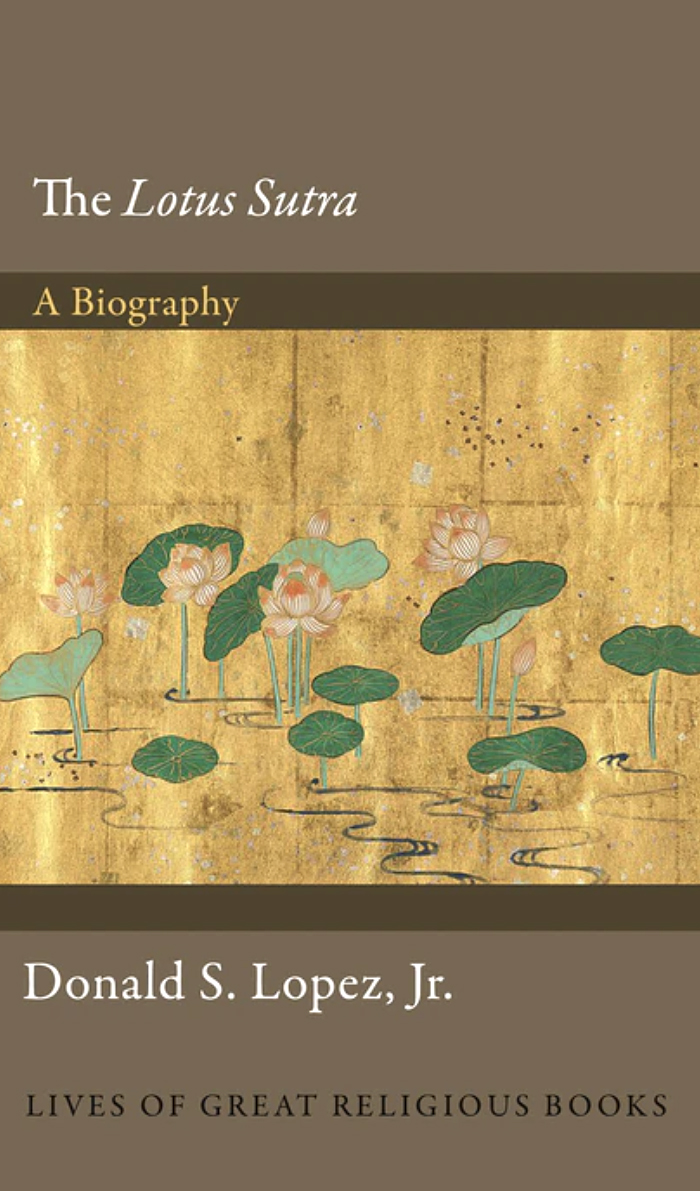
The Lotus Sutra A Biography-front.jpg

Description

The Lotus Sutra is arguably the most famous of all Buddhist scriptures. Composed in India in the first centuries of the Common Era, it is renowned for its inspiring message that all beings are destined for supreme enlightenment. Here, Donald Lopez provides an engaging and accessible biography of this enduring classic.

Lopez traces the many roles the Lotus Sutra has played in its travels through Asia, Europe, and across the seas to America. The story begins in India, where it was one of the early Mahayana sutras, which sought to redefine the Buddhist path. In the centuries that followed, the text would have a profound influence in China and Japan, and would go on to play a central role in the European discovery of Buddhism. It was the first Buddhist sutra to be translated from Sanskrit into a Western language—into French in 1844 by the eminent scholar Eugène Burnouf. That same year, portions of the Lotus Sutra appeared in English in The Dial, the journal of New England's Transcendentalists. Lopez provides a balanced account of the many controversies surrounding the text and its teachings, and describes how the book has helped to shape the popular image of the Buddha today. He explores how it was read by major literary figures such as Henry David Thoreau and Gustave Flaubert, and how it was used to justify self-immolation in China and political extremism in Japan.

Concise and authoritative, this is the essential introduction to the life and afterlife of a timeless masterpiece. (Source: Princeton University Press)

Citation
Lopez, Donald S., Jr. The Lotus Sūtra: A Biography. Lives of Great Religious Books. Princeton, NJ: Princeton University Press, 2016.
Publisher Link
Table of contents
  • Introduction1
  • Chapter 1. Plot Summary12
  • Chapter 2. The Lotus Sūtra in India21
  • Chapter 3. The Lotus Sūtra in China43
  • Chapter 4. The Lotus Sūtra in Japan65
  • Chapter 5. Across the Atlantic116
  • Chapter 6. The Lotus Sūtra in the Twentieth Century179
  • Chapter 7. Across the Pacific208
  • Notes223
  • Index243
Interconnections
1 Scholarship on
Kumārajīva Khyentse Foundation.jpg
Classical WorksAbout this item
The White Lotus of the Good Dharma, popularly known as the Lotus Sūtra, is taught by Buddha Śākyamuni on Vulture Peak to an audience that includes bodhisattvas from countless realms, as well as bodhisattvas who emerge from under the ground, from the space below this world. Buddha Prabhūtaratna, who has long since passed into nirvāṇa, appears within a floating stūpa to hear the sūtra, and Śākyamuni enters the stūpa and sits beside him. The Lotus Sūtra is celebrated, particularly in East Asia, for its presentation of crucial elements of the Mahāyāna tradition, such as the doctrine that there is only one yāna, or "vehicle"; the distinction between expedient and definite teachings; and the notion that the Buddha's life, enlightenment, and parinirvāṇa were simply manifestations of his transcendent buddhahood, while he continues to teach eternally. A recurring theme in the sūtra is its own significance in teaching these points during past and future eons, with many passages in which the Buddha and bodhisattvas such as Samantabhadra describe the great benefits that come from devotion to it, the history of its past devotees, and how it is the Buddha's ultimate teaching, supreme over all other sūtras. (Source: 84000)