Books/The Center of the Sunlit Sky/Bilingual
In the Karma Kagyü school, Pawo Rinpoche's commentary on The Entrance to the Bodhisattva's Way of Life is considered both the standard commentary on this text and—together with the Eighth Karmapa's Chariot of the Tagbo Siddhas—the standard presentation of Madhyamaka, especially in its Consequentialist approach. Since the Second Pawo Rinpoche was a disciple of the Eighth Karmapa, his commentary preserves many of the Centrist pith instructions of Karmapa Mikyö Dorje.
Of all the commentaries on Śāntideva's text, it is by far the most voluminous (975 folios). However, not only its length distinguishes it from other Tibetan commentaries. First, in terms of its scriptural sources, there is an unparalleled abundance of at times extensive quotes from the sūtras to support the main points of the commentary. It is the only commentary that gives synopses of the relevant passages from the major Indian commentaries for each topic of the text. In addition, it quotes a number of the earliest Tibetan commentaries, such as those written by the Sakya master Sabsang Mati Panchen Jamyang Lodrö (1294–1376) and the Kadampa master Tsonaba Chenbo Sherab Sangbo (fourteenth century). (The Center of the Sunlit Sky, page 613)
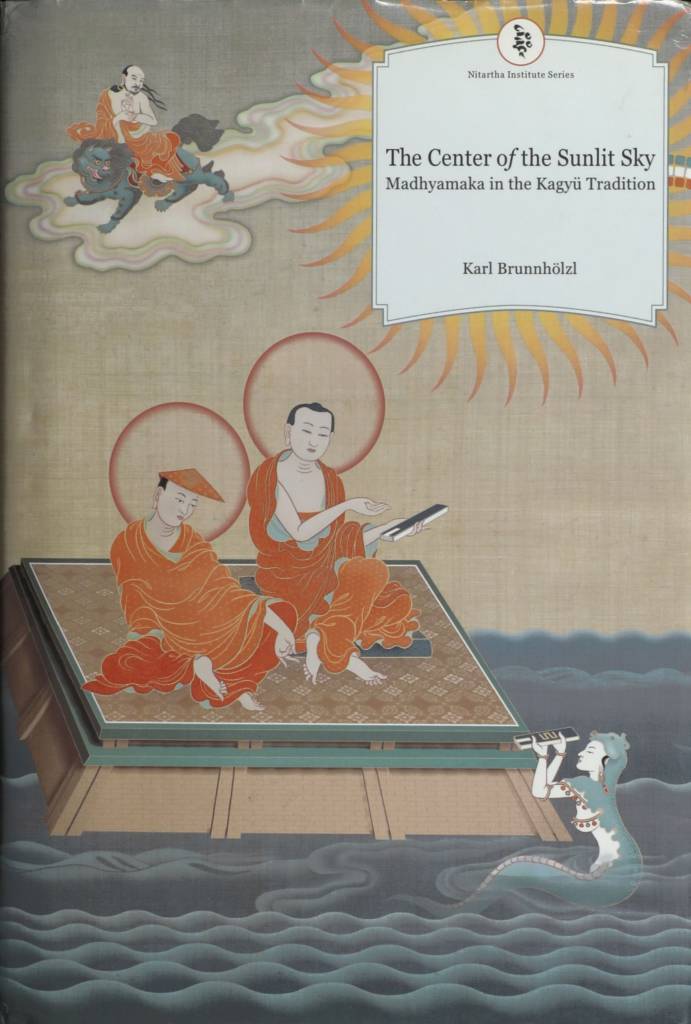
Here is the description of the book The Center of the Sunlit Sky, which contains this translation in Part Two:The book follows the original Indian sources as well as the standard commentaries on Madhyamaka in the Kagyü School of Tibetan Buddhism. At the same time, these materials are adapted for a contemporary audience, combining the familiar sharpness of Madhyamaka reasonings (launching a massive assault on our cherished belief systems) with exploring the practical relevance of the Madhyamaka way of mind training.
Part One of the book, "The General Presentation of Madhyamaka in the Kagyü Tradition," provides an overview of the transmission of Madhyamaka from India to Tibet and its relation to Vajrayāna and Mahāmudrā, followed by a general presentation of Madhyamaka in terms of ground, path, and fruition. Further chapters are devoted to the Autonomist-Consequentialist distinction, the controversial issue of "Shentong-Madhyamaka," the distinction between expedient and definitive meaning, and a penetrating presentation of the major differences between the Eight Karmapa's and Tsongkhapa's interpretations of Madhyamaka.
Part Two consists of a brief introduction to the Bodhicaryāvatāra and a translation of the Second Pawo Rinpoche's commentary on its ninth chapter (on knowledge).
(Source: book jacket)
