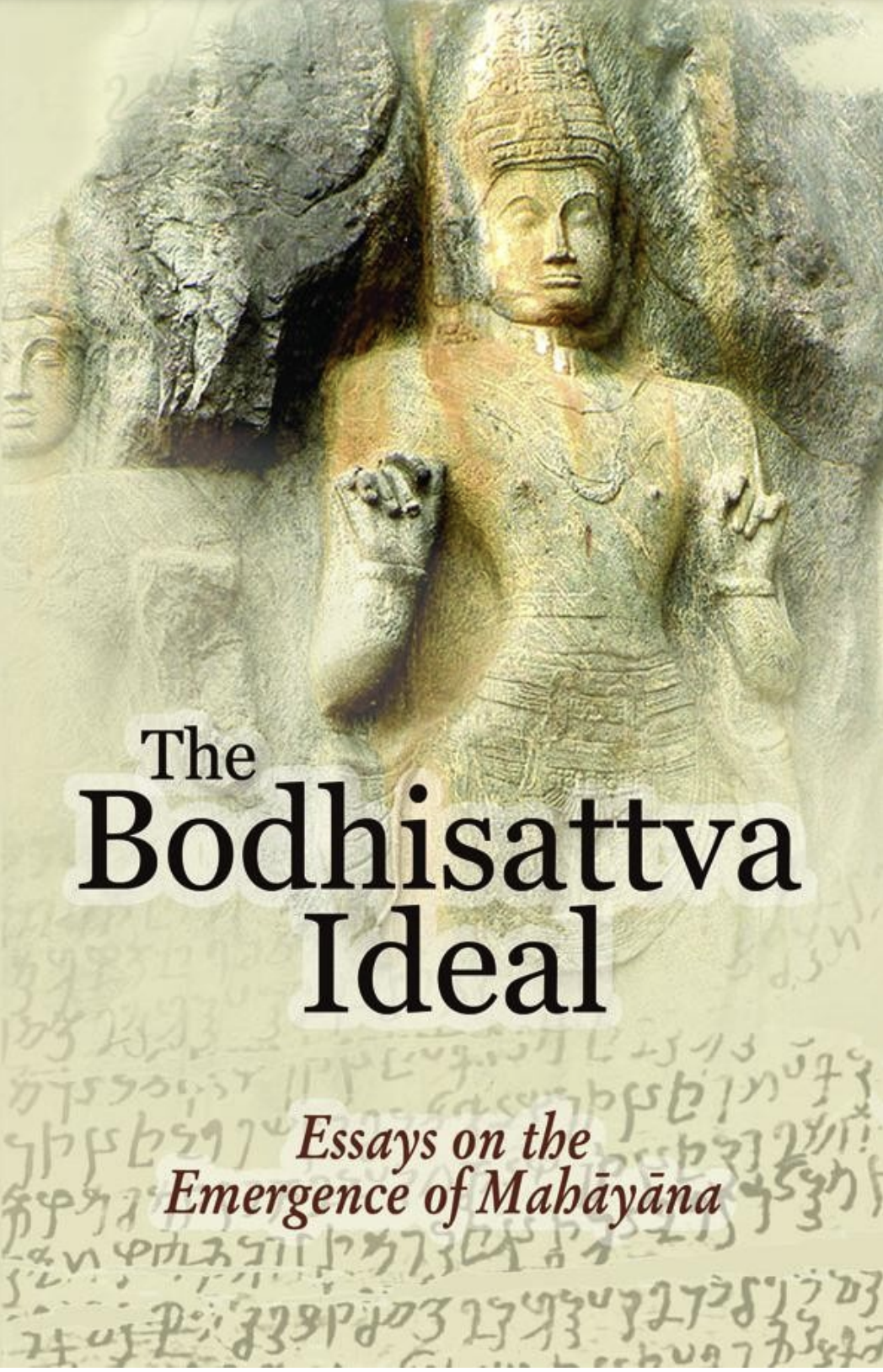
The Bodhisattva Ideal: Essays on the Emergence of Mahāyāna
From Bodhicitta
< Books
Books/The Bodhisattva Ideal: Essays on the Emergence of Mahāyāna| 🤓 Admin Zone 🛠️ hidden to non-admins | |
The Bodhisattva Ideal: Essays on the Emergence of Mahāyāna
Book
Please note that many items in our library are simply pages that represent a detailed library catalog entry and citation of someone else's work, presentation, or performance. Read our General Disclaimer for more information.

Description
This book brings together six essays on the origin and history of the bodhisattva ideal and the emergence of the Mahāyāna. The essays approach the subject from different perspectives from scholarly examinations of the terms in the Nikāyas and Āgamas to the relationship of the bodhisattva ideal and the arahant ideal within the broader context of the social environment in which Mahayana formed and further developments that lead to the formulation of the fully fledged bodhisattva path. As such, the collection provides a good overview for a wider Buddhist readership of the history of changes that eventually led to the emergence of the Mahāyāna. The essays include: Arahants, Buddhas and Bodhisattvas, by Bhikkhu Bodhi; The Bodhisattva Ideal in Theravāda Theory and Practice, by Jeffrey Samuels; Bodhi and Arahattaphala: From Early Buddhism to Early Mahāyāna, by Karel Werner; Vaidalya, Mahāyāna, and Bodhisatva in India: An Essay Towards Historical Understanding, by Peter Skilling; The Evolution of the Bodhisattva Concept in Early Buddhist Canonical Literature, by Bhikkhu Analayo; and Orality, Writing and Authority in South Asian Buddhism: Visionary Literature and the Struggle for Legitimacy in the Mahāyāna, by David McMahan.
Citation
Nyanatusita, Bhikkhu, ed. The Bodhisattva Ideal: Essays on the Emergence of Mahāyāna. Kandy: Buddhist Publication Society, 2013.
Table of contents
- Prefacevi
- Contributorsvii
- Abbreviationsviii
- Arahants, Buddhas and Bodhisattvas1
- Competing Buddhist Ideals1
- Looking to the Buddha as the Ideal3
- The Perspective of the Nikāyas4
- How the Buddha is Distinguished from Other Arahants8
- The Bodhisattva Problem11
- The Transition towards the Full-fledged Bodhisattva Concept16
- The Emergence of the Mahāyāna as the Bodhisattva-vehicle18
- Breaking down Old Stereotypes22
- Towards a Healthy Integration of the Vehicles27
- Notes29
- The Bodhisattva Ideal in Theravāda Theory and Practice31
- Introduction31
- The Scope of the Bodhisattva Ideal in Theravāda Buddhism34
- A Re-evaluation of the Bodhisattva-Śrāvaka Opposition41
- Acknowledgments43
- Notes44
- Bodhi and Arahattaphala51
- Notes65
- Vaidalya, Mahāyāna, and Bodhisatva in India69
- Conventions69
- Preface70
- I. The quiet revolution in Buddhist Studies72
- II. Points of Terminology75
- The Śrāvakayāna and the eighteen Buddhist schools79
- The three vehicles82
- III. Vedalla, Vaidalya, Mahāyāna and other names84
- Vedalla as a genre or category of the Buddha's teaching (aṅga)86
- Discussions about Vedalla (vedallakathā) and future threats87
- Vedalla/Vaitulya as a system of thought (vāda)88
- The Vedalla/Vetulla Piṭaka89
- Vaidalya as an epithet for Mahāyāna sūtras90
- Nāgārjuna’s Vaidalya-prakaraṇa92
- Vetullavāda and Mahāyāna in Sri Lanka92
- Vedalla/Vaidalya and Mahāyāna in India94
- Vaidalya/Vaitulya/Vaipulya in the north Indian tradition95
- The Mahāyāna according to Asaṅga97
- IV. What Mahāyāna is not98
- V. What was the Mahāyāna? Grasping the Inconceivable107
- VI. Hermeneutics and debate109
- VII. The Bodhisatva111
- VIII. Points of Difference113
- IX. Recapitulation: the burden of terminology116
- Acknowledgements119
- Notes120
- Appendix I157
- The nine and the twelve categories/genres of the Buddha’s teaching157
- Appendix II158
- Glossary of terms and titles158
- The Evolution of the Bodhisattva Concept in Early Buddhist Canonical Literature165
- Introduction165
- Gautama as a Bodhisattva166
- Gautama’s Marvellous Qualities171
- The Lineage of Former Buddhas179
- Gautama’s Vow181
- Maitreya’s Prediction186
- Conclusion193
- References194
- Notes196
- Orality, writing and authority in South Asian Buddhism: Visionary Literature and the Struggle for Legitimacy in the Mahāyāna209
- Introduction209
- Orality in Early Buddhism212
- Writing and the Survival of the Mahāyāna215
- Sacred Texts and Sacred Sites216
- Writing and the Visual221
- The Buddha-Vacana and Strategies of Legitimation in the Mahāyāna225
- Visionary Literature and Grounds for Legitimacy230
- Conclusion235
- Notes237
Interconnections