Sutra of the Wise and the Foolish (Mongolian)
| 🤓 Admin Zone 🛠️ hidden to non-admins | |

Description
One of the great treasures of Buddhist literature which have come down to us in Tibetan translation is the Do-dzang-lun (མདོ་མཛངས་བླུན། - mdo mdzangs blun) or the Sutra of the Wise and the Foolish, known to the Mongols, into whose language it was translated from Tibetan, as the Uliger-un dalai or Ocean of Narratives. The history of this unusual scripture is still uncertain, e.g. we are not sure whether there ever was a Sanskrit or Prakrit original (none has yet been found), though legend telling us that the tales were heard in Khotan by Chinese monks who translated them (but from what language?) into Chinese from which language it was translated into Tibetan, thence into Mongolian and Oirat. Whatever the history of the Sutra may be, it is one of the most interesting, enjoyable and readable of Buddhist scriptures and has for centuries been an inexhaustible source of inspiration, instruction and pleasure for all who have been able to read it. (Source: Forward, vii. )
Foreword
- 1. The Beginning of the Narratives1
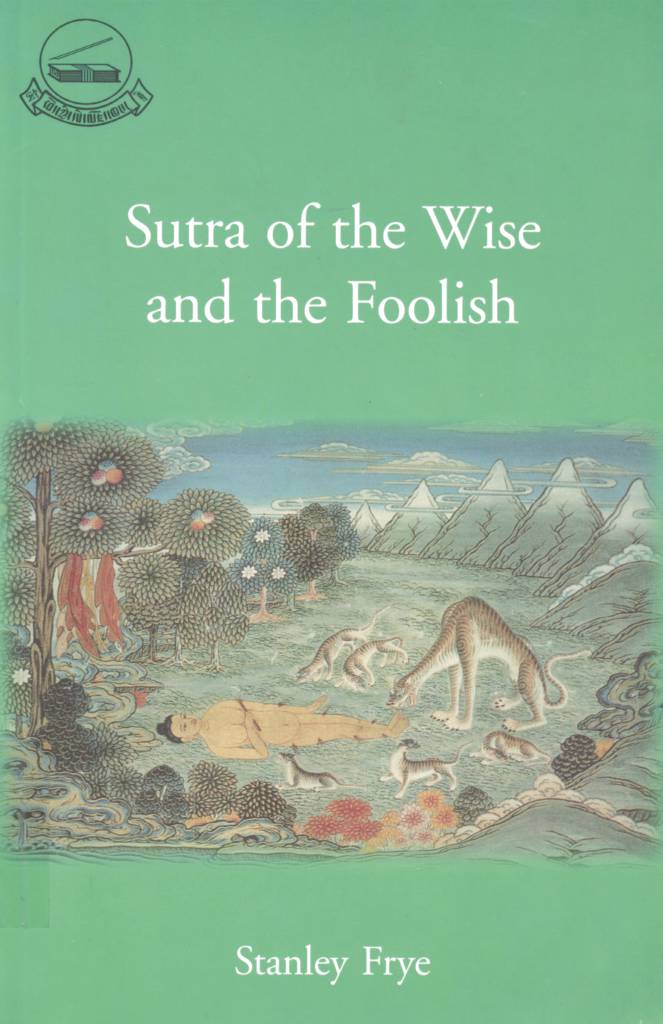
- 2 Prince Mahasattva Gives His Body to the Tigress14
- 3 The Mendicant Keeps the Precepts18
- 4 The boy Who Sold Himself to Make an Offering21
- 5 The Sea-God Asks Questions23
- 6 The Devaputra Gangadhara26
- 7 Prince Swasti30
- 8 Vajra, the Daughter of King Prasenajit34
- 9 Golden Gem40
- 10 Flower of the Gods42
- 11 Jewel of the Gods44
- 12 Ksantivadin, or the Patient Rishi44
- 13 King Maitrabala Makes a Gift47
- 14 The Taming of the Six-Heretic Teachers49
- 15 The Kunda Beast Gives His Body66
- 16 In Praise of the Blessing of the Monk69
- 17 The Monk Keeps the Precepts84
- 18 The Householder Without Organs91
- 19 The Beggar Woman Gives her Clothing96
- 20 The Slave Woman Sells her Poverty to the Monk Mahakatyayana99
- 21 Golden God102
- 22 The Man with Two Families105
- 23 King Chandraprabha Gives His Head108
- 24 The Seven Sons of Minister Mrgara119
- 25 Maha Kapina128
- 26 Utpala the Nun132
- 27 Sudolagarne137
- 28 King Asoka139
- 29 The Pot of Gold141
- 30 Joy, the Brahmins wife144
- 31 Great Charity Goes to the Sea146
- 32 King Mirror-Face159
- 33 Good Searcher and Evil Searcher162
- 34 Prince Virtuous164
- 35 The Householder Named Pacifier174
- 36 The Prince Whose Eyes Were Opened178
- 37 Angulimala, or Finger-Necklace186
- 38 The Beggar-Woman Named Relying on Joy202
- 39 Bhasicara206
- 40 The Householder Dandadhara209
- 41 Excellent Honey215
- 42 The Householder Tasila219
- 43 Elephant Helper223
- 44 The Brahmin Gives Patches226
- 45 The First Compassion of the Buddha228
- 46 King Forehead-Born234
- 47 The Ten Sons of Sumana237
- 48 Upagupta243
- 49 The Five Hundred Swans Who Were Born as Gods243
- 50 The Lion With the Firm Mind245
- 51 The History of the Lizard248
- 52 The Monk Kyunte250